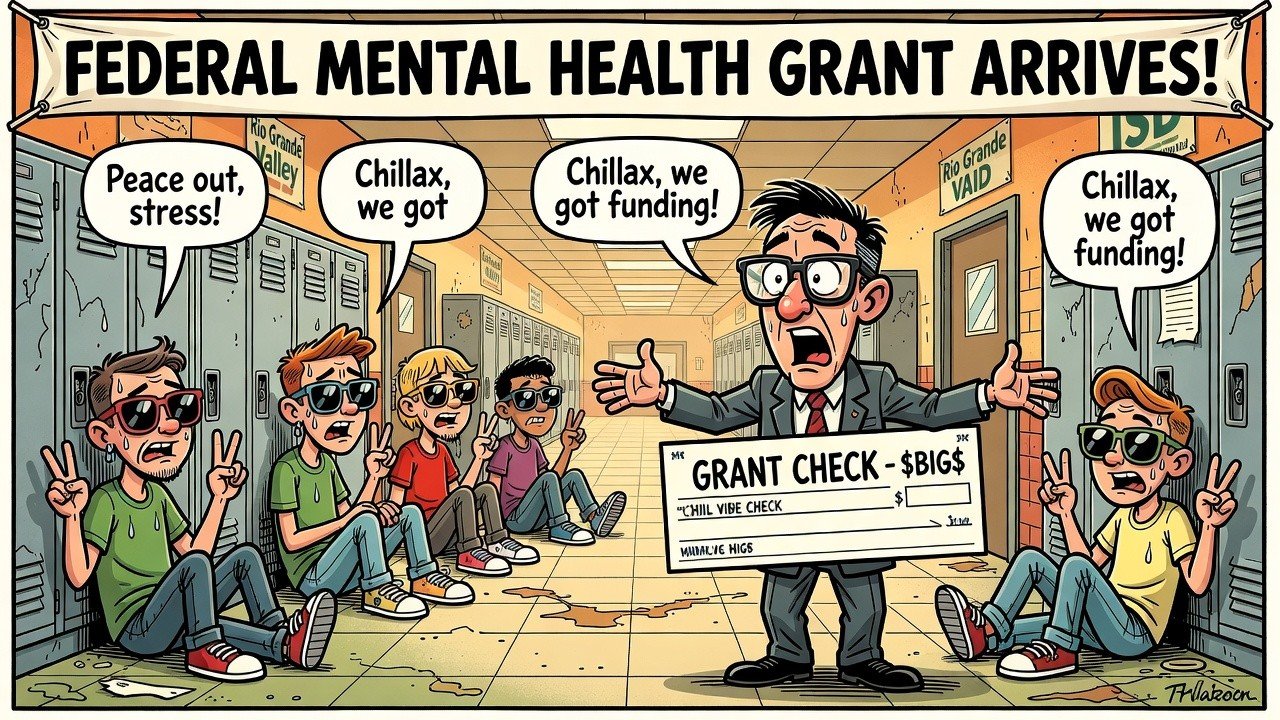
SATIRE: EDINBURG, Texas — A transformative $1.2 million federal grant aimed at recruiting mental health professionals for Rio Grande Valley schools has instead inspired students to begin practicing amateur therapy on each other with devastating confidence, according to officials at the Region One Education Service Center.
Fifth Grader Diagnoses Classmate With ‘Acute Recess Anxiety’
Within days of the grant announcement, schools across the Valley reported students using terminology they clearly learned from TikTok to diagnose peers with conditions that do not technically exist in any diagnostic manual.
“My friend Brandon told me I have ‘existential dodgeball trauma’ because I did not want to play during recess,” said fictional McAllen ISD student Sophia Mango, age 10. “He said he could tell because of my aura, which he described as ‘a faded yellow, like old tortillas.’ I did not ask for this assessment.”
The grant, part of the Mental Health Service Professional Demonstration Program, was designed to address critical staffing shortages by recruiting trained counselors. Instead, it appears to have activated what experts are calling ‘pop psychology syndrome’ among students who attended a single assembly on emotional wellness.
“We showed one video about feelings and now a third grader told me my body language suggests I am projecting unresolved conflict from my personal life,” said fictional school counselor Patricia Queso, speaking from the Ghost Desk in the counselor’s office, which is technically a folding chair next to a broken laminator. “I am 28. My unresolved conflict is that the laminator does not work and nobody has fixed it since 2019.”
Schools Implement ‘Therapy-Free Zones’ to Curb Epidemic of Unsolicited Advice
Several RGV districts have reportedly begun designating specific areas as ‘therapy-free zones’ where students are not permitted to analyze each other’s attachment styles during lunch.
“A student told me my ‘love language’ is passive aggressive note-writing because I gave her a reminder about overdue library books,” said fictional librarian Ernesto Fajita, who has worked in education for 22 years and described the current climate as ‘the most psychologically evaluated I have ever felt in my life.’ “She is nine. She should not know what a love language is. She should know where the picture books are located.”
U.S. Senator John Cornyn, a supporter of the grant program, was unavailable for comment but reportedly issued a statement from his own Ghost Desk in Washington confirming that the funding was intended for licensed professionals, not ‘a child who watched one episode of a podcast and now believes they are certified.’
As of press time, a group of middle schoolers had formed a peer mediation circle to discuss why the cafeteria stopped serving pizza on Fridays, and the discussion had somehow evolved into a three-hour exploration of generational trauma.
Frequently Asked Questions
Q: Will the grant actually bring licensed mental health professionals to RGV schools?
A: Yes, and they are reportedly very excited to be immediately corrected by seventh graders who believe they understand cognitive behavioral therapy better than people with master’s degrees.
Q: How can parents support children’s mental health at home?
A: By listening, validating feelings, and firmly explaining that watching a three-minute video about mindfulness does not constitute a clinical license.