SATIRE: This is parody. Not a real news report.
McALLEN — City officials confirmed this week that the desalination plant’s rising $205 million price tag now includes $15.2 million for injection wells stretching 7,000 feet into the earth, a bargain, they say, compared with the alternative: mixing precious fresh water into toxic brine just to legally pour the mixture into a drainage ditch. “The state told us we can only dump the salty leftovers if we first ruin some of the good water,” explained fictional utilities spokesman Gilbert Chorro, standing beside a scale model of the Earth’s crust in City Hall. “We did the math. It was cheaper to dig a hole deeper than five H-E-Bs stacked on top of each other than to keep wasting the water we spent $205 million making.”
Plant 10% Designed, 100% Paid For
The plant, currently 10% designed with a 30% contingency fund for the surprises that inevitably come from a project whose main feature is a mile-deep salt closet, will produce 10 million gallons a day starting in 2029, or possibly 2030, or whenever the brine stops complaining. McAllen households have been paying a $14 monthly surcharge since October for water that will not exist for four more years, and officials gently noted the fee will remain on bills for the full 30-year loan — and then simply stay afterward, out of tradition. “Think of it as a subscription,” said fictional ratepayer advocate Rosa del Pozo. “You pay monthly, and someday, God willing, the product arrives. My abuela waited decades for a Veterans Bridge expansion. This is the Valley way.”
Brine Given Its Own Underground Condo
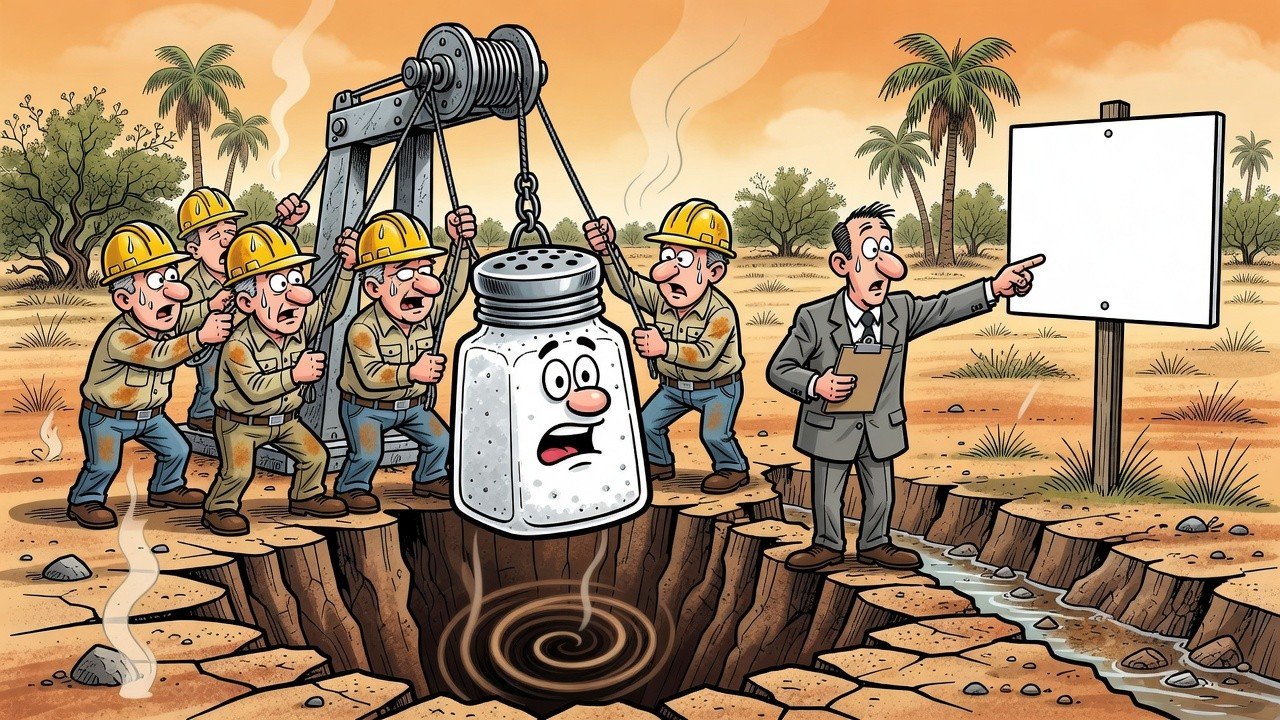
The injection wells will ferry concentrated brine 7,000 feet down, past the Gulf Coast Aquifer, past several layers of rock that never bothered anybody, into what engineers describe as “a permanent time share for salt.” Chorro defended the depth: “We tried 6,500 feet, but the salt kept applying for asylum. At 7,000, it finally settles down and stops calling TCEQ.” The original plan — diluting brine with fresh water so it could legally enter a Valley drainage ditch — was scrapped after officials realized it meant buying expensive new water specifically to make it worse. “That’s not water policy,” Chorro said. “That’s a telenovela plot.”
Groundbreaking is set for early 2028, at which point the plant will be 11% more expensive, then 12%, then a number the city will announce via smoke signal from the wellhead.