Valley Election Officials Investigate List of ‘Potential Noncitizens’ Registered to Vote
Valley election officials are currently engaged in a crucial task: verifying a list provided by the Texas Secretary of State which identifies 236 individuals as “potential noncitizens” registered to vote. This list, compiled using the federal Save Database, aims to ensure the integrity of voter rolls but has sparked discussions about its potential impact on community members in South Texas.
Efforts Unfold in Cameron County
Of particular focus is Cameron County, where 68 individuals have been flagged by the state as needing verification. The county’s election officials are meticulously cross-referencing voter registration details with existing citizenship documentation to ensure accuracy before issuing any verification notices. “This is an extra step that we’re having to dedicate staff to do,” explained Remi Garza, Cameron County Elections Department Administrator. He noted the dual responsibility facing his team as they manage both early voting procedures and the verification task.
Recipients of verification notices have a 30-day window to respond with proof of citizenship. Failure to do so results in being marked ineligible to vote, though individuals can regain their eligibility upon presenting valid documentation later.
Concerns Over Database Reliance
The reliance on the Save Database for identifying noncitizens has raised concerns among experts. David Froomkin, an Assistant Professor at the University of Houston Law Center, criticized the use of this database due to its high error rates. “Political scientists have found that there’s a high error rate on relying on these databases,” he pointed out, citing issues such as measurement inaccuracies and errors in name matching.
Such errors could potentially result in legitimate voters being incorrectly flagged, a fear that looms large in the Rio Grande Valley (RGV) community where common surnames can lead to mismatches.
Local Impact and Broader Implications
The verification process is not just a state directive; it has tangible implications for Valley residents. With Hidalgo County also actively sending out notices, the impact on the RGV is profound. Voter confidence may be shaken, particularly among minority communities who might feel targeted by such measures.
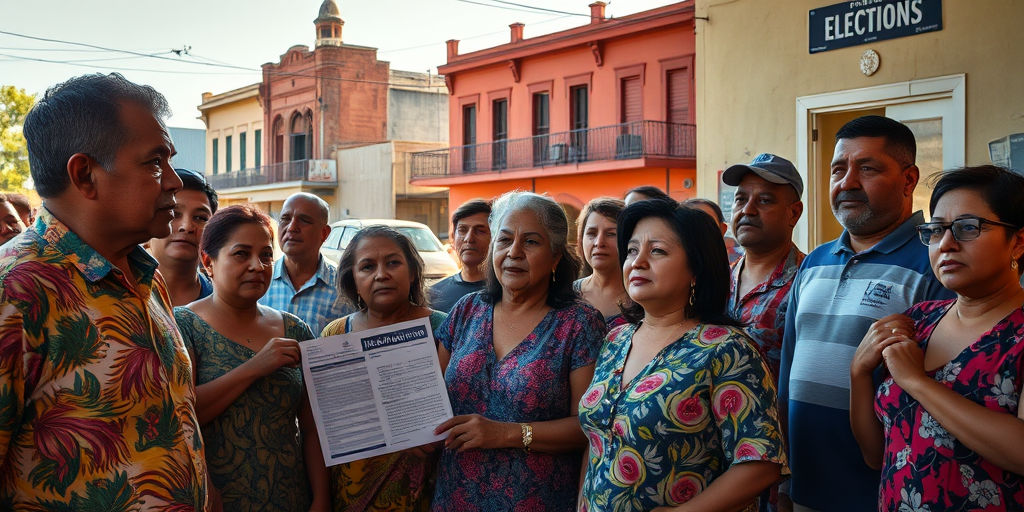
Rolando Ramirez, a Valley resident whose family has lived in the area for generations, shared his concerns, “It’s disturbing to think that mistakes in these databases could lead to disenfranchisement. We hope the county takes every precaution to avoid unnecessary errors.”
Moreover, the process comes at a critical time, with early voting already underway, adding pressure to election officials to ensure timely and accurate verifications. Cameron County aims to complete the process by the end of the week, highlighting the urgency of the operation and the workload shouldered by the department.
Community and Historical Context
This isn’t the first time voter eligibility and citizenship verification have emerged as contentious issues in South Texas. Historically, the Valley has faced challenges related to voting rights and accessibility, with advocates frequently raising concerns about policies that can disproportionately affect marginalized groups.
The implications of this investigation extend beyond the immediate verification process. If any of the identified individuals are found to have voted unlawfully, their cases could be referred to the state attorney general’s office, possibly leading to legal repercussions.
Balancing Priorities and Perspectives
While election officials work diligently to balance the necessary safeguards of voter eligibility with fair treatment of all registered voters, community members are navigating their reactions. Some, like Ramirez, call for transparency and communication throughout the process, while others place trust in local officials to handle the situation with care.
Federal databases and their use in such investigations are contentious, fueling debates about privacy, accuracy, and fairness. The broader dialogue around election integrity continues to underscore how impactful these issues are for areas like the Valley with diverse populations and historical complexities in voting rights.
Resources for Residents
Cameron County residents who receive verification notices are encouraged to promptly respond with the necessary documentation to avoid potential disenfranchisement. Meanwhile, those facing difficulties with the process or needing advice can seek assistance from local voter rights organizations.
The complexity and stakes of this situation exemplify the crucial role local news outlets play in keeping Valley residents informed about developments that affect their democratic rights. For ongoing updates and guidance, the community is advised to stay tuned to trusted RGV news sources.
As election officials move forward with their investigation, the balance between ensuring security and maintaining accessibility remains at the forefront of the Valley’s civic discourse. Lawmakers and community leaders alike continue to navigate these evolving electoral landscapes, reflecting the dynamic nature of democracy itself.