Mexico Responds After U.S. Contractors Install ‘No Trespassing’ Signs Along Matamoros Beach
The recent installation of ‘no trespassing’ signs by U.S. military contractors along a stretch of Matamoros beach has sparked swift action and a diplomatic response from Mexico. This development, which reportedly stemmed from confusion over boundary lines, has engaged both local and international authorities to address the implications for the South Texas and Rio Grande Valley (RGV) communities.
A Surreal Scene at Matamoros Beach
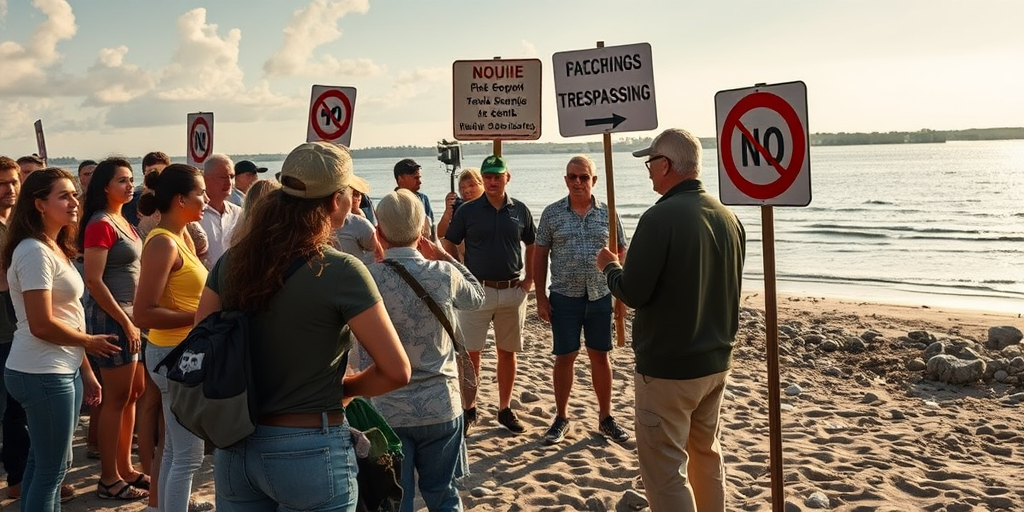
On the morning of November 18, beachgoers and environmental activists at Playa Bagdad in Matamoros were caught off guard by an unusual sight. Elias Ibarra, an eyewitness and environmental activist, reported, “We saw a group of people arriving by boat, apparently from the U.S. side. These individuals, unmarked and unidentified, proceeded to put up signs declaring the beach a ‘restricted area’ under the U.S. Department of Defense.”
The signs, which labeled the area as a National Defense Zone, provoked immediate confusion and concern. Ibarra wasted no time in contacting Mexican authorities, which included alerting the Mexican Federal Attorney for Environmental Protection. By the end of the day, the Mexican Navy had removed six signs, asserting that they had been unlawfully placed on Mexican territory.
Official Responses and Diplomatic Channels
Mexico’s President, Claudia Sheinbaum, addressed the situation in a press conference, emphasizing that the International Boundary and Water Commission (IBWC) is now involved to clarify the location of the boundary at this coastal point. “It is crucial that both the U.S. and Mexican governments collaborate to clearly define and respect our shared borders,” she remarked.
A Pentagon official confirmed that the signs had been placed by U.S. military contractors in alignment with a planned identification of National Defense Areas, part of an initiative launched during the Trump administration. The official cited changes in topography and water depth as factors contributing to the current misunderstanding of boundary lines. They assured that further efforts would focus on coordination with both U.S. and Mexican agencies to prevent recurrence.
Impact on the Rio Grande Valley
The implications of this incident resonate strongly with the RGV community. As the RGV sits adjacent to the U.S.-Mexico border, any changes in boundary perceptions or enforcement directly affect daily life and cross-border relations. Local stakeholders remain deeply invested in ensuring that diplomatic channels remain open and effective to safeguard these vital interactions.
Local economic analyst, Dr. Miguel Cardenas, noted, “The Valley’s economic health is intricately tied to our relationship with Mexico. Incidents like these, if mishandled, can have detrimental effects on trade, tourism, and community trust on both sides of the border.”
Reflections of Past and Present
This event echoes prior challenges faced by cross-border communities, particularly in maintaining cultural and economic ties despite geopolitical tensions. The presence of National Defense Zones established during previous U.S. administrations has been met with skepticism by residents who worry about the militarization of border areas.
Maria Mendoza, a Brownsville resident who frequently visits family in Matamoros, expressed her concerns, saying, “We have always valued our ability to move freely and engage with our neighbors across the border. Seeing these signs feels like another barrier to the unity we’ve known for generations.”
Looking Ahead: Navigating Diplomatic Waters
While the immediate removal of the signs by Mexican authorities has alleviated some concerns, the broader issue of defining and respecting national boundaries remains unresolved. This incident highlights the necessity for clear protocols and communication between nations, particularly in regions where boundaries may appear fluid on the ground.
Future meetings between U.S. and Mexican officials are anticipated, with aims to establish a more precise boundary and ensure that any defense measures respect the sovereignty of both nations. Collaborative efforts from entities like the IBWC are crucial to fostering an environment where both security and cultural exchange can coexist.
Community Resources and Continuing Dialogue
For Valley residents and those interested in staying informed about developments, the IBWC and local consulates intend to provide regular updates. Community forums and town hall meetings are expected to facilitate dialogue, enabling residents to engage directly with officials and voice their perspectives.
As South Texas navigates this challenging landscape, the importance of maintaining a respectful and collaborative approach to border management cannot be overstated. With ongoing discussions and investment in community interests, the Rio Grande Valley can continue to thrive as a region exemplifying cross-cultural unity and economic vibrancy.