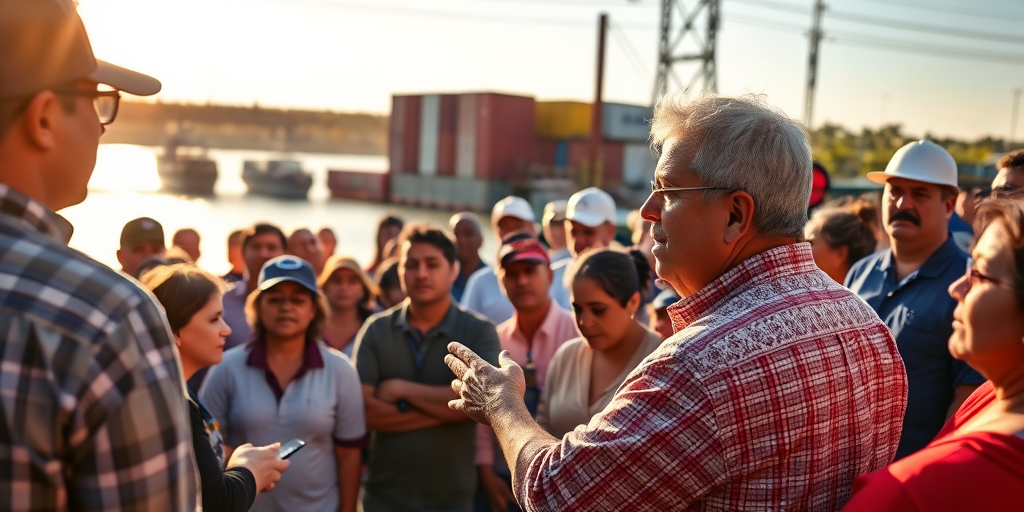
Garcia: McAllen Foreign Trade Zone is Not Just for McAllen; It’s for All of Hidalgo County
In a recent announcement that highlights a significant milestone for the region, Mark E. Garcia, President and CEO of Foreign Trade Zone No. 12, has emphasized that the McAllen Foreign Trade Zone (FTZ) is not exclusively for McAllen but serves all of Hidalgo County. With its extensive coverage of 108 acres and nearly a million square feet of developed property, FTZ No. 12 continues to push the boundaries of economic growth and development within the Rio Grande Valley.
A Look at the History and Evolution
Established as the 12th foreign trade zone in the United States, FTZ No. 12 holds the distinction of being the first inland trade zone not located at a port or airport. This historic achievement set the foundation for the zone’s expansive role today, which, as of 2016, covers the entire county under the Alternative Site Framework (ASF). This framework represents a pivotal shift, allowing for quicker activation of new FTZ sites, cutting down processing time from over a year to just 30 days.
Garcia proudly acknowledges the visionary foresight of FTZ No. 12’s founders: “Our FTZ was one of the first industrial parks in this entire area. Back then, it was just a farm field, and people thought the idea was outrageous. Yet, look at this industrial sector now.”
Transformative Local Impact Across the Valley
By extending its services to encompass all of Hidalgo County, the FTZ creates a ripple effect across the local economy. From McAllen to Edinburg, and Pharr to Mission, businesses can tap into a wealth of opportunities. A notable example is a high-tech company in Pharr that specializes in transistors and printed circuit boards. With Garcia’s team guiding the company’s integration into the FTZ, it now effectively navigates tariff challenges by establishing a US-based operation.
“The FTZ gives businesses a competitive edge. For companies like the one in Pharr, it means alleviating the burden of tariffs. For other Valley residents, it translates to economic vitality with more jobs and services,” Garcia explained.
Embracing the Benefits of Foreign Trade Zones
The McAllen FTZ operates as a secure, duty-free space and offers several critical advantages. Businesses within the zone can defer customs duties, eliminate tariffs on exports, and avoid ad valorem taxes on export-oriented inventory. As Garcia puts it, “The financial flexibility and savings on customs costs have a strong pull, especially for companies engaging in cross-border operations with Mexico.”
These benefits are especially pertinent to the Rio Grande Valley. As a region known for its strategic location along the US-Mexico border, the RGV holds a unique position in international trade. The FTZ’s comprehensive services align seamlessly with the needs of Valley businesses, thus reinforcing South Texas’s role as a hub for global commerce.
Continued Growth and Future Prospects
The expansion of the McAllen FTZ through the ASF program points to a promising future for the region. As Garcia notes, the zone operates on 775 acres, underlining its potential as both an economic driver and property developer. Its growth underscores a broader trend within the RGV, aimed at fostering industrial diversity and resilience.
In light of the ongoing expansion, Garcia stresses the importance of collaboration between the FTZ, local governments, and community organizations. “Together, we form a support system that is crucial to converting opportunities into tangible outcomes for the Valley’s residents,” he remarked.
Balancing Opportunities and Community Needs
While the advantages of FTZ No. 12 are clear, effective management requires balancing these with local community priorities. Concerns regarding economic equity and the long-term sustainability of FTZ-driven growth require ongoing local dialogue and proactive policy planning.
In particular, transparency in operations and decisions surrounding development priorities remain crucial. Valley residents, stakeholders, and policymakers must work together to ensure that FTZ initiatives align with broader societal goals, such as environmental sustainability and equitable resource distribution.
Connecting with the Rio Grande Valley Community
For community members interested in engaging more deeply with the FTZ’s initiatives, resources are readily available. Local businesses and individuals can learn more through workshops planned by the FTZ administration, designed to foster greater participation and understanding of this beneficial program.
Garcia’s message is clear: “The FTZ is a community asset, one that stands ready to lift the entirety of Hidalgo County as we continue this journey into a prosperous future.”
This article is the first part of a four-part series delving into the intricacies and transformative power of Foreign Trade Zone No. 12. Stay tuned for further insights and developments that will shape the economic landscape of the Rio Grande Valley in the coming editions.