**Challenging Water Rights in Heavily Urbanized Irrigation Districts: A Big Battle Ahead in Austin**
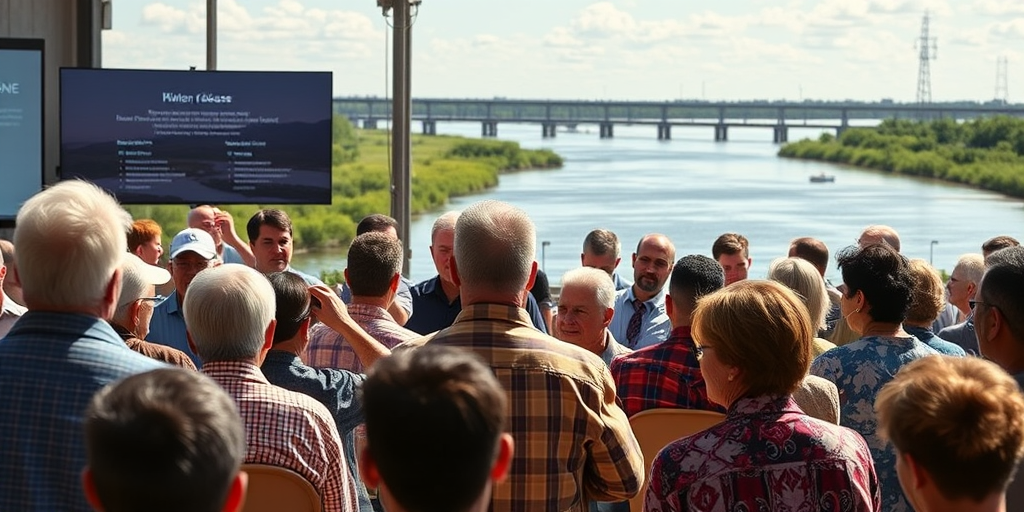
The complexity of water management between the United States and Mexico was brought into sharp focus during a recent update provided by Jim Darling, the chairman of the Region M Water Planning Group. Addressing stakeholders at the McAllen Economic Development Corporation’s Quarterly Meeting, Darling outlined the current state of water resources in the Rio Grande Valley (RGV) and the potential challenges that lie ahead.
**Improved Reservoir Levels and Allocation Issues**
Darling reported a positive development: water levels at the Amistad and Falcon dams have seen an increase, now reaching 26.84% capacity. This improvement is owed to recent water releases from Mexico, prompted by diplomatic pressure from the U.S. However, Darling’s update revealed a stark disparity in water distribution among irrigation districts, raising concerns about equity and resource management in the RGV.
In the RGV, about 80% of water stored in these reservoirs is allocated for irrigation purposes, while only 20% is designated for municipal use. This imbalance is more pronounced in heavily urbanized districts, which enjoy reservoir capacities ranging from 60% to 65%, while rural areas struggle with much lower capacities, around 17% to 19%.
**The Call for Treaty Renegotiation**
The disparities among the districts led Darling to advocate for a reconsideration of the 1944 Water Treaty between the U.S. and Mexico. Under this treaty, two-thirds of the water released by Mexico into the Rio Grande is returned to Mexico, with only one-third retained by the U.S. Darling argues that the treaty, established in an era without reservoir infrastructure, no longer reflects the current water usage patterns. His suggestion for a renegotiation underscores the need for a balanced approach that considers both nations’ modern water demands.
Recent water releases from Mexico were conducted on a one-to-one ratio, diverging from the treaty’s two-for-one stipulation. This deviation has increased domestic pressures in Mexico, contributing to unrest over the perceived inequity of water sharing.
**Groundwater as a Viable Solution**
In response to ongoing challenges, Darling emphasized exploring groundwater as an alternative resource. He highlighted the viability of treating groundwater via reverse osmosis—a method with a higher initial investment but lower operational costs compared to chemical treatments. “Groundwater is our untapped asset,” Darling noted, stressing the importance of incorporating it into regional water strategies and seeking state support.
The City of McAllen has taken a proactive stance by planning to construct a regional groundwater plant. This facility aims to enhance interconnected water supplies for neighboring cities, reinforcing regional water security and reaching communities that face limited access to water resources.
**Implications for Future Trade Agreements**
Customs broker Jorge Torres weighed in on the broader geopolitical implications, suggesting that water sharing will likely become a significant factor in future renegotiations of the United States-Mexico-Canada Agreement (USMCA). “It’s pivotal for trade negotiations next year,” Torres remarked, highlighting water’s role as a strategic resource in North American trade relationships.
**Industry and Infrastructure Outlook**
Despite the complexities surrounding water distribution, Darling remains optimistic about the RGV’s capability to support future industrial projects. By utilizing treated wastewater, the region can potentially meet increased water demands from new developments, ensuring sustainable growth.
As the RGV marches towards industrial and economic progress, the community faces critical decisions about resource allocation and distribution—a discussion intrinsically linked to water rights and equitable access. Darling’s call for collaborative efforts in renegotiating treaties and embracing innovative water solutions could set the tone for a more sustainable future for Valley residents.
**A Call to Action and Resources**
For local stakeholders, business leaders, and residents, engaging with these developments is essential. The Region M Water Planning Group and community officials are likely to facilitate ongoing dialogue and provide resources for those impacted by the changes in water management policies.
For more information or to express concerns about future water sufficiency and strategic planning, the community can refer to the Region M Water Planning Group’s official website or the McAllen Economic Development Corporation’s contact points for guidance and participation in forums.
In sum, while Darling’s update signals both challenges and opportunities in water management, it underscores a shared responsibility. As the RGV continues to ambitiously shape its future, ensuring equitable water distribution remains a cornerstone of its socio-economic ambitions.
[RGV news, local impact, community interest, Valley residents, South Texas]