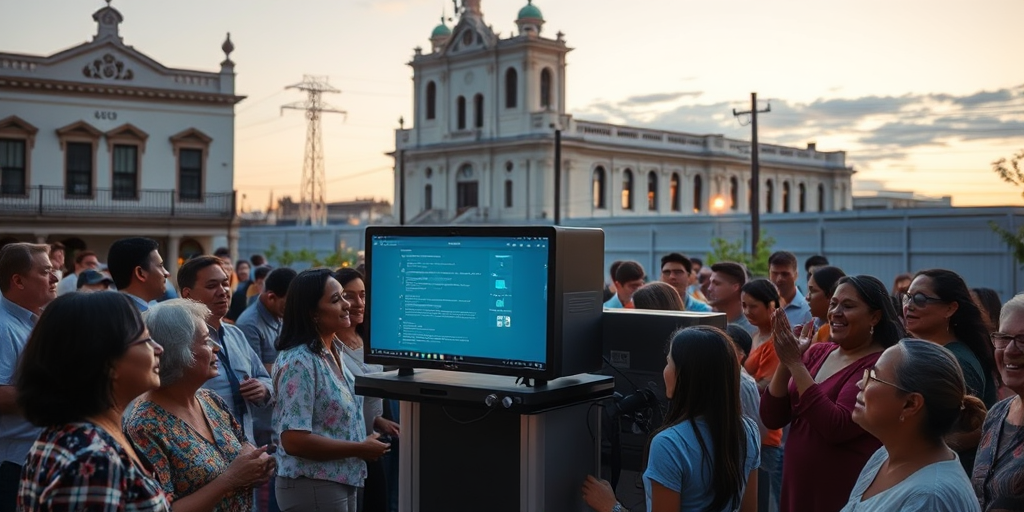
**STC’s AI-Focused CIT Program Paves the Way for Future Innovators**
In an era increasingly dominated by artificial intelligence (AI), South Texas College’s (STC) Bachelor of Applied Technology in Computer Information Technology (BAT-CIT) program is positioned at the forefront of AI education, offering students essential skills and industry-recognized certifications that equip them for competitive roles in the tech-driven workforce.
**Leading AI Education through Industry Collaboration**
Since Fall 2020, STC has integrated AI-focused microcredentials within its BAT-CIT program to align with industry standards set by tech giants like Google and Amazon Web Services (AWS). Over five years, the program has awarded over 2,250 such certificates, providing students a unique competitive edge in both state and national job markets.
“In the entire state of Texas and throughout the entire United States, no one has done such a thing,” remarked Saeed Molki, Department Chair of BAT-CIT. He emphasized that these advancements underscore a visionary approach initiated by STC President Ricardo J. Solis, along with key academic leaders. Their push for embedded industry certifications aims to ensure that students’ education translates directly into career readiness.
**Expanding Curriculum to Meet Market Needs**
Continuous improvement and adaptation drive the BAT-CIT program as it launches four new courses tailored to AI’s continually evolving scope. These include an Advanced Artificial Intelligence course and an anticipated Data Science and Machine Learning in Cybersecurity course scheduled for Spring 2026. Each course builds on the last, fostering a pathway from foundational skills in Python to machine learning, leading to mastery in advanced AI concepts.
Nicholas Hinojosa, Assistant Professor of Computer Science, highlighted the operational framework: “Essentially, students are getting a certificate with every class. Even those starting from basics like our 1301 class will leave with a Google AI Essentials certificate.”
**Local Impact: Empowering Valley Residents**
By offering these educational opportunities, STC significantly impacts Rio Grande Valley (RGV) residents. As the region becomes a nurturing ground for tech talent, local combat against tech industry stagnation gains momentum. Enhancing vocations in AI not only diversifies the local economy but also places RGV in a competitive stance on a global front.
Andrea Rios, a BAT-CIT student and president of the Computer Science Club at STC, underscores this student-first approach: “At STC, adapting to the rapid changes in the tech industry is a core teaching. Faculty are remarkable in guiding us to gauge industry demands and meet them.”
**Broader Implications for Future Growth**
As STC sets an educational precedent, the local community can expect broader economic benefits. By fortifying the workforce with cutting-edge, AI-ready skills, the program potentially attracts technological investments and boosts employment rates within the region.
Local real estate agent Jose Martinez sees the initiative as transformative: “The RGV has so much untapped potential. As our community upskills, we become more attractive to tech firms seeking locations with a ready talent pool. This opens doors to sustainable economic development.”
**Balanced Perspectives for Continued Success**
While optimism surrounds the expansion, experts like Dr. Teresa Galvan from the University of Texas Rio Grande Valley caution for balance. Long-term success must be measured not only by immediate job placement but by sustaining educational excellence and staying relevant to industry advancements.
“While tax incentives can stimulate growth, it’s crucial that they are implemented with foresight to avoid budgetary shortfalls that could affect public services,” Dr. Galvan notes about potential economic impacts.
In conclusion, STC’s pioneering efforts in AI education through the BAT-CIT program demonstrate a firm commitment to preparing Valley residents for tech-driven futures. As students step into roles as tomorrow’s innovators, the community truly benefits from this educational momentum, ensuring stability and progression in an ever-evolving digital world.
For in-depth details on STC’s Computer and Information Technologies program, interested parties can reach out via [South Texas College CIT Department](http://www.southtexascollege.edu/academics/computer-info-tech/index.html) or contact their office directly for personalized guidance.
**Community Resources Available**
For community members eager to learn more or connect with local educators regarding this educational shift, STC encourages visits to their website for more detailed insights. Additionally, informational sessions across various Rio Grande Valley locations will serve as platforms for engagement and dialogue concerning this academic evolution.