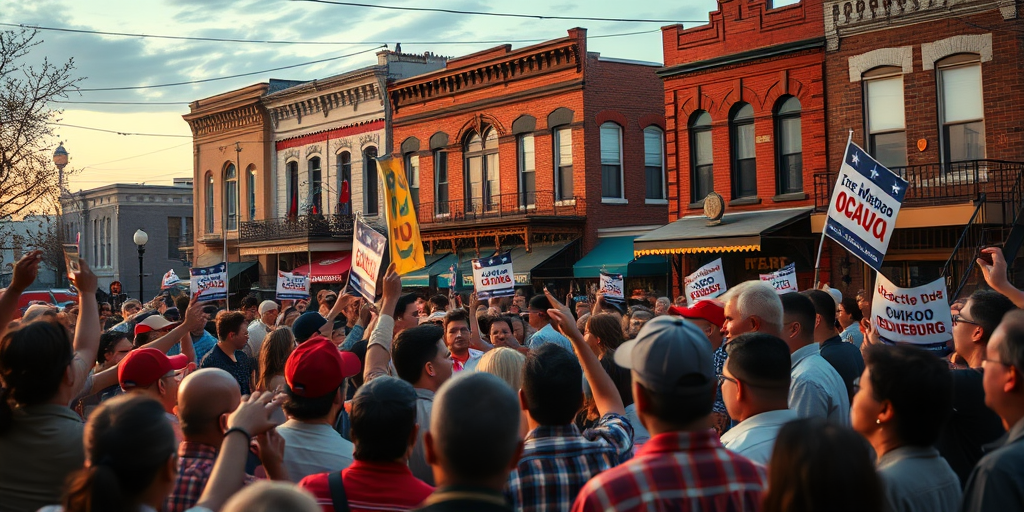
Local Races: Unofficial Election Results Reflect Significant Changes Across the Rio Grande Valley
The Rio Grande Valley witnessed pivotal shifts through local elections this season, marking significant political and economic changes for Valley residents. From mayoral elections to major propositions on property taxes, the outcomes could have lasting implications on South Texas’s social and economic landscape.
Edinburg’s New Leadership
In Edinburg, the mayoral race culminated in a notable victory for Omar Ochoa, who emerged as the newly elected mayor. His leadership is expected to usher in new policies aimed at addressing community concerns, from urban development to border security, a pressing issue given the recent seizure at the Anzalduas Bridge that underscored ongoing challenges at the border. Ochoa’s supporters anticipate a focus on public safety and economic revitalization.
Juan Garcia, an active community member, expressed optimism about Ochoa’s election. “We hope Mayor Ochoa can tackle the border issues effectively while ensuring robust economic policies that bring more jobs to Edinburg.”
Rejections on Property Tax Proposals
Significant developments were also observed in the rejection of property tax increases proposed by the Brownsville ISD and PSJA ISD under propositions A and B. These proposals aimed at generating revenue for school infrastructure faced backlash from voters wary of increased financial burdens.
Carmen Martinez, an outspoken parent in Pharr, explained the community’s sentiment. “While we recognize the need for better schools, the proposed hikes were too much for our community to bear right now. We need to find a balance that supports education without overwhelming families.”
Statewide Measures and Local Economics
In a broader scope, Texas voters overwhelmingly approved historic property tax cuts, potentially offering significant economic relief to many homeowners across the Valley. This move is viewed as a mechanism to foster economic stability, encouraging spending and investment. The relief for local citizens struggling with high property taxes is expected to trickle down, affecting local businesses positively.
Dr. Alan Reyes, an economist at the University of Texas Rio Grande Valley, noted, “These cuts could help households redirect finances into the local economy, provided that essential public services remain adequately funded.”
Community Initiatives Enrich Local Culture
Apart from political shifts, community engagement continues to reflect Valley residents’ resilience and communal ties, as showcased by various local events. The ‘Heroes and Outlaws’ concert raised substantial support for the Vannie E. Cook Jr. Cancer Clinic, while San Benito’s Casino Night generated funds for local education, illustrating ongoing philanthropic momentum within the community.
Meanwhile, in Weslaco, the ‘H-E-B Feast of Sharing’ encouraged unity through food and entertainment, echoing the strong community spirit present across the RGV.
Balancing Dynamics of Change
As these developments unfold, the impacts on local governance, community welfare, and economic conditions remain significant areas of focus. The newly elected officials and recent legislation will require careful tracking to ensure intended benefits reach their targets without unintended consequences.
For residents seeking more information on these changes or engagement with local governance, RGV news outlets and public forums offer platforms for staying informed and involved.
In conclusion, the current transition in leadership and policy within the Rio Grande Valley stands as a testament to the power of community voices and collective action. How these changes will unfold and continue to shape daily life in South Texas is poised to be both an opportunity and a challenge, reflecting the vibrant and dynamic nature of the Valley.