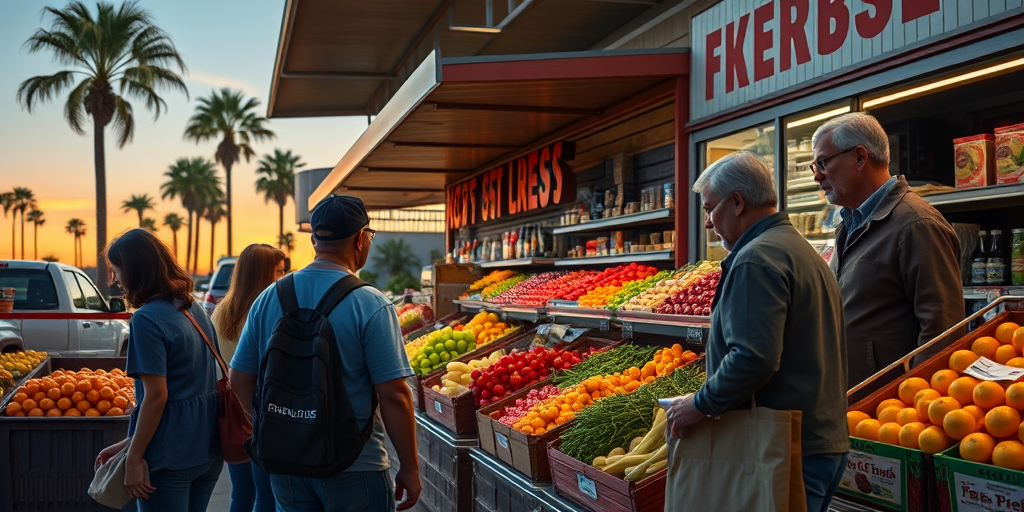
Weslaco Produce Store Struggles Amid Government Shutdown
For residents of the Rio Grande Valley (RGV), the 36th day of the U.S. government shutdown marks more than just a historical record; it’s a clear reflection of how federal issues can directly affect local communities. In Weslaco, a produce store sees fewer customers, highlighting the widespread impact on Valley residents who rely on government assistance programs like SNAP (Supplemental Nutrition Assistance Program).
The Lingering Effects of the Government Shutdown
With federal operations at a standstill, many Texans are reporting delays in receiving their November SNAP benefits, consequently affecting their ability to purchase essential goods. AJ Wark, a third-year maritime studies student at Texas A&M University, is one of the many feeling this strain. “We don’t know what we’re going to eat,” she laments, expressing the uncertainty faced by those depending on food stamps as a lifeline.
President Donald Trump’s decision to withhold SNAP benefits until a resolution is found exacerbates the issue, placing millions in a precarious situation. For business owners like Rosa Mireles, owner of Mid Valley Farms Produce in Weslaco, the drop in customer traffic is palpable. “It affects us a lot, look, where are the people?” Mireles comments, gesturing towards her empty storefront.
Local Businesses Bear the Brunt
Mireles estimates that approximately half of her customers are SNAP recipients, meaning the delay in benefits has significantly cut into her revenue. “There are people who really need those benefits,” she states. Throughout the day, shopping carts remain idle as customers, constrained by limited funds, opt to purchase only the most basic necessities. “The people are only buying the basics. It’s sad because it’s not easy,” Mireles adds.
The store’s struggle is a microcosm of the broader hardships being faced by similar small businesses across the Valley and South Texas region during this shutdown.
Community and Economic Implications
The Rio Grande Valley is no stranger to economic challenges. The area’s growth has typically been punctuated by unique barriers, including limited access to economic opportunities and heavy reliance on public assistance programs. With the current shutdown stretching federal support thin, the Valley’s communities are confronting intensified financial distress.
Pascal Cervantes, an economic analyst with a focus on the RGV, notes, “While it might appear to be a federal concern, the government shutdown has immediate and tangible impacts on local economies. Small businesses, which are often the lifeline of the Valley, are experiencing the brunt of the shutdown.”
Steps Toward Resolution
Efforts are underway to alleviate the shutdown’s impact, but an immediate resolution seems elusive. President Trump has urged GOP senators to expedite negotiations to reach a compromise. Meanwhile, other legal challenges within Texas continue to unfold. A federal judge in Austin has temporarily blocked parts of a controversial state law that restricts campus protests, indicative of the ongoing dialogue about legislative measures impacting Texans.
Additionally, the recent approval of all 17 Texas Constitutional amendments, as well as Omar Ochoa’s win in the Edinburg mayoral race, show that local governance and progress have not come to a halt amid federal gridlock.
Looking Forward
The Valley community remains resilient in facing these challenges, buoyed by a combination of local solidarity and the hope for a swift congressional solution to the shutdown. Mireles, like many other business owners, remains optimistic for a quick resolution. “I hope the government shutdown will end soon, and federal benefits will get disbursed so customers can return,” she expresses, echoing a sentiment of cautious optimism shared by many.
In the interim, local organizations and charities may become crucial support systems for residents facing food insecurity. Community leaders are advocating for increased awareness and support for food banks and other aid programs.
Valley residents struggling or seeking assistance during this time can contact local social services such as Valley Interfaith or Catholic Charities of the Rio Grande Valley, organizations known for their outreach and support activities.
A Region of Resilience
As the Rio Grande Valley navigates these compounded challenges, the community’s resolve and adaptive spirit highlight the importance of RGV news focusing on local impact and community interest. Highlighting these issues is crucial to understanding how the ripple effects of a federal shutdown traverse across local communities, touching lives in unforeseen ways, yet fostering resilience within the Valley’s heart.