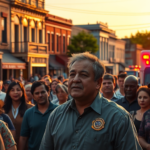
San Benito at the Crossroads: Embracing Artificial Intelligence in Local Education
San Benito and the broader Rio Grande Valley (RGV) community are on the brink of a significant educational shift, as discussions intensify around the integration of Artificial Intelligence (AI) in local schools. The San Benito News has highlighted this emergent conversation, emphasizing the increasing relevance of AI across various societal sectors.
Advocacy for AI in Schools
Joe Martinez, Ed.D., a San Benito native and a Doctor of Curriculum & Technology, is leading the charge for incorporating AI into K-12 education. Driven by The Genesis Mission, a national initiative, Martinez is advocating for the infusion of AI curriculum in schools with the belief that such integration can significantly enhance students’ future career prospects.
“AI is not just the future; it is the present, reshaping industries and creating new pathways,” Martinez stated in a recent commentary. The Genesis Mission aims to provide financial resources to schools to facilitate AI curriculum integration, making it a viable part of educational development. According to the initiative’s framework, by 2030, AI is predicted to replace up to 30% of jobs, yet it promises to open new avenues for those versed in AI technologies.
The Broader Impact on South Texas
The implications of AI adoption in education extend beyond the classroom and could have wide-reaching effects across the Valley’s socio-economic landscape. With schools in San Benito potentially pioneering these changes, the RGV could become a hub for technological proficiency and innovation. This prospective transformation positions local schools as incubators for future technologists and entrepreneurs, broadening professional opportunities for young Valley residents.
Local real estate agent Jose Martinez (no relation) underscored the potential economic benefits, saying, “If our educational institutions embrace AI, we could witness an influx of tech companies and startups looking to tap into a skilled workforce, thereby boosting the local economy.”
Counterarguments and Challenges
Despite the enthusiasm, several community members and experts voice caution. Concerns about overreliance on AI abound, with critics warning that foundational skills such as critical thinking may lag if students become too dependent on technology. Furthermore, disparities in infrastructure and funding raise equity issues — a challenge that could widen the gap between well-resourced and underfunded schools.
“I worry about our smaller, rural schools,” stated Maria Diaz, a community advocate. “Without adequate resources, we risk leaving some students behind in this tech revolution.”
Additionally, ethical and privacy concerns persist, particularly regarding data protection and surveillance. Dr. Teresa Galvan from the University of Texas Rio Grande Valley emphasized, “AI tools require robust oversight to prevent misuse and ensure privacy, especially when dealing with minors.”
AI in Medicine: A Cautious Approach
The medical field, another focal point for AI application, faces its own set of challenges. While AI has the potential to significantly aid in patient diagnosis and treatment, experts caution against overstatement of its current capabilities. Presently, AI functions primarily as a decision-support tool rather than an independent diagnostician.
Dr. Elena Rodriguez, a physician and local health advocate, noted, “AI can enhance our diagnostic capabilities, but it cannot replace human judgment. Medical professionals must remain vigilant and critically assess AI outputs to avoid potential errors.”
Future Directions and Community Engagement
Looking ahead, it’s crucial for the implementation of AI curriculum and technology to come with ample professional development for teachers, ensuring they can effectively integrate these tools into the classroom. Policymakers and educators alike must engage in ongoing discussions with the community to address concerns and optimize the benefits of AI integration.
Efforts to foster public engagement are underway, as local educational boards plan town halls and information sessions to discuss the implications of The Genesis Mission and involve Valley residents in decision-making processes.
Conclusion: A Balanced Path Forward
As San Benito and the RGV community navigate this evolving landscape, a balanced strategy that recognizes both the potential and pitfalls of AI is imperative. While embracing AI could position the Valley as a leader in educational innovation, it is essential to address the challenges head-on and ensure equitable access and ethical implementation.
Valley residents with questions or seeking more information can contact the San Benito CISD directly or access resources through the local government’s educational offices. As this story develops, its impact on the RGV could become a hallmark of change and opportunity, reflecting the community’s broader commitment to progress and inclusivity.