O’Caña Pledges to Reignite Madero International Bridge Project
In a recent announcement, former Mission Mayor Armando O’Caña has declared his intent to run for mayor in the 2026 election, emphasizing the resuscitation of the Madero International Bridge project as a cornerstone of his campaign. This project, which was previously mothballed following O’Caña’s electoral defeat in 2022, is seen as pivotal for enhancing trade connectivity between the United States and Mexico, particularly through the Rio Grande Valley (RGV).
A Vision for Renewed Connectivity
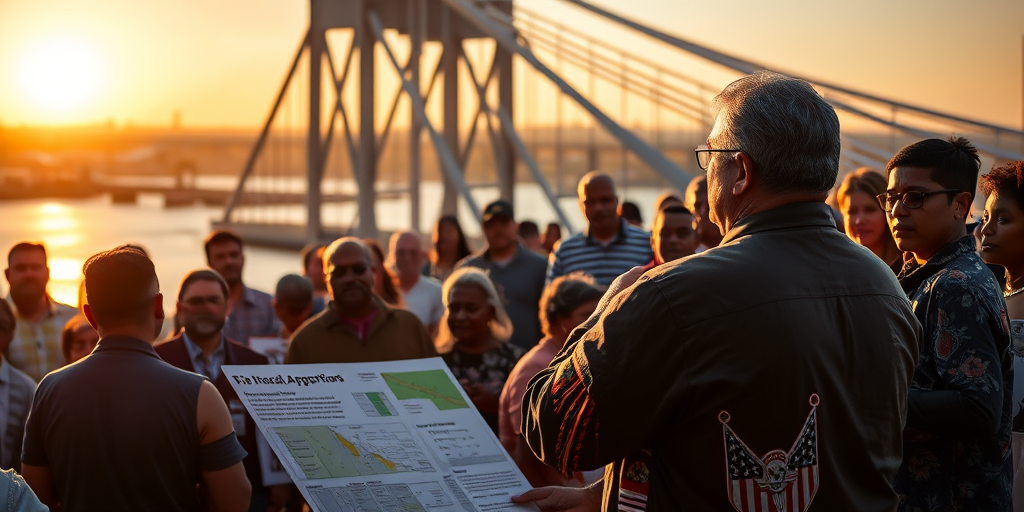
The Madero International Bridge project, aimed at establishing a freight rail link to Mexico, was shelved when current Mayor Norie Gonzalez Garza took office and chose to focus on other priorities. However, O’Caña argues that reviving this project meets a critical need expressed by economic leaders in Hidalgo County who support the drive for enhanced trade routes. “I’m committed to putting my name on the ballot to make this vision a reality,” O’Caña told veteran broadcaster Ron Whitlock in an interview for RGV Local News.
Beyond the bridge itself, there’s an ambitious plan to pursue a “Binational Diamond Rail Corridor,” connecting Dallas-Fort Worth, Houston, the Rio Grande Valley, Monterrey, and San Antonio. This endeavor promises to not only boost local commerce but also strengthen international economic ties. Triangle Railroad Holding Company, leading this initiative, is committed to high-speed rail connections extending from Mission-McAllen to major Texas cities and Monterrey, Mexico.
Progress and Partnerships
Central to advancing these rail projects is Rio Grande Valley Rail Advocates, a nonprofit organization actively engaged in land acquisition for the rail corridors, having already secured 25% of the necessary land. “We’re moving ahead, and this is just the beginning,” stated O’Caña, who is a member of the organization.
A major light rail conference is set to take place in Mission, Texas, early next year, highlighting the region’s central role in these infrastructure developments. Jean-Pierre Ramirez, renowned for his work on the Channel Tunnel project between London and Paris, will be the keynote speaker. His presence underscores the project’s significance and potential impact.
Implications for South Texas
For the RGV and South Texas, these projects are more than infrastructure enhancements; they are catalysts for economic transformation. The envisioned rail connections promise faster transportation of goods and people, fostering growth and creating jobs. Real estate agent Jose Martinez anticipates, “The RGV could become a hub of activity—this is about future-proofing our economy and enhancing our community’s standard of living.”
Despite the broad local support, there are challenges. Efforts to develop these railways in regions north of San Antonio and Houston face resistance due to competition with the Texas Central Rail system. “We’ve met barriers north of these cities, but support remains strong southward,” O’Caña remarked.
A History of Ambition
The efforts to bolster the Valley’s infrastructure are not new but echo past initiatives aimed at propelling the region into a new era of development. In the previous years, residents have seen an ebb and flow in such projects with varying commitments from political leaders. Maria Diaz, a community leader in Mission, shared, “Projects like these have the power to change lives, providing opportunities for our youth and securing a better future.”
Future Challenges and Considerations
While the potential benefits are substantial, fiscal prudence and stakeholder engagement remain vital to successful execution. Critics caution that while reducing travel time and costs is attractive, the investment’s return must be carefully analyzed against initial outlays and future maintenance.
The proposed projects also highlight the need for a balanced approach that ensures local voices are heard. “Engagement with Valley residents is crucial for tailoring these initiatives to our unique needs,” advised Dr. Teresa Galvan, an economist familiar with the region’s economic strategies.
Resources and Involvement
For Valley residents eager to learn more or participate in discussions regarding these projects, information sessions will be hosted by stakeholders. The organizers also plan to provide online resources and helplines to ensure comprehensive community involvement. These platforms aim to foster a deeper understanding of how these transformative projects could affect local lives.
In conclusion, this announcement marks a significant moment for the Rio Grande Valley and its future infrastructure landscape. By reigniting the Madero bridge and exploring ambitious rail projects, O’Caña’s vision could enhance connectivity and economic vitality. The ongoing commitment to these endeavors will ultimately define the region’s trajectory and its position within a broader South Texas and international context.