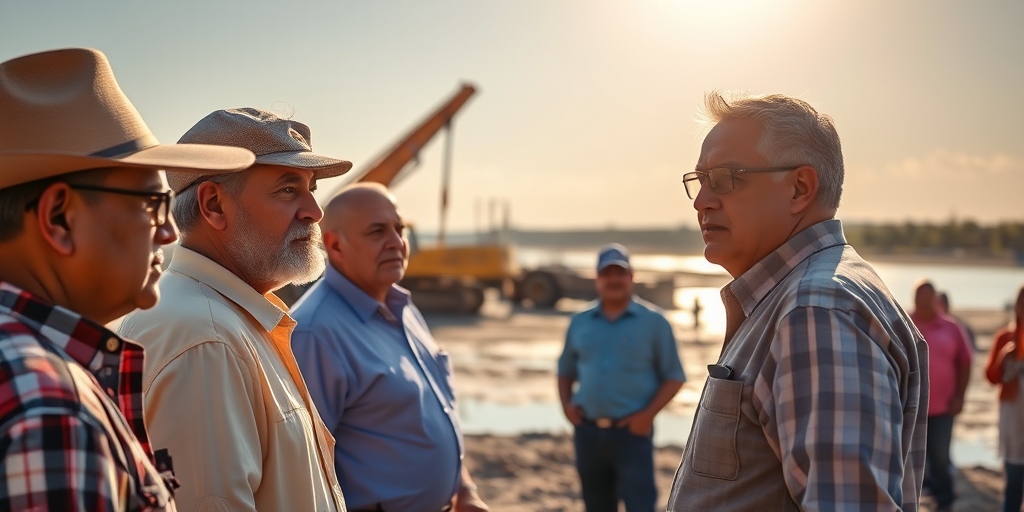
Plans Underway for New Water Pumps to Bring Flood Relief in Cameron County
As Cameron County continues to grapple with the perennial challenge of flooding, a new plan promising much-needed relief is set to transform the region’s flood management landscape. The initiative, which encompasses the installation of new water pumps and the widening of vital waterways, underscores the community’s concerted efforts to bolster defenses against floods that have historically plagued Valley residents.
New Projects for Flood Management
The initiative, pegged at an ambitious $13.5 million, has garnered financial backing from a combination of state, federal, and local resources. A noteworthy undertaking within this project is the expansion of the Adams Garden Ditch, set to widen to 400 feet. This wider channel aims to provide robust protection against encroaching waters, safeguarding homes and agricultural activities from devastating floods.
Equally significant is the construction of strategically placed water pumps along the floodway levee, slated to benefit both residential and farm zones lying between La Feria and Harlingen. The Cameron County Drainage District #6, spearheading these efforts, recently received the green light from necessary regulatory bodies to advance these projects.
“We have to move the water; we have to move the water quickly,” emphasized Gilbert Galvan, Director of Cameron County Drainage District #6. “The idea is to build these pumps and improve the structures at the levee to move the water quickly, and then start on the widening of the ditches.”
The Local Context and Community Impact
Flooding in Cameron County is more than an inconvenience—it’s a significant risk to both life and livelihood. Valley residents remember well the floods that have left lasting impacts, making this project a beacon of hope for many who have suffered repeated damage and loss.
Local farmers, often at the mercy of unpredictable water levels, stand to gain from the new infrastructure measures. As Galvan poignantly remarked, “Can you imagine a field getting three, four feet of water and they’ve got livestock? Where does the livestock go? You can’t just go pick them up and move them someplace.”
The endeavors also echo broader regional priorities in the Rio Grande Valley (RGV) to adapt to changing climate conditions and build resilient communities. As warm temperatures persist into late October, with recent forecasts predicting occasional showers amidst generally sunny, breezy weather, these projects offer timely reassurance that the Valley is proactively preparing for future challenges.
Contracts Await and the Road Ahead
However, before physical construction gets underway, the Cameron County Drainage District #6 must await the formal awarding of contracts by the Texas Water Development Board. The completion of all projects is tentatively scheduled for 2030, creating a long-term horizon for the community to anticipate improved flood management infrastructure.
This timeline requires patience from Valley residents but is met with optimism regarding potential reductions in emergency response times and costs associated with flood damage repair, both critical outcomes for a region marked by its agriculture-based economy.
Connecting Recent Developments and Future Implications
This water management strategy represents one among several steps the RGV is taking to protect and enhance its community resources. Complimenting this development is a larger tapestry of scheduled high school and cultural events, diverse in their engagement yet united in reinforcing local identity. Despite concerns such as the ongoing government shutdown threatening important services like the Hidalgo County Head Start programs, projects like these water pumps provide a narrative of resilience and progress.
Moreover, high school sports remain a vibrant focus, with ongoing competitions and band preparations—reflections of an active and culturally connected RGV populace. This holistic view illustrates how disparate elements can harmonize to support a thriving community, emphasizing the potential benefits of sustained regional investment.
Balanced Perspectives
While this project is generally viewed as beneficial, it is essential to also consider potential criticisms. Some stakeholders may raise concerns about environmental impacts or the financial weight of such a substantial investment. As in previous public policy engagements, transparency and open dialogue will be crucial in addressing various community perspectives fairly.
Dedicated avenues for residents to stay informed about these developments include forthcoming public meetings and dedicated contact lines with the Cameron County Drainage District #6, enabling active community participation.
In conclusion, the flood mitigation initiatives shepherded by Cameron County are ambitious and timely in addressing a chronic local issue, embodying a commitment to safe and sustainable living conditions. As the community navigates this journey, the Valley residents stand to witness a transformation that honors its history while fortifying its future. In this collaborative endeavor, Cameron County sets a precedent for resilience and innovation in the heart of South Texas.