New Traffic Ordinance Enhances Safety for PSJA Memorial Early College High School Area
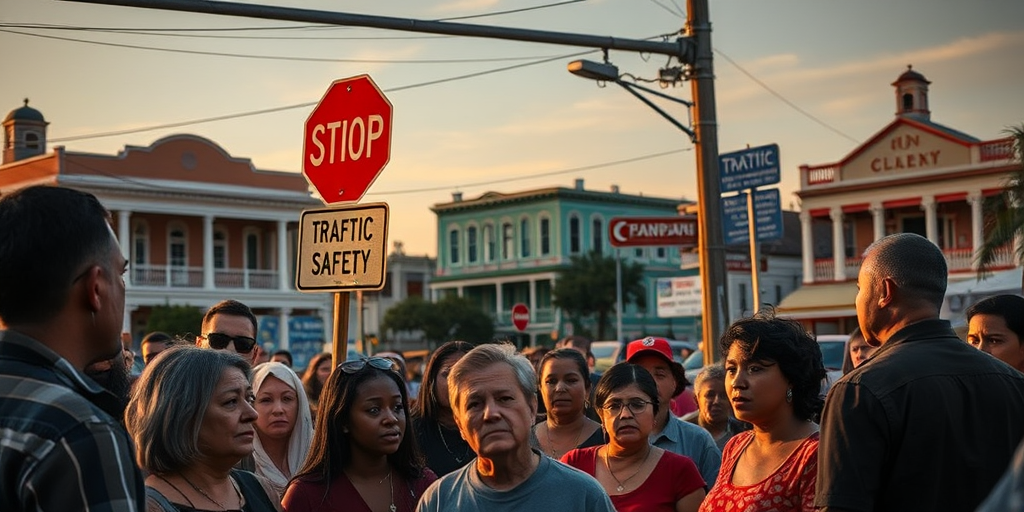
In an effort to bolster student safety and streamline traffic flow around PSJA Memorial Early College High School, Alamo city officials have approved a new traffic ordinance poised to transform daily commutes. The ordinance, heralded as a significant stride towards ensuring a safer environment for students and reducing vehicular congestion, introduces a range of traffic control measures on Ridge and Alamo roads, but the timing of its full implementation remains uncertain.
Summary of Traffic Measures
At the heart of the ordinance are new parking restrictions around the school during peak hours, reflecting the city’s commitment to improving safety. Additionally, law enforcement is empowered to issue citations for violations, thereby holding motorists accountable and potentially deterring hazardous driving behaviors.
Complementing these restrictions, the city plans to introduce new stop signs, street markings, and traffic lights, which together aim to clarity traffic norms and facilitate safer pedestrian crossings for the school’s large student body. However, during the recent public announcement, city officials were unable to provide a definitive timeline for these implementations, sparking curiosity and concern among community members eager for change.
Alamo Police Chief Victor Ramos commented on the new measures, stating, “By tightening traffic regulations and enhancing roadway infrastructure, we aim to create a safer environment for our students and parents. It’s all about collaboration—between the community, the police, and city planners—to make the Valley safer.”
Local Impact and Community Perspectives
For Rio Grande Valley residents, especially those whose children attend PSJA Memorial Early College High School, these changes come as welcome news. The campus, renowned for its focus on early college opportunities, hosts hundreds of students who frequently traverse busy intersections during commute hours. The new ordinance attempts to address persistent safety concerns like crowded streets, jaywalking, and accidents involving distracted drivers.
Maria Estrada, a local parent who regularly navigates the roads near the school, expressed her relief about the changes. “As a parent, my biggest worry is the constant stream of cars during drop-off and pick-up times. Knowing the city is implementing measures to protect our children is incredibly reassuring,” she said.
Though broadly supported, the ordinance also has its critics. Some parents have voiced frustrations over the anticipated adjustment period and potential delays, with fears that stricter enforcement could initially exacerbate congestion.
Broadening the Lens: Ties to Regional Safety Initiatives
The traffic ordinance is part of a broader regional push for enhanced public safety that parallels recent initiatives across the Valley. In nearby Donna, a new mobile application was introduced to assist residents in reporting domestic violence, underscoring a community-wide movement towards safety and welfare. Furthermore, infrastructural improvements, such as a $1 million drainage project in La Villa and sewer service expansions in Rio Grande City, demonstrate a region investing in its future.
RGV is no stranger to tackling challenges head-on. Earlier this year, the community rallied together in the wake of the Our Lady of San Juan del Valle Shrine tragedy, showcasing their resilience and dedication to improvement.
A Look Ahead
While the immediate focus stays on safety enhancements, the long-term impacts of these traffic changes may redefine South Texas cities’ approach to urban planning and community safety. Once fully implemented, these enhancements can serve as a blueprint for other schools in the Valley, advocating standardized yet adaptable safety measures.
Dr. Laura Benitez, an urban planner from the University of Texas Rio Grande Valley, highlighted, “The ordinance serves as a microcosm for broader aspirations in urban policy—redefining traffic governance to reflect contemporary needs while preserving community identity.”
For those seeking more concrete updates and engagement opportunities, city officials encourage residents to stay informed through local social media channels and regularly posted advisory alerts. This transparency is intended to guide community members through the ordinance’s eventual rollout and aid in adapting to new regulations.
In the end, while change always carries inherent challenges, Alamo’s proactive stance on traffic management near PSJA Memorial stands as a testament to a Valley committed to the safety and well-being of its youth. It is a story of community interest driving tangible action and represents hope for a safer, more accessible future for all Valley residents.