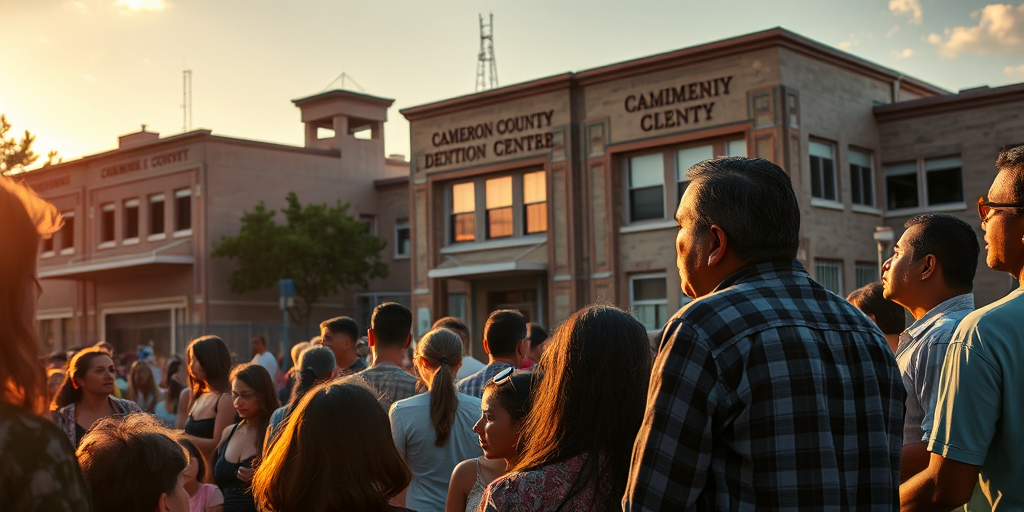
**Cameron County Family’s Quest for Answers Continues: Death in Custody Raises Unresolved Questions** Tragedy struck a Cameron County family in October 2023 when Jacqueline Barocio, a 25-year-old inmate, was found dead in her cell at the Carrizalez-Rucker Detention Center. Despite Brandy Ann Brown Daniels receiving a 30-year sentence for delivering the fentanyl that caused Barocio’s death, her family remains haunted by unanswered questions surrounding the circumstances of her demise. **Seeking Justice Beyond the Sentence** Daniels, 45, pled guilty to the charge of delivering the fatal dose, yet the legal resolution has not provided the solace Jacqueline Barocio’s family hoped for. “Do I feel like it was justice? No,” remarked Esmeralda Barocio, Jacqueline’s sister. The family’s dissatisfaction stems from an absence of detailed answers about Jacqueline’s final hours and the inability to access her autopsy report. Barocio was found dead in her cell just before 7 a.m. on October 21, 2023, shortly after her family last communicated with her. For them, the plea deal—devoid of trial testimonies—has left a void filled with speculation and frustration. **Local Impact: A Community’s Concern** In the Rio Grande Valley (RGV), where communities are intrinsically linked by family ties and shared histories, incidents like Jacqueline’s death reverberate deeply. Safety within institutions designed to hold individuals accountable while upholding their rights remains a priority for Valley residents. The case draws attention to the urgent need for transparency and reform in detention facilities across South Texas. District Attorney Luis V. Saenz explained the plea agreement, stating, “We reached an agreement on a 30-year sentence—which I thought was fair. The moment she agreed to a plea, we processed it to prevent any changes in decision.” The DA’s office stresses that their swift action aimed to secure justice, yet the complexities of the case are far from resolved in the public eye. Esmeralda Barocio finds inconsistency in the given explanation, particularly how Daniels, already in custody, managed to transfer contraband drugs to Jacqueline—a scenario that doesn’t align with the family’s perception of Jacqueline’s character and aspirations. “She wanted to get out and be with her kids; she was participating in programs for release,” Esmeralda lamented. **Connecting to Broader Issues** This case is not singular in its implications. It sheds light on broader issues of drug smuggling, inmate safety, and institutional responsibility within South Texas’s penal system. The narrative highlights a recurring challenge for local administrations—ensuring the integrity of detention practices while safeguarding individuals’ rights. Dr. Julio Marquez, a criminology expert at the University of Texas Rio Grande Valley, emphasizes systemic accountability. “In incidents like these, fostering a culture of transparency is crucial for restoring public trust. It’s vital to scrutinize the internal processes and hold any negligence accountable,” he said. **The Road Ahead: Navigating Uncertainty** For the Barocio family, closure requires accessing the complete narrative of Jacqueline’s last days, including the elusive autopsy report which could provide critical insights. Community advocacy for procedural reforms continues as locals rally alongside the Barocios, demanding transparency and fairness. Esmeralda vocalizes a collective sentiment, underlining the dignity and humanity of those under institutional care. “My sister was not an animal. She had hopes, dreams, and a family that loved her,” she passionately declared at a recent community gathering. **Engagement and Resources** To support families like the Barocios, local organizations suggest establishing independent review boards that monitor conditions and practices within detention facilities. Residents are encouraged to engage with local authorities, join advocacy groups, or attend public forums to voice concerns and contribute to positive reform. In light of these developments, the RGV community remains a testament to resilience. With a commitment to justice and clarity, residents stand united, reflecting the profound impact of Barocio’s case on local interest and the ongoing quest for truth in the Rio Grande Valley. For those seeking to support the Barocio family or similar causes, resources and contact information are available through local advocacy groups, legal aid services, and community support centers within Cameron County. **Additional Information and Community Resources** For updates and community involvement, contact the Cameron County DA’s office or local representatives. Engage with advocacy groups working towards reform and transparency in the justice system. Residents can also follow developments on local news channels and social media platforms using the hashtag #JusticeForJacqueline. **Let Us Hear Your Voice** To share your thoughts, suggestions, or inquire about community initiatives, KRGV encourages readers to submit their stories and experiences. Visit our website or contact our newsroom directly. Valleys residents are also invited to participate in upcoming town hall meetings to discuss pressing local issues and influence positive change. **Stay Informed** For continuous coverage of this unfolding story and other important news affecting the RGV, sign up for our newsletter or download the KRGV app. Your engagement supports the pursuit of a transparent, informed community.