Mission Resident’s Tireless Advocacy Brings Light to Her Colonia
In a testament to community action and perseverance, Ramona Mercado, a devoted Mission resident, has successfully petitioned for the installation of much-needed streetlights in her colonia after 35 years of sustained efforts. This milestone in local activism highlights the potential for significant community-driven changes within the Rio Grande Valley (RGV).
A Long Journey Reaching Its Destination
Alejandra Street, a key artery in the unincorporated area of Hidalgo County, has long posed a challenge for residents after sunset due to the complete lack of streetlights. Over the years, navigating the darkened street safely after dusk became a mounting concern for Mercado and her neighbors.
“During the day, there are no issues,” Mercado explained. “But at night, it’s hard to see because there are no streetlights in the neighborhood.”
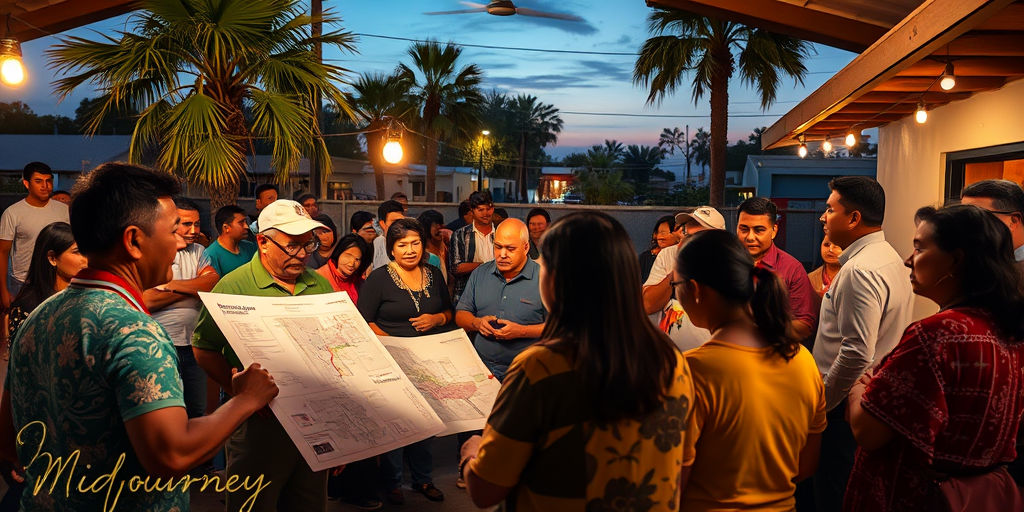
Determined to improve the situation, Mercado initiated a grassroots campaign. In March, she began knocking on doors, rallying her neighbors to support a petition demanding streetlight installation. By May, armed with over 50 signatures, she presented her case to Hidalgo County Precinct 3 Commissioner Everardo “Ever” Villarreal.
Her persistence paid off when the proposal was acknowledged, and Mercado stood before the Hidalgo County Commission in September, ensuring her community’s needs were heard and addressed. On Monday, November 10, 2025, the Hidalgo County commissioners unanimously approved the streetlight project.
Community and Political Support
Commissioner Villarreal commended Mercado’s efforts and recognized the crucial role local activism plays in driving infrastructure improvements across the Valley. “I promised to my residents that I want to light up all our subdivisions in Precinct 3. This success is an example for other neighborhoods to follow — your voices can and will be heard if you work together,” said Villarreal, encouraging continued community involvement.
The approved project comes with a $10,000 price tag, with each household contributing up to $20 annually for the service, a model that ensures residents participate in maintaining their infrastructure. The streetlights are expected to be installed within the next year.
Local Impact: Safety and Quality of Life
For Valley residents, the impact on safety and daily convenience is significant. Improved street lighting often correlates with reduced crime rates and enhanced community cohesion. In a region like South Texas, where long evening hours are spent outdoors, access to well-lit environments transforms the quality of life, making public spaces safer for social gatherings and kids’ play.
Hidalgo County stands as a representative microcosm of broader issues faced by other RGV communities where infrastructure gaps remain prevalent due to underfunding or bureaucratic oversight. Mercado’s victory shines a light — both literal and metaphorical — on the power of sustained citizen involvement to address these gaps.
Irene Lopez, a lifelong Mission resident and supporter of Mercado, shared, “For years, we felt overlooked. Ramona’s victory proves that with effort and unity, positive changes are possible. This is a victory for all Valley residents striving for better living conditions.”
Connecting to Historical Challenges
Historically, colonias — small, often informal settlements typically found along the U.S.–Mexico border, including parts of the RGV — have faced unique challenges, especially concerning infrastructure and service provision. Lack of streetlights is not uncommon and presents ongoing questions about resource allocation and equity.
These challenges are exacerbated by rapid population growth, with the RGV exhibiting one of the fastest-growing demographic dynamics in Texas. Consequently, addressing these infrastructure deficits becomes even more pressing and necessitates strategic planning backed by community-driven initiatives.
Looking Ahead: Broader Implications
Mercado and her colonia highlight an important precedent: the power of grassroots initiatives to foster change. Looking forward, it’s conceivable that other unincorporated areas in South Texas will draw inspiration from Mercado’s dogged determination, setting in motion their campaigns for essential services and infrastructure.
While the immediate future holds the promise of a brighter night for Mercado’s neighborhood, her success story emphasizes the need for systemic changes within county and city frameworks to proactively handle infrastructural improvements and civic engagement.
For those inspired by Mercado’s journey, resources and support channels are available through local government offices. Hidalgo County’s website provides guidance for residents interested in initiating petitions or understanding project funding. Visit their page dedicated to unincorporated subdivision streetlights (https://www.hidalgocounty.us/2350/Unincorporated-Subdivision-Street-Lights) to learn more.
In conclusion, in the ever-evolving landscape of RGV news, stories of ordinary residents achieving extraordinary changes highlight the region’s indomitable spirit. Mercado’s achievement represents a beacon of hope and underscores the profound local impact individuals can have by uniting for the common good.