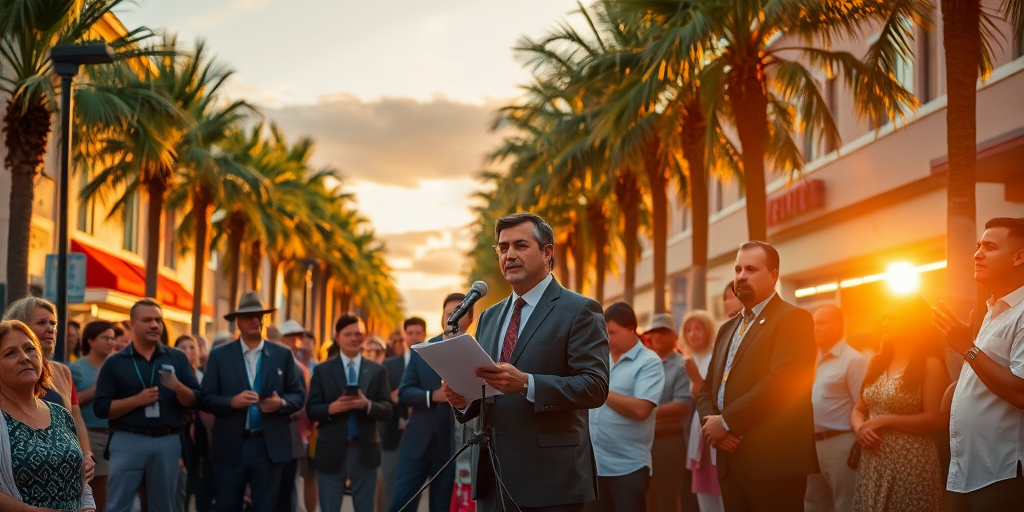
Lawmakers Review Key Legislative Session Highlights at McAllen Luncheon
On a bustling Friday in McAllen, Texas, lawmakers and community leaders convened at the legislative wrap-up luncheon, hosted by the McAllen Chamber of Commerce and Economic Development Corporation. This event marked a vital opportunity to review and discuss the 89th Texas Legislative Session’s impacts on the Rio Grande Valley (RGV), focusing on critical issues like water resources, education, tax relief, and health care.
Water Infrastructure Takes Center Stage
Water management was a dominant topic at the luncheon, highlighting the region’s urgent needs in the face of recurrent droughts. Sen. Juan “Chuy” Hinojosa of District 20 underscored the importance of water infrastructure expansion. “We set a water fund, and we must continue expanding infrastructure and finding new water resources,” he stated, reflecting a broader commitment to ensuring a sustainable water supply for the Valley’s growing population.
Meanwhile, Sen. Adam Hinojosa proposed a significant bill aimed at establishing public utility agencies. This initiative is designed to enable cities to pool resources, effectively tackling flooding challenges and ensuring a robust long-term water supply. “Our region can’t afford to face another year of severe drought unprepared,” he emphasized.
Historic Funding in Education
Education was another focal point of the legislative recap, with lawmakers touting a historic $8.5 billion increase in public school funding. As Rep. Ryan Guillen highlighted, this allocation marks the largest ever state commitment to enhancing public education. However, the issues of equitable funding and school vouchers sparked spirited debate among the attendees.
Rep. Sergio Muñoz Jr. of District 36 raised concerns about voucher programs diverting necessary funds from public schools, asserting that such moves could widen the inequality gap. On the other hand, Guillen defended the vouchers, advocating for parental choice in schooling and arguing that this would create competition that could improve educational standards across the board.
Tax Relief: A Turning Point for Small Businesses
The session also brought promising developments in tax relief aimed at businesses and homeowners, set to be decided in the upcoming November ballot. Sen. Hinojosa detailed a proposal to increase the homestead exemption ceiling, potentially up to $200,000 for seniors. Further, the elimination of significant portions of small-business property taxes is expected, which Hinojosa described as “transformational” for the Valley’s small business landscape.
The RGV’s business community has relied on such legislative measures to attract new investments and stimulate economic growth. Elizabeth Suarez, president, and CEO of the Chamber and EDC, echoed this sentiment, stating, “From tax relief to investments in water and energy, these are tangible improvements that will help our community grow.”
Advancements in Health Care
Health care reforms were also a priority during the discussion. The legislative sessions saw the introduction of a $3 billion Dementia Prevention Institute and new laws enforcing price transparency in medical services. Sen. Juan Hinojosa advocated for Medicaid expansion, emphasizing healthcare as a right rather than a luxury, whereas Sen. Adam Hinojosa highlighted the expanded telehealth services, a crucial enhancement for rural areas in the Valley.
Looking Ahead: November Ballot and Civic Engagement
With seventeen statewide propositions set to appear on the November ballot, including measures affecting property taxes and research funding, local leaders stressed the importance of voter participation. Veronica Gonzales from the University of Texas Rio Grande Valley underscored this, urging residents to engage civically: “At the end of the day, it is the voters who select the people that represent them.”
This upcoming election presents a pivotal opportunity for Valley residents to voice their opinions and influence policies that directly impact their lives. Community groups and local officials are actively working to ensure increased voter turnout, emphasizing the importance of these issues to everyday life in South Texas.
Implications for the RGV Community
As the RGV continues to experience rapid growth, the outcomes of this legislative session could have long-lasting effects on the region. Enhanced water and utility infrastructure promise increased resilience against environmental challenges, while improved education funding and tax relief could make the area more attractive to new businesses and families.
This robust review session in McAllen has clearly laid the groundwork for the Valley’s future, reflecting the community’s active engagement in shaping a bright and sustainable future. As local leaders continue to advocate for essential reforms and improvements, the Valley stands positioned to harness these changes, fostering an environment where its residents can thrive.
For more information about the outcomes of the legislative session or to engage with civic activities, Valley residents can connect with local government offices or visit the McAllen Chamber of Commerce online. This collaboration and community decision-making are central to ensuring that South Texas continues to be a place of opportunity and growth for all who call it home.