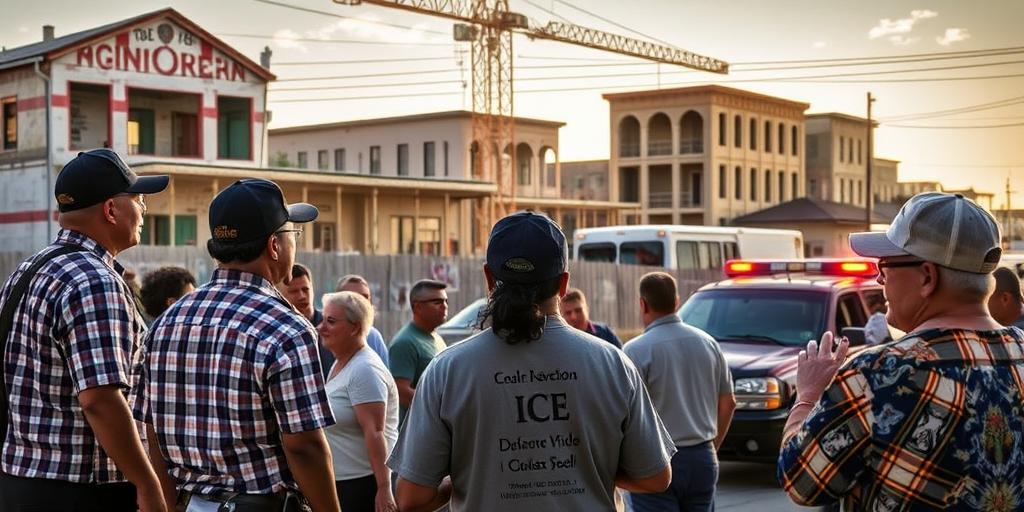
ICE Operation Leads to Arrest of Nine Mexican Nationals at Harlingen Construction Sites
Over the Labor Day weekend, federal immigration authorities conducted a controversial operation at two construction sites in Harlingen, resulting in the arrest of nine Mexican nationals. The event, unfolding amidst a slew of holiday activities in the Rio Grande Valley (RGV), brings a focused lens on the ongoing debate surrounding immigration policies in the region.
Federal Operation Amidst Holiday Bustle
The arrests were part of a “worksite op” carried out by U.S. Immigration and Customs Enforcement (ICE). The operation, conducted discreetly, targeted construction sites where authorities suspected unauthorized employment. This unfolded over a weekend marked by smaller-than-expected crowds heading to South Padre Island, despite residents enjoying Labor Day festivities, such as cookouts benefiting from holiday deals and a surge in Powerball ticket sales in Los Fresnos.
ICE officials, when reached for comment, emphasized the importance of enforcing immigration laws. “These operations are critical in ensuring a lawful workforce and protecting jobs for citizens and legal residents,” remarked ICE spokesperson Maria Gonzalez. However, the operation has sparked concerns among community leaders and residents who see it as a disruption amidst a weekend meant for relaxation and social activities.
Harlingen: The Heart of the Valley Debate
Harlingen, known for its burgeoning construction industry, is at the center of this issue. The operation has once again placed local immigration challenges under the microscope. Employment within the construction sector is a cornerstone of the local economy, with both legal and unauthorized workers contributing significantly to the region’s growth and development.
City officials have expressed mixed opinions. Mayor Luis Aranda voiced empathy for the human element involved, acknowledging the fine balance between law enforcement and humanitarian considerations. “While enforcement is necessary, it is vital to approach such situations with a sense of compassion and understanding of the regional workforce dynamics,” he noted.
Community Impact and Reactions
For Valley residents, the ICE operation poses questions about economic ramifications and community sentiment. Local businesses, particularly in construction, face uncertainty about workforce stability. Fear of potential labor shortages looms, with some contractors worried about project delays and increased costs.
Community member Eva Rodriguez highlighted the broader implications for families and local friendships. “These arrests are not just about numbers; they affect real people, their families, and the fabric of our community. Many have been part of Harlingen for years,” she expressed, advocating for more supportive and integrated policy frameworks.
Historical and Ongoing Challenges
The Rio Grande Valley has a longstanding relationship with immigration issues. Traditionally a blend of diverse cultures and ethnicities, this South Texas region frequently grapples with federal and local policy intersections. From previous high-profile raids to ongoing border security debates, the Valley’s narrative intertwines socioeconomic factors with the ongoing immigration discourse.
Previously, ICE operations have provoked public outcry and legal challenges, with local advocacy groups calling for more humane immigration reforms. “We must advance beyond enforcement and work towards comprehensive solutions that reflect our community’s needs,” stated Maria Benitez, director of the Valley Immigration Legal Foundation.
Future Implications and Community Resources
The future remains uncertain concerning ICE’s operational strategies in Harlingen and broader RGV communities. As the debate continues, the potential for policy shifts or community-led initiatives persists. It’s crucial for stakeholders, from policymakers to local civic leaders, to collaborate on sustainable solutions fostering inclusion and legal compliance.
Residents looking for legal assistance or more information can access resources through local support groups and legal aid organizations. The Valley Immigration Services Center offers free consultations to those affected, alongside public forums to discuss rights and resource navigation.
ICE’s recent operation in Harlingen serves as a reminder of the intricate balance between federal mandates and community impact. As the RGV navigates these complexities, its resilience and solidarity shine through, reflecting the intertwined stories of its diverse populace amid ongoing change.