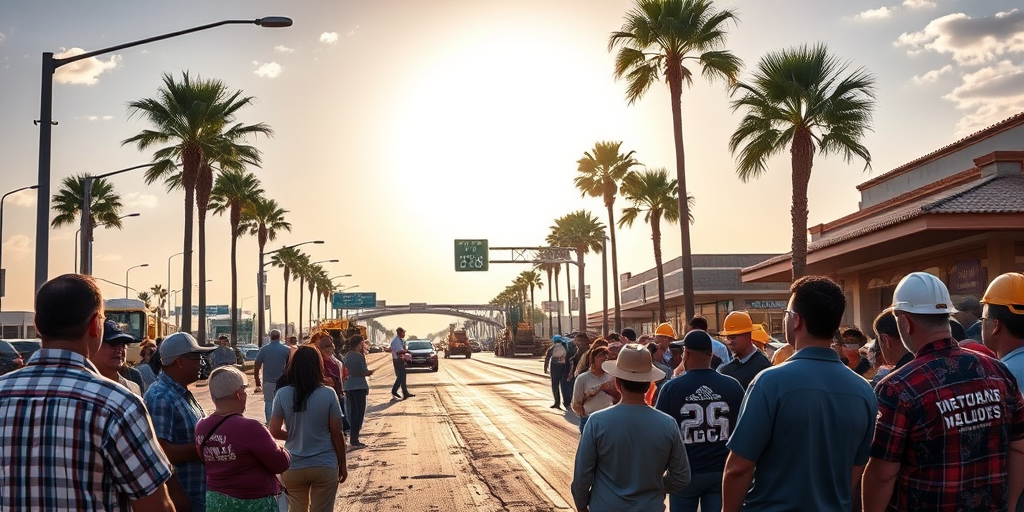
Traffic Alert: Daily Lane Reductions on I-69C Frontage Roads in Pharr
The Texas Border Business, a key source for RGV news, has announced vital changes that could impact hundreds of Valley residents: starting December 4, 2025, milling and paving operations on the I-69C frontage roads in Pharr will occur, leading to daily lane reductions. This development is crucial for those navigating the ever-busy thoroughfares of South Texas. The operation, scheduled to run until December 18, highlights the ongoing infrastructure improvement endeavors in the area but also calls for drivers to prepare for potential travel delays.
Background on the Infrastructure Project
This roadwork is part of a broader initiative by the Texas Department of Transportation (TxDOT) to maintain and enhance major roadways across the state, focusing on safety and accessibility. The I-69C project, stretching between I-2 and Nolana Loop, underscores these efforts by addressing wear and tear on the road infrastructure that sees significant daily traffic volumes. Pharr, a thriving community within Hidalgo County, serves as a crucial commercial link, making road efficiency paramount for local businesses and commuting residents.
Emily Rodriguez, a TxDOT spokesperson, explained, “The planned improvements are essential to ensure the safety and functionality of one of our critical transportation arteries. We ask all drivers to exercise patience and caution as we work towards more durable and user-friendly roads.”
Impact on the Rio Grande Valley
The Rio Grande Valley, known for its vibrant population and economic significance, relies heavily on such infrastructural updates to support its growth and sustenance. With cities like Pharr at the helm of trade and commerce, thanks to its proximity to the border, smooth and practical road access is indispensable. These lane reductions come at a time when local residents and businesses are particularly active, with holiday season activities contributing to increased traffic.
Joseph Garcia, a local business owner, expressed mixed feelings about the timing. “While I understand the necessity of doing these essential upgrades, it’s inconvenient during one of our busiest periods. However, better roads in the long-run will undoubtedly benefit my business and others,” he said.
Preparing for Traffic Changes
TxDOT and local authorities have advised motorists to anticipate longer travel times and are emphasizing safe driving practices as they navigate reduced lanes and intermittent ramp closures. From 8:30 a.m. to 4:30 p.m., drivers should slow down, stay alert, and be aware of changing traffic patterns and potential road workers on site. Alternate routes should be considered when possible to mitigate expected congestion.
Looking Back: Previous Similar Initiatives
Historically, the Valley has seen similar projects aimed at modernizing its roadways. Past efforts have not only reduced traffic incidents but also significantly improved commuting quality. These initiatives are part of a continuous strive to manage and anticipate urban growth effectively.
In reflecting on earlier endeavors, Jose Martinez, history professor at the University of Texas Rio Grande Valley, noted, “Our region’s development has often mirrored the ebb and flow of road and infrastructure improvements. Each has played a critical role in facilitating economic expansion and community well-being.”
Local Resources and Future Considerations
For residents seeking more information or wishing to report concerns, TxDOT encourages engagement through their official channels and community meetings. Local radio, community boards, and social media platforms like those managed by Texas Border Business are providing updates in real time, ensuring that residents stay informed and can plan accordingly.
As the Rio Grande Valley continues to expand, projects like the I-69C upgrades serve as key ventures towards a future where infrastructure keeps pace with developmental demand. While disruptions caused by such projects may temporarily inconvenience travelers, the long-term benefits they provide are integral to the health and progress of Valley communities.
In conclusion, as Pharr braces for these necessary road modifications, Valley residents weigh both the short-term inconveniences and the long-term gains that more efficient transportation routes promise. In keeping with the community’s visionary spirit, such improvements form the backbone of its ongoing narrative of resilience and prosperity.