**Historic Texas Home, Formerly Owned by H-E-B Family, Lies Vacant**
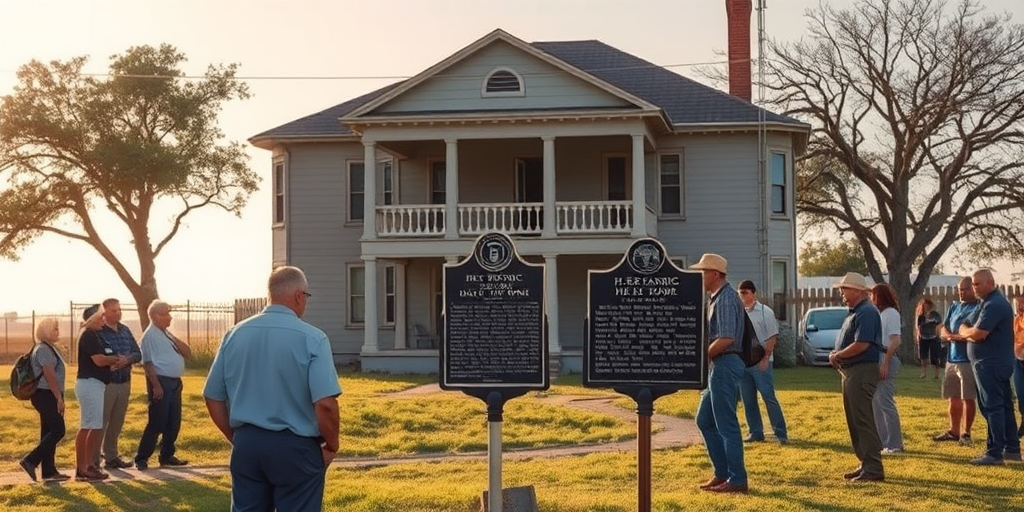
A vacant mansion in Harlingen, Texas, awaits a promising future, standing as a silent witness to the roaring success of Texas’s quintessential grocer, H-E-B. Once bustling with social events and entrepreneurial energy, the Italian Renaissance-styled home of Howard E. Butt Sr. and his wife, Mary, played a pivotal role during H-E-B’s expansive push across the Rio Grande Valley in the 1930s. Today, it faces a vastly different fate as it lies in disrepair, echoing stories of past grandeur.
**A House of Historical Significance**
Nestled within the quiet lanes of Harlingen, this mansion at 718 East Taylor Avenue once served as the residence of the Butt family. In 1929, upon relocating H-E-B’s headquarters to Harlingen, Howard E. Butt Sr. purchased the property. Within its distinguished Palladian windows and beneath spiraled columns, Butt, alongside his wife, initiated a flourishing era for H-E-B—a legacy that has grown into a grocery empire throughout Texas.
This home, a renowned symbol, once hosted vibrant social gatherings led by Mary Butt, whose philanthropy and involvement in civic activities resonated throughout the Rio Grande Valley. The family’s departure to Corpus Christi in 1940 marked the end of an era for the house. Yet, their influence continued to resonate as H-E-B expanded across South Texas.
**Current State and Ownership**
Despite its rich history, the once-majestic house has been neglected. Its Spanish roof tiles, once brilliantly vibrant, now appear worn and tired, and the bricks that once glistened in pristine cream now bear the smudges of time and weathering. Ownership since 2002 lies with Jennie Volpe, who has maintained tenancy only in an apartment within the property. The primary house remains void of life, a factor provoking concern among local Valley residents over its upkeep.
“Unlike what the house once represented, seeing it now brings a sense of loss to the community,” expressed Javier Mendoza, a long-time Harlingen resident who recalls the property’s vibrant history. “Many here remember its historical significance and hope it can be rejuvenated to reflect that past.”
**Local Impact and Future Possibilities**
The dereliction of this historical home matters to Harlingen and the greater RGV community. It not only means the loss of an architectural gem but also extinguishes a part of the local cultural heritage. Initiatives to restore such landmarks emerge as crucial in preserving community identity, suggesting potential economic avenues through tourism and education about local history.
Local historian Ana Gonzalez sees the house’s restoration as a beacon of civic pride for future generations. “Reviving this symbol of our past presents an opportunity for deeper community involvement and potentially opens doors for historic tourism—a sector yet untapped fully in the Valley,” she notes.
As Harlingen officials deliberate over future uses for the location, suggestions from community forums have varied. Some propose converting it into a museum celebrating H-E-B’s storied past to inspire local business ventures. Others advocate for its use in community-oriented spaces, aligning with Howard and Mary Butt’s philanthropic ideals.
**Balancing Perspectives**
While the house’s state prompts desires for restoration, it raises questions regarding funding, structural safety, and feasibility. Balancing its preservation alongside energetic community redevelopment requires thoughtful navigation through historical, economic, and social layers.
The Architectural Heritage Foundation recently pointed out the challenges of renovating such properties. “Preserving historical integrity while adhering to modern standards is complex, especially in smaller communities,” remarked Alex Ramirez, a foundation representative. “However, they can serve as profitable community assets if leveraged reasonably.”
**Call to Action**
For now, Valley residents who wish to stay informed or contribute ideas on the property’s future can engage with local officials through planned town halls. Commissioners’ sessions scheduled in the coming months are to provide comprehensive insights into efforts geared toward this historic abode.
As the Rio Grande Valley continues to flourish, nurturing connections to the past becomes a critical part of growth. This vacant house, rich in stories of entrepreneurial zeal and community spirit, waits patiently—making room for new voices and visions to echo through its ancient archways, propelling Harlingen’s journey forward.
In conclusion, preserving the delicate tapestry of heritage and progress remains vital for regions like the RGV, fostering robust community interest and inspiring future leaders from historical legacies well-aligned with Howard and Mary Butt’s profound contributions to South Texas.