“We’re Fading Out:” Edinburg Citrus Grower Struggles Amid Dire Water Shortage
In the heart of the Rio Grande Valley, an ongoing water crisis is threatening the livelihood of long-standing local agriculture, with Edinburg citrus grower Eric Saenz embodying the plight of many farmers affected. As temperatures rise, and water levels fall, the struggle to maintain citrus groves amid severe restrictions highlights a pressing issue for Valley residents and the broader South Texas community.
The Struggle for Survival
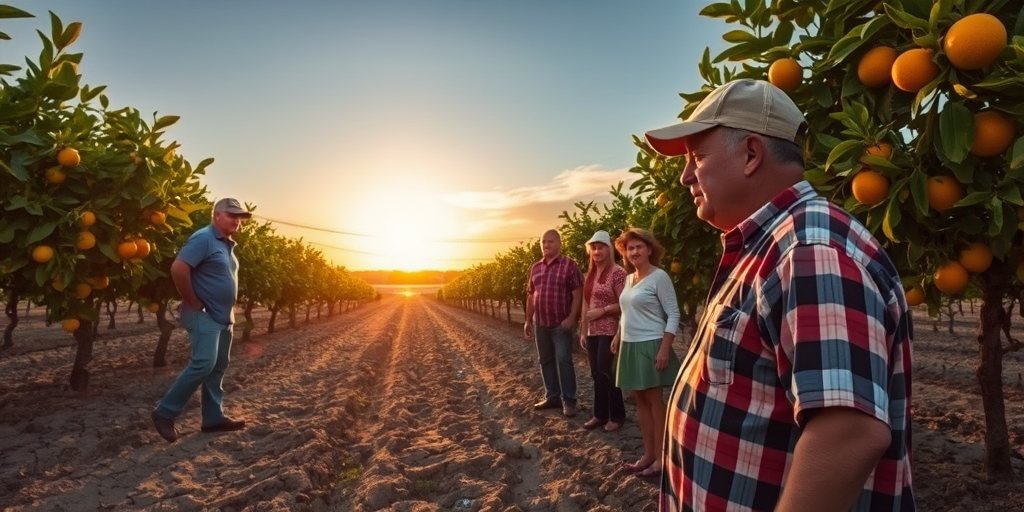
For Eric Saenz, his family’s citrus grove is more than just a business—it’s a legacy and a way of life. “I have memories from back in the day, growing up running through the orchards,” Saenz shares. But today, this cherished land faces a growing threat as a prolonged drought ravages the soil, turning what once were vibrant rows of oranges and grapefruits into an arid, cracked expanse.
Citrus growers in the RGV depend on water from the Rio Grande to sustain their groves. However, low water levels in area reservoirs have led to limited allocations, severely straining operations. “Without water, there’s no life,” emphasizes Saenz. The soil, hard as cement, and the foliage, visibly wilting and curling, speak volumes of the dire situation.
Economic Ripple Effect
The water scarcity has repercussions extending well beyond the fields. With diminished activity in the orchards, Saenz has been forced to make heartbreaking decisions affecting not just his business, but his community. “I just had to let go of some of the workers,” he admits, acknowledging the economic blow to families reliant on such employment. This decline in agricultural activity underscores an urgent need for intervention and support.
The broader economic impact is considerable, affecting numerous families who depend on these agricultural jobs in South Texas. Local economist Dr. Teresa Galvan of the University of Texas Rio Grande Valley points out, “The citrus industry is a cornerstone of the Valley’s economy. Any destabilization can have cascading effects, from job losses to increased local poverty.”
International Complications
Further complicating matters is the recent lapse in water deliveries from Mexico under a 1944 treaty. The treaty requires Mexico to supply the United States with 1,750,000 acre-feet of water over five-year cycles. Yet, Mexico ended the last cycle with a significant debt of 925,000 acre-feet of water, leaving Valley citrus growers in uncertainty.
Farmers like Saenz feel the pressure intensely, with little relief in sight despite their pleas. “We’re fading out. We’ve been asking for water, and there’s no relief there,” Saenz laments, as the clock ticks on water negotiations at the international level.
Weather Complications
The local climate only exacerbates the situation. As the Rio Grande Valley endures warm and muggy conditions with temperatures soaring into the 90s, the neighboring Caribbean faces the threat of Hurricane Melissa, a Category 4 storm. While not directly impacting the Valley, the changing climate patterns add an uncertain variable for a community already grappling with environmental challenges.
Climate expert Dr. Jose Ramirez warns, “These heightened temperatures and variations in weather patterns can exacerbate already challenging agricultural conditions, potentially leading to a longer-lasting impact on resources.”
Echoes of the Past
This water crisis echoes previous challenges in the RGV, where the balance between growth, resource management, and environmental stewardship has often been tenuous. Local residents and stakeholders have long sought sustainable solutions, mindful of the long-term viability of the Valley’s natural resources.
Looking Ahead
Despite the daunting circumstances, Saenz is resolved to fight for his grove and his way of life as long as he can. “I’m gonna fight this as long as I can, but if there’s no water, I can’t do anything,” he concedes.
Local advocacy and community partnerships will be crucial as the RGV seeks solutions to these interlinked challenges of water scarcity and economic sustainability. Residents and officials alike are encouraged to engage with ongoing consultations and resource management initiatives aiming to forge a path forward.
For those interested in contributing ideas or seeking assistance, local government has established contact points for community suggestions and support measures. Residents are urged to attend upcoming public forums and stay informed through local news outlets like RGV Local News.
As the Rio Grande Valley community faces this critical moment, cooperation and adaptability will be key to preserving the agricultural backbone of South Texas and ensuring a sustainable future for the generations that follow.