**TXDOT Seeks Feedback on Ed Carey Drive Expansion in Harlingen**
The Texas Department of Public Transportation (TXDOT) is embarking on an ambitious plan to expand Ed Carey Drive in Harlingen, one of the city’s most trafficked routes. The proposed $62 million project aims to transform over two miles of roadway into a six-lane thoroughfare, with added safety features such as five-foot sidewalks and a median to curb accidents. As part of their comprehensive approach, TXDOT is seeking community input to fine-tune the project details.
An Overview of the Expansion Plan
The project focuses on Loop 499, or Ed Carey Drive, between I-69E and Harrison Avenue, also known as FM 106. As it stands, the road features an inconsistent layout, with sections of both four and six lanes. This expansion seeks to unify the entire stretch to six lanes, thereby improving traffic flow on this critical artery, which is essential for Harlingen residents who rely on it daily.
Pedestrians and cyclists appear to be a significant focus of TXDOT’s safety measures. Beyond road widening, the plan outlines the construction of five-foot sidewalks and a median, both of which will reduce conflicts between vehicles and pedestrians, thereby preventing crashes. Additionally, improvements to the bridge over the Arroyo Colorado are included to bolster safety and traffic fluidity.
Local Insights on the Project
Community members have expressed enthusiasm mixed with caution. Jaime Hernandez, a local resident, commends the initiative but points out the urgency of addressing congestion issues. “I’ve seen the traffic worsen over the years, especially during school hours. If TXDOT doesn’t step in now, Harlingen could face the kind of gridlock you see in larger cities like McAllen,” he remarked.
Commissioner Sandra Perez of Cameron County highlighted the potential economic benefits. “Improving infrastructure stimulates economic activity, and Ed Carey Drive is essential for connecting various parts of the Valley. It’s a smart investment that could yield high returns for RGV residents.”
Community Engagement: A Pillar of the Plan
Ray Pedraza, the Public Information Officer at TXDOT Pharr District, emphasizes the importance of local feedback in shaping the project. “The public involvement process is a vital part of the development project. We encourage everyone to attend meetings or submit feedback online to discuss plans, whether it’s regarding the road’s design or its broader community impact,” Pedraza stated.
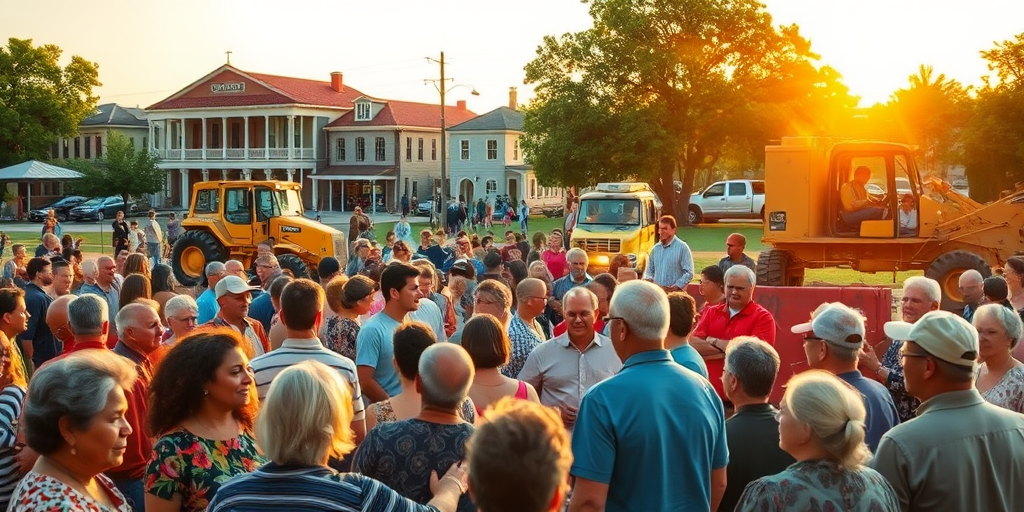
Local residents will have the opportunity to participate in both virtual and in-person sessions. One critical in-person meeting is scheduled at the Treasure Hills Elementary School cafeteria, a venue strategically chosen for its accessibility. Residents can also access further information and submit comments through TXDOT’s dedicated project website.
Historic Precedence and Future Implications
Infrastructure development is not new to the Rio Grande Valley, where rapid population growth has often strained local roads and utilities. Past projects have delivered mixed results, often dependent on community involvement and governmental transparency.
The current plan not only addresses immediate concerns but also looks ahead at potential expansions to accommodate future growth. If successful, this strategy could serve as a model for other parts of the Valley, advancing regional development in a sustainable and community-centered manner.
Potential Challenges and Considerations
No large-scale infrastructure project is without its challenges. Some residents are concerned about the construction timeline, which could stretch to 2035, delayed start notwithstanding. Others worry about potential disruptions during the building phase, though TXDOT assures minimal impact on residential properties—highlighting only one non-residential building might be affected.
Skeptics caution that public reliance on such infrastructure might inadvertently elevate property values and rents, effectively ostracizing lower-income households. Environmental impacts, particularly concerning the Arroyo Colorado bridge improvement, may also necessitate further scrutiny to ensure ecological balance.
Connecting with the Broader RGV Context
The Valley has experienced several notable incidents recently, including a brief lockdown in Donna, an arrest of out-of-town suspects, and a major crash involving a truck and farm tractor in Willacy County. These events, while disparate, underscore the importance of reliable infrastructure for community safety and cohesion.
The potential impact on high school sports, community initiatives like “Pump Patrol,” and even daily commutes cannot be understated. As temperatures peak and isolated thunderstorms loom, as forecasted by the KRGV FIRST WARN 5 Weather app, smooth traffic flow becomes increasingly essential.
Next Steps and How to Get Involved
The call for public feedback is more than a formality—it’s an invitation for Valley residents to participate actively in shaping their environment. For those interested in more information or offering input, TXDOT provides resources, including detailed plans and contact details, on their website.
In conclusion, the proposed expansion of Ed Carey Drive represents a strategic, impactful shift for Harlingen and the broader RGV region. As residents contemplate its implications, the collective voice of the community will be crucial in ensuring the project not only meets current demands but also embraces future growth responsibly and inclusively.