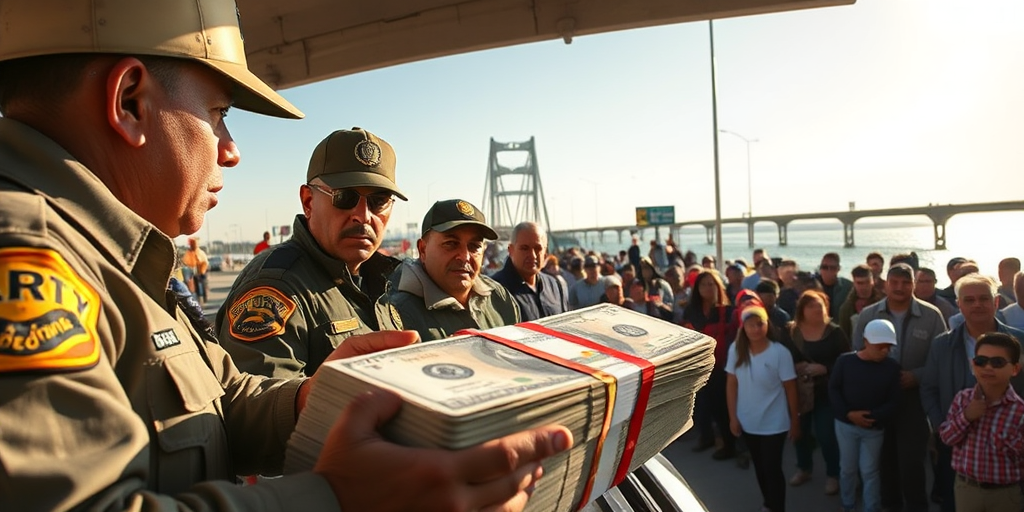
Brownsville CBP Officers Seize $70K in Unreported Currency
In a significant operation reflecting the ongoing dedication to border security, U.S. Customs and Border Protection (CBP) officers at the Brownsville Port of Entry seized $70,749 in unreported U.S. currency. This revelation emerged from an outbound vehicle inspection conducted on November 18, 2025, at the Gateway International Bridge, a crucial passage connecting the U.S. to Mexico.
Details of the Operation
During a routine outbound inspection, CBP officers utilized their multifaceted strategies, including a canine unit and a nonintrusive inspection system, leading to the discovery of the unreported bulk currency. Port Director Tater Ortiz lauded the efforts of the officers, saying, “CBP officers’ duties not only involve inspecting inbound traffic but also stopping unreported bulk currency, which are often proceeds from illicit activity, and their efforts led to this seizure of unreported currency.”
The utilization of advanced inspection technologies highlights the commitment of CBP, the largest law enforcement organization in the U.S. under the Department of Homeland Security, to maintain rigorous border security measures. In accordance with federal law, individuals carrying more than $10,000 in currency must report such amounts to CBP when entering or departing the U.S. Failure to do so can result in the seizure of funds and potential criminal charges.
Context and Background
The seizure of unreported currency underscores a broader context of transborder activity in the Rio Grande Valley (RGV). As a significant trade route, the RGV sees substantial movement of both legal commerce and efforts to bypass legal stipulations. These stringent enforcement actions are essential to maintaining lawful trade and travel, promoting economic prosperity while securing national borders.
Dr. Emily Vasquez, an expert in border studies at the University of Texas Rio Grande Valley, stated, “Such operations are critical. They don’t just prevent illegal activity but help bolster trust and safety in cross-border transactions, which are vital for the economic health of South Texas.”
Local Impact and Community Perspectives
For the RGV community, the impact of this seizure is twofold: it reflects the persistent challenges of regulating cross-border currency flow while emphasizing the effectiveness of local enforcement mechanisms. Valley residents benefit from these efforts through enhanced safety and the protection of legitimate economic interests.
Notably, the Brownsville CBP operations play a crucial role in this dynamic. By maintaining a balance between vigilance and facilitation, they ensure that the Gateway International Bridge remains a robust and secure link between the U.S. and its neighbors.
Local business owner Miguel Rios remarked on the situation, “As someone whose livelihood depends on consistent trade with Mexican partners, I appreciate CBP’s clear protocols. They help foster an environment where business can flourish legally.”
Potential Future Implications
This currency seizure may signal future trends in CBP’s operational focus, potentially leading to increased frequency and improved methodologies for outbound inspections. By continuing to refine their approaches to border security, they could further reduce illicit activities along these critical junctures.
Furthermore, this incident might encourage Valley residents involved in cross-border exchanges to remain informed on legal requirements, therefore reducing potential legal missteps and promoting smoother transactional processes.
Resources for the Community
For those directly affected by CBP’s enforcement actions or who seek to navigate the complexities of travel regulations, CBP provides robust support through its Information Center. Available resources also include information on trusted traveler programs like SENTRI, which facilitate expedited processing for pre-approved, low-risk travelers. These initiatives are part of CBP’s commitment to promoting efficient, lawful, and secure trade and travel activities.
Conclusion
Ultimately, the seizure at Brownsville Port of Entry serves as a timely reminder of the complexity involved in maintaining border security. As South Texas, and particularly the RGV, continues to grow as a pivotal region for international trade and travel, consistent enforcement of legal regulations remains indispensable. CBP’s comprehensive strategies ensure that both the economic and security interests of the community are upheld, reinforcing the region’s status as a vital hub in cross-border operations.
For further inquiries, concerned parties can contact CBP press officer Roderick Kise for media-related questions or reach out to the CBP Information Center for broader concerns. Ensuring transparency and engagement, CBP’s digital platforms provide timely updates, mediation releases, and avenues for public interaction, strengthening community ties and cooperation.
Through these efforts, Brownsville’s integration of advanced inspection technologies is yielding tangible results, enhancing the safety and prosperity of the entire Rio Grande Valley while setting standards for effective border management practices nationwide.