Government Set to Deploy Buoy Barrier Along Rio Grande Near Brownsville
The federal government has announced plans to deploy buoy barriers along the Rio Grande near Brownsville, Texas, as part of a $96 million project under the “Big Beautiful Bill” signed during the Trump administration. This move aims to deter drug and human smuggling, but it has sparked controversy among environmentalists and local officials. As Valley residents express mixed reactions, the impact of the new barriers remains a topic of significant discussion and concern across South Texas.
Plan Details and Implementation
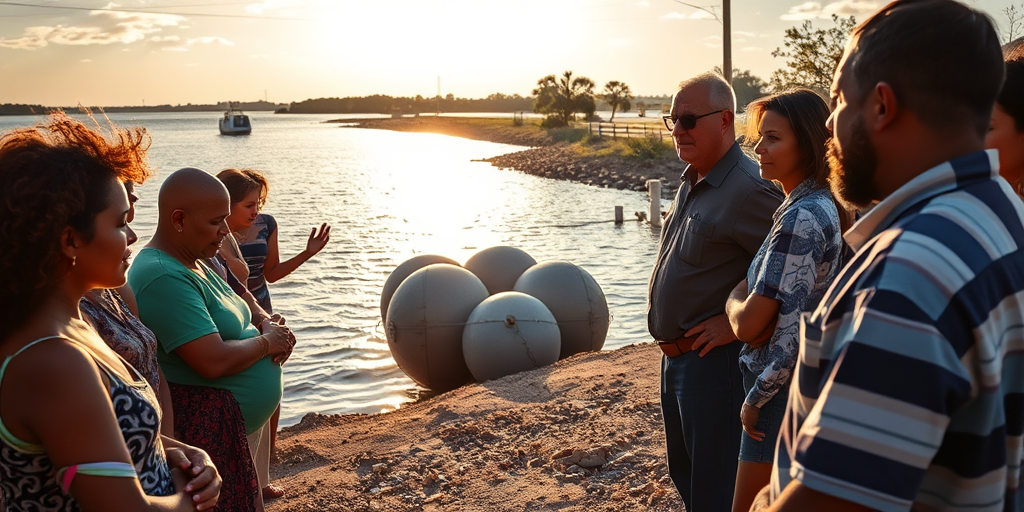
The buoy barrier project, funded by the federal government, will involve the installation of floating barriers intended to hinder illegal activities across the international border. Set to stretch over a 17-mile expanse from Palm Boulevard to the Southmost area, this initiative reflects the ongoing federal strategy to enhance border security.
The booms are similar to those deployed in other areas like Eagle Pass, Texas, and are primarily designed to obstruct illicit crossings. However, as construction plans move forward, local leaders and environmental advocates are raising questions about the barriers’ effectiveness and potential environmental impact.
Environmental Concerns
Environmentalists are voicing their worries about the potential negative impacts of the buoys on the Rio Grande ecosystem. Christopher Basaldu, Co-Founder of the South Texas Environmental Justice Network, argued that the barriers could interfere with the river’s natural flow and harm local wildlife. “They’re an insult to the environment. If the river levels get too low, these buoys won’t float, and they’ll just be sitting on the riverbed, trapping anything that comes downstream,” Basaldu warned.
The environmental perspective adds another layer of complexity to the debate, as residents consider the long-term implications of altering the natural state of such a critical water source.
Local Leadership Reactions
Cameron County Judge Eddie Trevino has expressed surprise and disappointment over the lack of communication from federal authorities about the project. Trevino questioned the necessity of such barriers, especially considering the recent decline in illegal border crossings. “Our hope is that these actions help federal law enforcement without compromising environmental concerns or resources,” Trevino stated.
According to U.S. Customs and Border Protection (CBP), border encounters have significantly decreased from approximately 130,000 in fiscal year 2024 to around 34,700 in 2025. This data prompts local officials to question whether such drastic measures are needed at this juncture.
Community Responses
The announcement has generated divided opinions among Valley residents. While some see the barriers as a necessary step for maintaining security, others view them as overreaching and environmentally destructive. The recent “No Kings” protests throughout the Rio Grande Valley, including in cities like McAllen, Brownsville, Weslaco, and Harlingen, have highlighted dissent against federal policies perceived as invasive.
Protesters, echoing sentiments nationwide, have framed this local debate within a larger context of political dissent. With a street party vibe interspersed with serious calls for governmental transparency and community-focused decision-making, the protests reflect the Valley’s vibrant civic engagement.
Previous and Ongoing Local Events
The buoy barrier controversy surfaces amidst other pressing issues in the region—ranging from ongoing traffic safety concerns in McAllen, where a vehicle recently crashed into a business allegedly under the influence of alcohol, to upcoming community-driven events like the La Joya ISD Breast Cancer Awareness Walk.
Local businesses and residents are also grappling with potential economic impacts stemming from a possible pause in SNAP benefits due to a government shutdown. This array of concurrent issues adds to the complexity of local life in South Texas, as Valley residents balance the impacts of federal decisions alongside local challenges.
Potential Future Implications
Looking forward, the deployment of these barriers could set a precedent for future security measures along the Rio Grande. As such, it is crucial for sustained communication and collaboration among federal, state, and local entities to ensure that community interests and environmental safeguards are prioritized.
The emphasis on dialogue and adaptability may ultimately dictate the project’s success, particularly if concerns about economic consequences and natural disruption persist.
In summary, the introduction of buoy barriers near Brownsville has prompted a cascade of reactions throughout the Rio Grande Valley. While some see it as a necessary push for enhanced border control, others voice concern over the environmental, economic, and social implications. As officials navigate this contentious terrain, Valley residents remain hopeful for outcomes that respect both community interests and ecological integrity.
For additional details or to express concerns, residents can reach out to local government offices or attend public forums scheduled in the coming weeks. Valley residents are encouraged to stay informed and engage actively in discussions shaping South Texas’s future.