**Elections Department Responds to Roadside Political Signage Complaints in Cameron County**
**An Increasing Traffic Hazard**
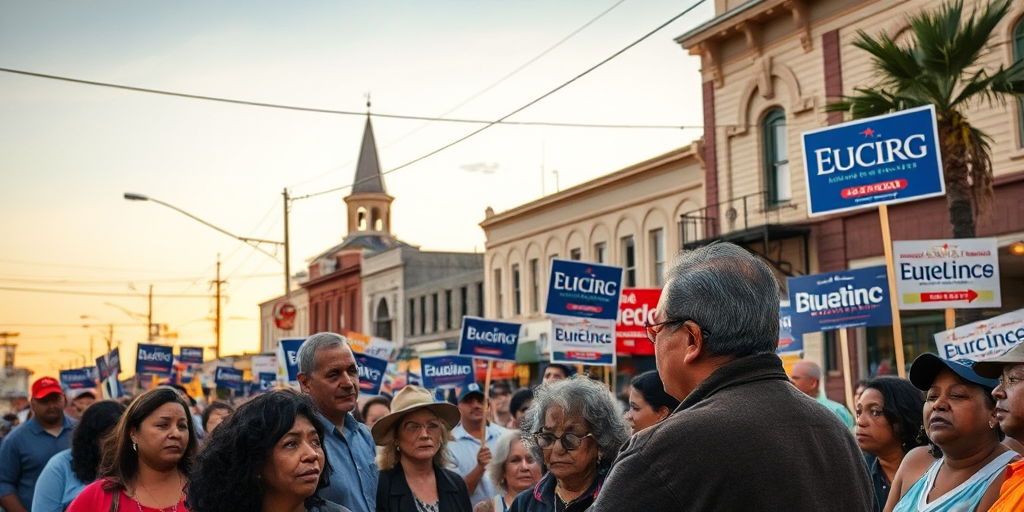
The roads of Cameron County have become a battleground of sorts—not for political debate, but for the proliferation of political signs that are increasingly being seen as a traffic hazard by local drivers. Residents of the Rio Grande Valley, who regularly travel through key areas such as Harlingen, Brownsville, and San Benito, have raised concerns over the obstructive nature of these signs along roadsides.
For drivers like Marcos Villanueva of Harlingen, the presence of these signs along Rangerville Road has turned commuting into an exercise of caution. “It’s difficult to see oncoming traffic, especially at intersections,” Marcos noted, echoing a sentiment shared by many Valley residents.
The subject has attracted considerable community interest and sparked a response from local officials, who have acknowledged the problem but also the significant challenges in resolving it.
**Officials Highlight Limited Jurisdiction**
Cameron County Elections Administrator Remi Garza has been at the forefront of addressing concerns. “We do get a lot of phone calls from people complaining about political signs,” Garza said. However, he also noted that the department’s ability to act is hampered by jurisdictional limits. Local regulations vary, and often, political speech, considered a protected right, can supersede these local ordinances.
The task of sign regulation often falls onto city governments, each with their own set of rules. Harlingen, for instance, has received reports of the problematic signage but has not yet enacted new restrictions. “Even though we recognize the issue, political signs can sometimes be placed by property owners themselves, leaving little room for municipalities to intervene if it’s within legal parameters,” a city spokesperson stated.
**Community Impact and Historical Context**
For the Rio Grande Valley—a region grappling with numerous socio-economic issues—the management of publicly placed political signage might seem minor, yet it reflects broader governance challenges. Political activism is deeply rooted here, part of the Valley’s identity. Historically, signage has been key in disseminating political messages, especially in a region where traditional media reach might be limited.
Yet today, as the RGV navigates modern infrastructure demands and a growing population, the need for smarter urban governance becomes apparent. Road users advocate not for the cessation of political communication but for a reconsideration of methods that would still respect both free speech and public safety.
**Looking Towards Solutions**
Balancing these competing needs is no simple task, yet some propose potential measures. Better inter-agency collaboration might help create consistent regional guidelines, thus providing clearer direction for roadside campaigning. Moreover, technological advancements offer tools for better visibility assessments from which transport planners and campaigners alike could benefit.
Additionally, increased dialogue between campaigns and municipalities might yield creative solutions. Setting clear post-election sign removal deadlines and leveraging social media more effectively could reduce reliance on physical signage.
**Future Implications for the Valley**
As Cameron County approaches another election cycle, the handling of political signs might hint at larger electoral and regulatory shifts. Solutions devised here could set precedents for other regions in South Texas, demonstrating how civic engagement can adapt to modern challenges while respecting constitutional protections.
Moreover, achieving balance in this issue could contribute to an evolving understanding of public space usage, fostering a community setting where activism is encouraged but not at the expense of safety and orderliness.
**A Call for Continued Engagement**
For now, Garza and other local officials encourage residents to continue voicing their concerns. “Public feedback is vital, and by expressing their viewpoints, Valley residents can drive the change they wish to see,” Garza concluded.
Community members interested in learning more about the regulations or who wish to report ongoing concerns can contact the Cameron County Elections Office. Information and updates will also be available via local news outlets such as KRGV, which remains committed to providing resources and comprehensive coverage on matters of local impact and interest.
In a region where every vote counts, the roads of Cameron County remain a visible testament to the lively and ever-present spirit of political engagement—a reflection of both challenges and opportunities within the vibrant socio-political tapestry of the Rio Grande Valley.