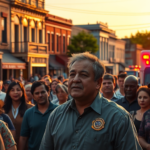
Harlingen Residents Provide Feedback on City’s Comprehensive Plan for Growth
As part of a long-term strategy to enhance living conditions and economic prospects, the city of Harlingen is actively seeking community input on its comprehensive plan for future growth. This initiative aims to better align with the needs and expectations of Valley residents by integrating their feedback into urban planning.
Community’s Vision for Development
During a recent public consultation, Harlingen residents vocalized their aspirations for the city’s expansion, emphasizing the need for more diverse shopping and dining options, as well as the creation of higher-paying jobs. This input is pivotal as it highlights what the community feels is lacking and what changes they envision for a more vibrant and economically robust Harlingen.
Local resident Cristian Escanuela shared his perspective, expressing a strong desire for the downtown area to host more business opportunities. “In downtown, I do wish there were more shopping opportunities and more businesses,” Escanuela conveyed, reflecting a common sentiment among attendees.
Lauren Vargas, another community member, highlighted her hopes for broader culinary offerings. “Maybe if we had nicer places to eat, more people would visit,” she noted, pointing out that locals frequently travel to neighboring McAllen or Brownsville for better dining experiences.
City Leadership’s Response
Harlingen City Commissioner Daniel Lopez has assured residents that their input will not be overlooked. In response to community feedback, he has announced the formation of a committee dedicated to transforming the comprehensive plan into practical action steps. “We are creating a committee that will take the plans—the downtown plan, park plan, and city comprehensive plan—and turn those into actionable steps,” Lopez explained.
Lopez has committed to a six-month timeline for developing an actionable plan, underscoring the city’s dedication to aligning with residents’ priorities. “My goal is to have it in six months to create an action plan to put these plans into action and then to start that movement,” he emphasized.
Implications for the Rio Grande Valley
The implications of Harlingen’s comprehensive plan go beyond city limits, impacting the broader economic landscape of South Texas and the Rio Grande Valley (RGV). By focusing on enhancing local amenities and fostering job creation, Harlingen positions itself as a more attractive place for both residents and businesses, which can lead to increased economic activity across the Valley.
Moreover, these developments echo a larger trend in the RGV, where cities are striving to balance growth with maintaining the distinct cultural and community-oriented character that distinguishes the region. Projects like the $2 million renovations of Oliveira Park in nearby Brownsville are part of a regional approach to improving urban infrastructure and quality of life.
Historical Context and Future Outlook
Addressing these desires for economic and infrastructural enhancements ties into a larger narrative of sustained community efforts within the RGV. Historically, concerns surrounding employment opportunities and urban amenities have been commonplace in public forums. Recognizing these issues, city officials now have the opportunity to implement strategic changes that speak to long-standing community objectives.
The current push for feedback and active follow-up represents a new chapter in inclusive urban planning for Harlingen. For residents like Vargas, the steps being taken are a positive sign. “I know better things are coming, of course,” she expressed, mirroring a cautiously optimistic community outlook.
Looking forward, these initiatives could serve as a blueprint for other Valley communities. As more cities adopt participatory approaches to planning, the region is likely to see transformations that reflect both its rich heritage and promising future.
Resources and Further Engagement
For those interested in contributing further to Harlingen’s comprehensive plan, the city will continue hosting feedback sessions to capture a broad range of perspectives. Residents are encouraged to engage with these resources to ensure their voices are part of the collective decision-making process.
Additional information and updates on the plan’s progress will be made available through the city’s official website and local news outlets. Valley residents can also reach out to the city commissioner’s office with questions or suggestions, ensuring that Harlingen remains on track to meet the diverse needs of its community.
In conclusion, the feedback gathered and the actions proposed by city leadership signify a commitment to making Harlingen a more inclusive and economically vibrant city—a commitment that echoes the collective aspirations of Valley residents for a brighter future.