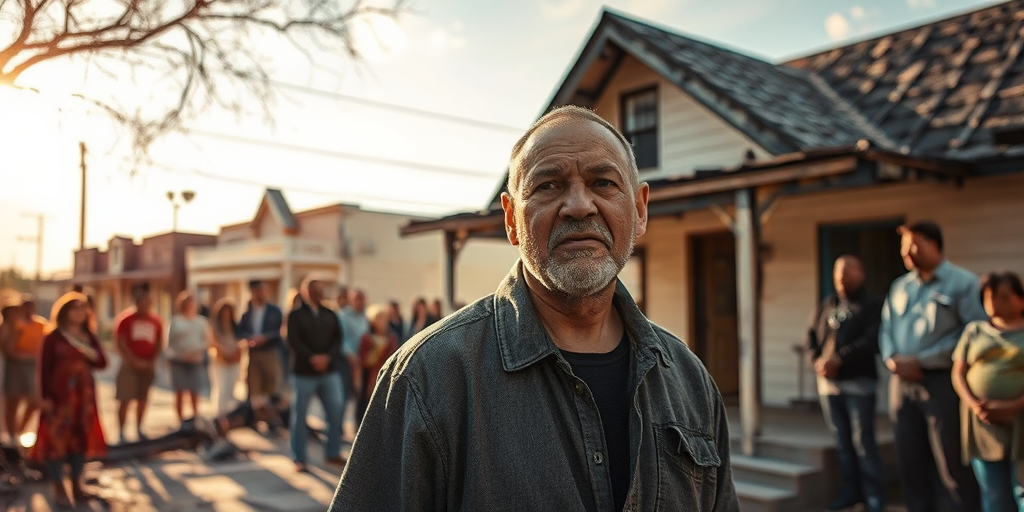
Brownsville Man Remains in Fire-Damaged Home Due to Lack of Alternatives
Amid the backdrop of economic development and social challenges in the Rio Grande Valley (RGV), the story of Crisogono Perez-Perez epitomizes individual resilience in the face of adversity. After a devastating fire destroyed his Brownsville home over a week ago, Perez-Perez, lacking insurance and financial means, continues to reside in his “unlivable” residence out of necessity. His situation sheds light on the experience of many Valley residents facing housing insecurity, as well as the broader social needs that accompany infrastructural progress in South Texas.
An Unfortunate Reality
Crisogono Perez-Perez’s home, located near Central Avenue and Highway 48, has been rendered almost entirely inhabitable by fire damage, with a collapsing ceiling and missing walls contributing to unsafe living conditions. Despite recommendations to vacate the premises, Perez-Perez has nowhere else to turn. “I don’t have anywhere else to live, that’s the thing,” he lamented, noting his struggles to stay warm amid the remnants of the destroyed home.
The fire that swept through the house left Perez-Perez and seven others without shelter. His sister, along with her husband and children, have managed to find alternative housing, while his brother relocated to a small trailer on the property. For Perez-Perez, options are scarce. Despite the community’s support, including a neighbor who helps with electricity, the reality is that insurance was never an option for the family, leaving them scrambling to cope with the aftermath.
Community Support and Personal Resilience
Faced with adversity, Perez-Perez has found solace in small acts of kindness and his desire to keep moving forward. He recounts the initial days post-disaster, when the smell of smoke was overpowering and unbearable headaches were commonplace. “We’re not in the best conditions to be living here, but here we are,” he shared resolutely, acknowledging an improved tolerance over time but dismissing its health implications. Members of the community have initiated efforts to support Perez-Perez by seeking building materials and other donations. Those interested in contributing can reach out via email to digital@krgv.com.
Perez-Perez’s plight underscores pressing socioeconomic disparities within the Valley. Local organizations and government agencies exist to assist those who find themselves in similar situations, but resources are often limited compared to the extensive need. This reinforces the significance of accounts like Perez-Perez’s that shine a light on systemic challenges within the Valley.
Infrastructure Development Amidst Societal Challenges
At the very moment when infrastructure advancements—such as Hidalgo County’s $12 million improvement project for Mile 2 West Road—are seen as vital steps in economic progress, stories like Perez-Perez’s offer a poignant reminder that alongside development must come attention to urgent social needs. Commissioner David Garza of Hidalgo County, advocating for balanced advancement, remarked on efforts to address both infrastructural and societal demands: “Improving our roads lays the groundwork for future prosperity, but we cannot overlook those who struggle daily in our communities. Comprehensive growth means supporting all our residents.”
A Broader Call for Solutions
Beyond the immediate response to Perez-Perez’s situation, his story encourages ongoing dialogue about the factors contributing to housing insecurity and ways that RGV leaders can enact policies to curb these issues. Advocates are pushing for broader access to affordable housing options, proactive measures in disaster risk reduction, and an overall increase in resources to support vulnerable populations. These actions are integral to ensuring Valley residents are not left behind amidst rapid regional transformation.
As attention turns to the future implications for the RGV community, policymakers and residents alike hope for solutions that integrate safety nets for at-risk populations while maintaining the momentum of planned growth initiatives. Balancing the need for economic development with increased social investments remains a focal point for Valley leaders seeking to protect their constituents’ interests.
Community Resources and Participation
For residents in the RGV seeking support or aiming to contribute to community-driven relief efforts, several local organizations and social services are available. The Community Development Corporation of Brownsville provides assistance and information on housing options, while nonprofit groups such as Habitat for Humanity are involved in offering home repairs and support to individuals and families in distress. Additionally, county government offices often hold public forums iteratively to engage local citizens in policy discussions, encouraging their participation for a more inclusive approach to community welfare.
In conclusion, Crisogono Perez-Perez’s story, though rooted in personal hardship, serves as a microcosm of broader challenges that municipalities in the Rio Grande Valley must address to create sustainable, equitable growth. His experience is a testament to the strength of individual resilience amidst trying circumstances and exemplifies the continued need for community support and inclusive progress in South Texas.