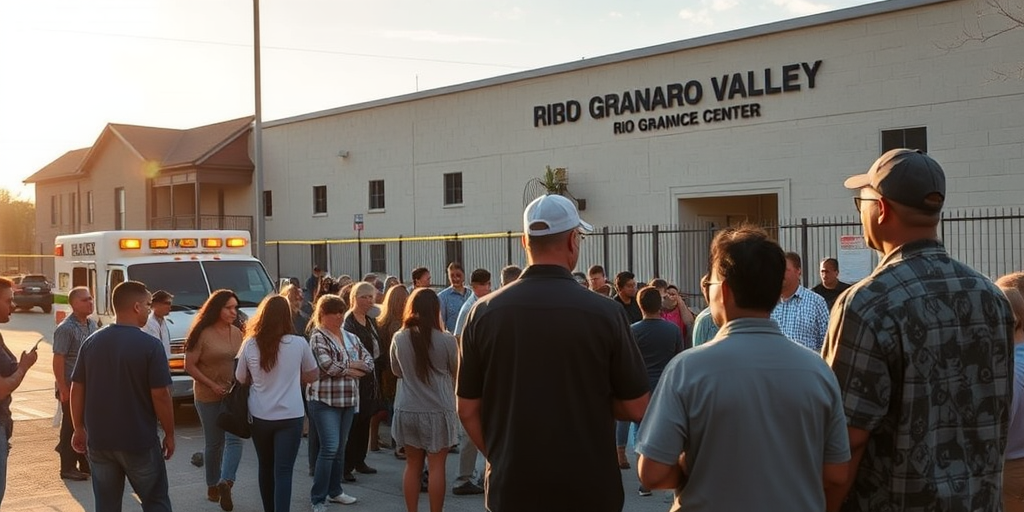
Hidalgo County Inmate’s Death Draws Texas Rangers Investigation
A good headline grabs readers’ attention by summarizing the heart of the story in a few words.
Lievan Aguirre, a 36-year-old inmate at the Hidalgo County Adult Detention Center, was pronounced dead after becoming unresponsive while restrained—a troubling incident currently under investigation by the Texas Rangers. This case adds complexity to ongoing discussions about the treatment of incarcerated people and the protocols in place for handling medical emergencies.
Incident Overview
On the night of December 2, Aguirre was found unresponsive at the detention facility. According to jail records, he had been in custody since November 21 on a charge of criminal trespass. The circumstances surrounding his sudden unresponsiveness remain unclear, but it’s been confirmed that he was in restraints when the incident occurred. Detention staff immediately sought to revive him and transported him to Edinburg Regional Hospital, where he was declared deceased.
“Hidalgo County adheres to strict guidelines aimed at ensuring inmates’ safety,” a representative for the Sheriff’s Office said in a press release. “Any incident like this is promptly and thoroughly investigated.” Still, questions remain over whether these protocols were appropriately followed in Aguirre’s case, prompting calls for a transparent investigation.
Broader Impact on the Rio Grande Valley
In Hidalgo County, and the wider Rio Grande Valley region, such incidents don’t just affect the inmates and their families but also the broader community’s trust in local law enforcement institutions. Dr. Raul Ramirez, a criminal justice expert at the University of Texas Rio Grande Valley, insists that cases like Aguirre’s must trigger meaningful dialogue. “It is crucial that as a community, we scrutinize these events to better understand systemic failings and protect vulnerable populations,” he maintained.
For many Valley residents, the issue of detainee treatment is a highly charged one, with legal and social implications. Concerns about how such incidents contribute to a national narrative about policing and incarceration in minority communities are frequently voiced at public forums in the area.
Connecting to Ongoing Discussions
Reports of detainees experiencing critical health incidents while in restraints have occurred previously in Hidalgo County, drawing criticism from civil rights groups and reform advocates. Past events have sparked debates over the adequacy of staff training in crisis interventions and medical responses.
Teresa Gonzales, community organizer for a local advocacy group, stressed the overlap between community support for various social justice issues and these isolated incidents. “We need to frame these tragedies as a call to action,” she said. “The Rio Grande Valley is ready for reforms that prioritize inmate health and safety.”
Future Considerations and Reforms
As the investigation into Aguirre’s death unfolds, local officials are contemplating potential reforms ranging from improved training for detention staff to the introduction of independent oversight mechanisms. Steps to achieve transparency and ensure public accountability are being called for by multiple stakeholders.
At a press conference, Commissioner Jessica Perez emphasized the importance of community involvement in shaping impending changes. “Rio Grande Valley residents have always shown resilience,” she commented. “A more inclusive dialogue around community care can help drive necessary policy shifts.”
Balanced Perspectives
While Aguirre’s death underlines urgent concerns, some voices caution against drawing conclusions prematurely. According to David Hernández, a former detention officer with 20 years experience, “The job is difficult, and while reforms are welcome, they need to be pragmatic and built on the nuanced reality that detention staff face daily.” He advocates for balancing reform with realistic expectations about resource allocation.
Available Resources
Local community centers will be holding informational forums for Hidalgo County residents seeking to engage more deeply with the issue. Moreover, legal aid services remain available for families wishing to explore rights and options in the wake of such incidents.
For those looking to follow the investigation closely or requires assistance, please refer to available open channels at the Hidalgo County Sheriff’s Office and community advocacy groups.
As this story continues to evolve, the dialogue it instigates concerning systemic changes and the long-term welfare of Valley residents will undoubtedly shape future community policies and structures in South Texas.