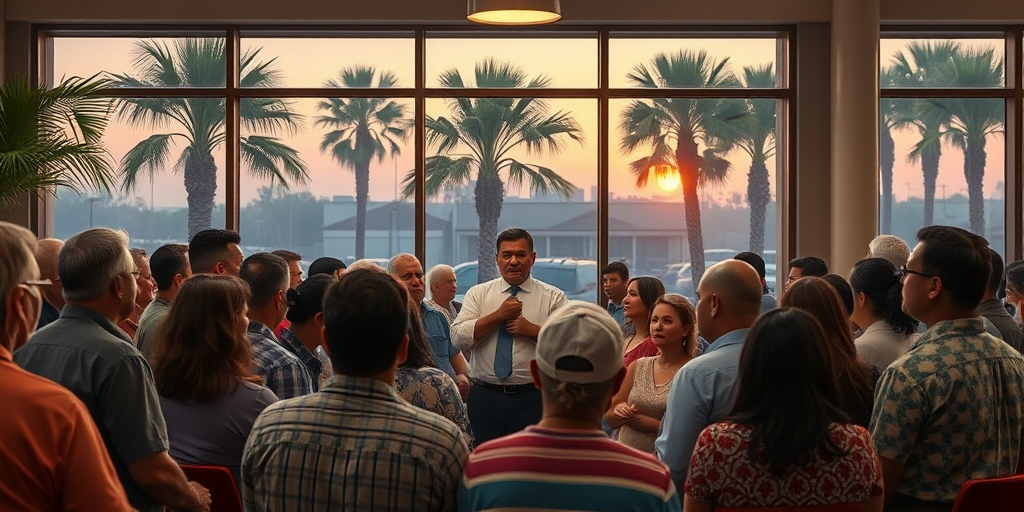
Photo Gallery: Bishop Daniel Flores Steps into His New National Leadership Role
Lifelong community advocate and spiritual leader, Bishop Daniel Flores of the Diocese of Brownsville is now poised to embrace a broader stage in his new national leadership role. This significant development not only elevates his influence but also draws attention to the Rio Grande Valley (RGV) as an integral voice in wider ecclesiastical dialogues.
Lead the Way: Bishop Flores’ Expanded Role
Bishop Flores, who has long been a revered figure in South Texas, was recently appointed to a prominent national position within the Catholic Church. This role involves working on policies that affect Catholics across the United States, bringing the insights and values of the Valley community to a national audience.
In his acceptance speech, Flores expressed gratitude and a commitment to advocacy and service. “The voice of the RGV is vital in today’s discourse. This position allows us to further community interests and underscore the South Texas perspective on faith and societal issues,” he said.
Background: A Rising Pillar of the Community
Born in Corpus Christi, Daniel Flores was ordained as a priest in 1988, ultimately becoming the youngest bishop in the U.S. at the time of his ordination in 2006. With a deep connection to the borderlands, his leadership has often focused on addressing immigration issues, social justice, and fostering a sense of unity and faith among diverse populations.
RGV news circles have frequently highlighted Bishop Flores’ involvement in community initiatives. Be it through local soup kitchens or educational programs, his efforts have consistently aimed at uplifting Valley residents while addressing broader challenges like poverty and immigration reform.
Local Impact: A Source of Pride and Hope
For residents of the RGV, Bishop Flores’ national appointment is a source of immense pride, reinforcing the region’s place in national discussions around faith and community welfare. Local parishes have celebrated his appointment, organizing gatherings to extend support and prayers.
Maria Gomez, a parishioner from McAllen, voiced her enthusiasm: “Bishop Flores has been a beacon of hope and steadfast leadership for us. His role brings much-needed attention to the concerns and aspirations of Valley residents.”
Moreover, this milestone speaks to the cultural richness and historical significance of South Texas in shaping national dialogues on faith and society. It underscores the interconnectedness of local communities with national narratives, spotlighting how regional leaders can influence larger conversations.
Linking to Past and Present Issues
Bishop Flores’ expanded leadership is timely given ongoing issues in the RGV, such as immigration and social inequality. His voice on the national stage can amplify local concerns and foster greater understanding among communities beyond the Valley.
In previous interviews, Flores has articulated the unique challenges faced by border dioceses, emphasizing the need for compassionate and inclusive immigration practices. His new role provides an influential platform to lobby for more humane policies directly impacting the RGV.
Looking Ahead: Anticipated Developments
As Bishop Flores steps into this national role, RGV residents are optimistic about potential advancements in local and national policymaking concerning immigration, racial equality, and community welfare. His appointment may encourage more dialogues between church leaders and policymakers at various levels to address these issues holistically.
Dr. Roberto Hernandez, a local sociologist at the University of Texas Rio Grande Valley, offered insight: “Bishop Flores’ leadership promises a bridge-building approach, crucial for addressing polarized viewpoints and promoting solutions that reflect community interest.”
Maintaining Balance: Diverse Perspectives
While Bishop Flores’ appointment has been met with enthusiasm, some voices within the community call for balancing religious leadership with secular governance. These perspectives advocate for ensuring that religious views do not overshadow diverse beliefs in public policy discussions.
Efforts are also underway within diocesan councils to engage young people in discussions about faith’s role in modern society and to inspire the next generation of local leaders through Bishop Flores’ example.
Community Engagement: Getting Involved
To stay informed and connected with initiatives under Bishop Flores’ leadership, Valley residents are encouraged to participate in local church events or councils. Opportunities to volunteer or engage in cross-community dialogues are abundant, with details available through parish offices or the diocese’s website.
In this era of increased national focus on diverse voices, Bishop Daniel Flores’ new role not only elevates his influence but affirms the critical place of the Rio Grande Valley in shaping broader conversations. His leadership is a testament to community resilience and the unyielding pursuit of justice and compassion for all.
In reflecting on this dynamic period, the RGV community stands both as a foundational support and a beneficiary of Bishop Flores’ journey, embodying the rich tapestry of South Texas culture and commitment to progress.