**New $3 Million Drainage Project Set to Transform Flood Management in Harlingen**
In a significant move to address persistent flooding concerns, Harlingen city officials have embarked on a $3 million drainage project. This crucial effort aims to mitigate stormwater-related issues that have historically affected the area, promising a substantial improvement in local infrastructure and quality of life for residents.
**The Project at a Glance**
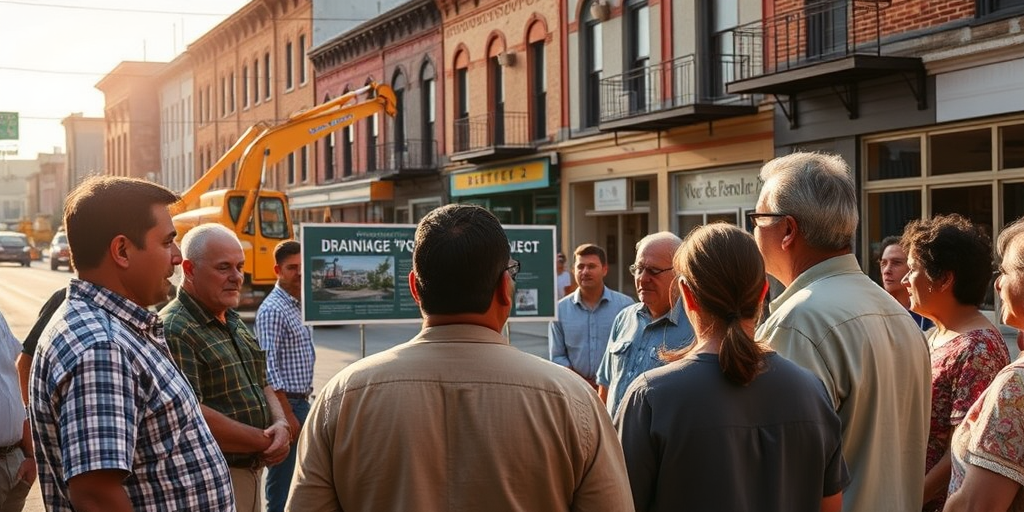
The ambitious drainage project, initiated earlier this November, is designed to dramatically enhance the area’s ability to manage stormwater. By installing 48- and 54-inch pipes across a 5,000-foot stretch along 5th and 7th Streets, the initiative is expected to triple the stormwater capacity of critical flood-prone areas. The project was identified as a priority in Harlingen’s 2008 hazard mitigation plan, but funding to commence construction only became available last year.
“We’re really excited about it,” said District 2 City Commissioner Daniel Lopez. “It’s the 5th and 7th Street stormwater drainage plan, and it’s going to make a significant difference in how we handle stormwater in Harlingen.”
**Local Impact: Providing Relief for Valley Residents**
The drainage project represents a critical infrastructure improvement for Harlingen, providing long-awaited relief for residents who have experienced frequent flooding. One such resident, Ted Picacio, has grappled with flooding issues for over 16 years. “When it gets really flooded, big vehicles, or these monster trucks, they slam the water and all these waves come over,” Picacio explained. “This new drainage project could finally bring some relief.”
By expanding the stormwater management system, city officials anticipate fewer disruptions during heavy rain, leading to safer and more accessible roads for Valley residents.
**Context and Historical Challenges**
Flooding has been a persistent challenge in Harlingen and throughout the Rio Grande Valley (RGV), where sudden rainstorms can quickly lead to dangerous road conditions. The Valley’s flat terrain and regional climate exacerbate this issue, causing frequent flash floods and standing water.
Harlingen’s new drainage initiative reflects broader regional efforts across South Texas to tackle similar challenges, aligning with community interest in enhancing local infrastructure resilience.
**Balancing Optimism with Realism**
While the new drainage system is expected to be completed by November 2026 and promises substantial improvements, it is crucial to ensure the project stays on track. City officials, however, are confident in the face of upcoming wet weather, asserting that the current timeline for completion remains feasible.
“Alone, these drainage improvements do great, but when you start putting them all together, you’re going to see a massive and a major change in our stormwater response,” Commissioner Lopez added.
**Connection to Broader Community Efforts**
The timing of this project’s inception is particularly poignant, given recent community-driven initiatives to support Valley residents. Local efforts, such as the Thanksgiving meal distribution by the McAllen Salvation Army and a canned goods collection drive by a Weslaco stylist, highlight the RGV’s strong sense of community and willingness to support one another.
Such initiatives not only demonstrate local resilience but emphasize the importance of municipal projects that seek to improve everyday living conditions for residents.
**Looking Forward: Continuing to Build on Success**
In addition to alleviating immediate flood concerns, Harlingen officials view this project as part of a broader strategy to enhance the city’s infrastructure and boost local economic growth. By providing more reliable city services, the region becomes more attractive to potential residents and businesses, potentially leading to increased development and prosperity across the Valley.
As the project progresses, city officials and community members alike will be closely watching its impact on Harlingen’s overall stormwater management strategy. If successful, it could serve as a model for future projects throughout the Rio Grande Valley, reaffirming the commitment to building a stronger, more resilient community.
For Valley residents seeking more details or wanting to express feedback, the Harlingen city offices will continue to update the community through various channels, ensuring that public engagement remains a priority as the project advances.
In conclusion, the new drainage project marks a significant step forward in addressing the flooding issues that have long impacted Harlingen. As the project takes shape, it embodies a concerted effort to enhance local infrastructure, safeguard community interests, and bolster the resilience of the entire RGV region.