**Farmers in Reynosa Protest for Fair Trade: Blocking Access to Pharr Bridge**
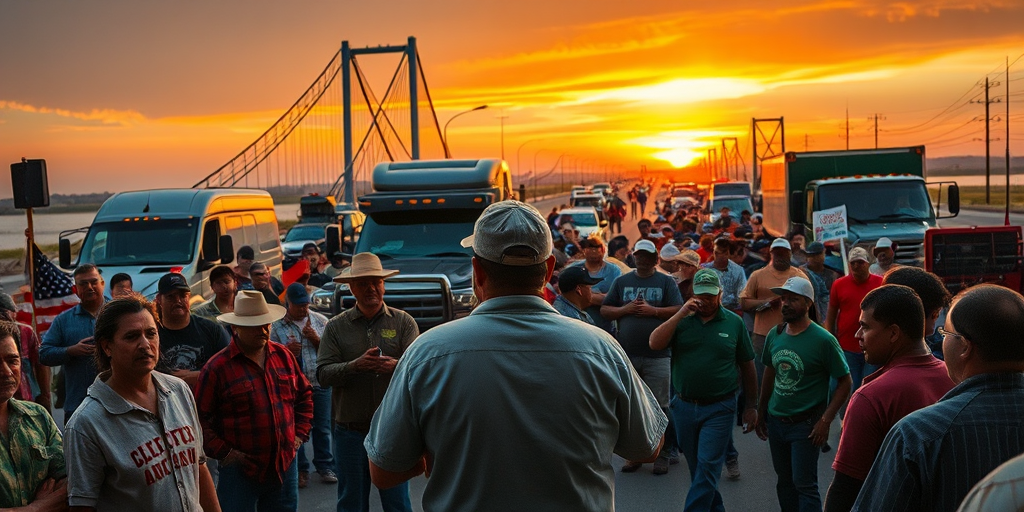
This week, a significant protest unfolded as farmers in Reynosa, Mexico, began blocking access to the Pharr International Bridge, a critical trade link between Mexico and the United States. This is part of a larger national strike aimed at securing better conditions for domestic agriculture. The protest stems from growing frustrations over the influx of cheaper grain imports, which have undercut local farmers’ profits, and a demand for increased federal aid.
**Background and Context**
The Pharr Bridge is an essential hub in U.S.-Mexico trade relations, handling over 65% of the nation’s produce imports from Mexico and facilitating an annual trade value exceeding $47 billion. The bridge’s closure threatens to disrupt these figures significantly, showcasing the high stakes involved. Farmers’ grievances anchor on the financial strains caused by competing against low-cost international imports, notably grains like sorghum, corn, and soy.
Local farmer Juan Manuel Salinas, president of the Northern Tamaulipas farming group, expressed the sentiment of many. “We are not asking for charity; we are asking for a level playing field,” he stated. “The government needs to recognize the pressure we are under and support us accordingly.”
**Local Impacts on the RGV**
The blockade at this critical juncture impacts Texas, particularly the Rio Grande Valley, in numerous ways. The economic ramifications could ripple through various sectors reliant on cross-border trade. Erik Garcia, a transport driver, narrowly made his delivery from Reynosa to Pharr before the protest commenced. “Our livelihoods depend on this connection staying open,” Garcia remarked, highlighting that any prolonged disruption could mean significant financial setbacks for local businesses involved in trade.
Moreover, given the substantial portion of U.S.-bound produce crossing this bridge, the ripple effects on local agriculture and logistics sectors could be profound. With supply chains already strained, additional delays could lead to shortages or increased costs in South Texas markets.
**Community Perspectives and Concerns**
Valley residents have mixed reactions to the ongoing situation. Some, like business owner Linda Trevino, empathize with the farmers’ plight. “These are hardworking people seeking fairness in their industry. While it’s inconvenient, it’s a cry for help that we should acknowledge,” she said. Meanwhile, others feel the brunt of the disruption more acutely, particularly import-export businesses seeing daily losses in trade.
To date, the protest has largely remained peaceful, though authorities remain vigilant. Law enforcement is working to ensure safety on both sides of the border while urging governmental dialogue with the striking farmers to seek a swift resolution.
**Historical and Ongoing Issues**
This recent action is part of a longer narrative of challenges facing the agricultural sector in both Mexico and South Texas. The struggle against cheap imports has been ongoing, further exacerbated by global market conditions and shifting trade policies. Historically, agricultural protests have sparked broader discussions about trade agreements and local economic supports necessary to sustain regional food industries.
**Potential Future Implications**
Should the protests persist, the economic impacts could extend beyond short-term losses, influencing future policy and trade negotiations between Mexico and the U.S. The need for diplomatic engagement and economic strategies that safeguard farmer interests while maintaining trade efficiency is more pressing than ever.
Furthermore, if such blockades become a recurring strategy for protesting groups, there could be calls for the development of more robust trade route alternatives or increased measures to prevent similar disruptions in the future.
**Resources and Contact Information**
Valley residents and businesses seeking assistance or information amid these disruptions can contact the local Chamber of Commerce or trade association offices. Additionally, regular updates are provided through local news outlets, ensuring that the community remains informed of developments.
As this situation continues to unfold, the story of the Reynosa farmers underscores the broader global challenges facing agriculture today—a complex interplay of local needs and international market forces. For the people of the Valley, it serves as a vivid reminder of the fragile connections that underlie our shared economic landscape.