Farmers in Reynosa Block Bridge Access, Stoking Economic Concerns in the Valley
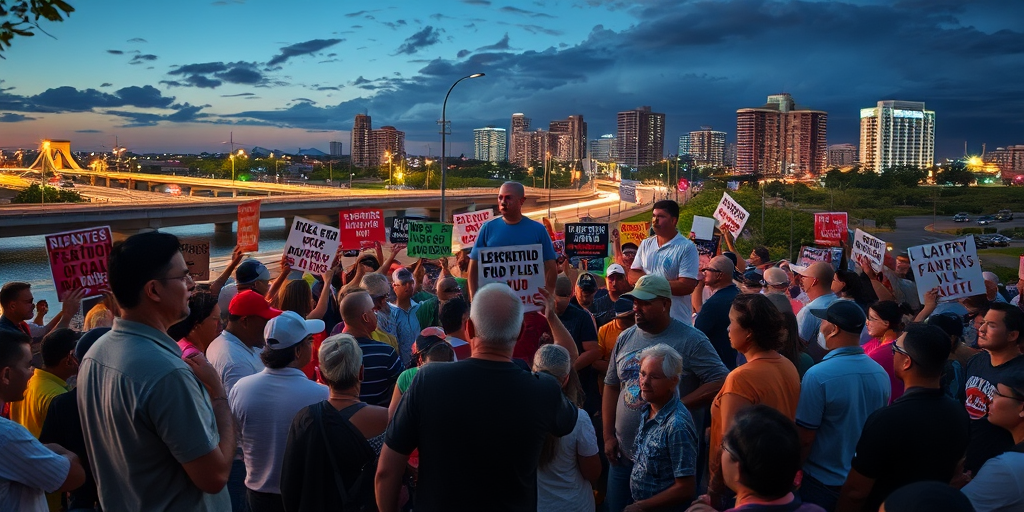
In a dramatic escalation affecting the Rio Grande Valley, farmers from Reynosa have blocked access to the Pharr International Bridge as part of a national strike. This blockade, motivated by these farmers’ demand for government assistance amidst an influx of cheaper agricultural imports, poses significant economic challenges for South Texas, particularly as it impacts the crucial trade flow with Mexico.
Significance of the Pharr International Bridge
The Pharr International Bridge is not just another port of entry. As the third-largest port in Texas and the seventh-largest land port nationwide, it is a vital artery for commerce between the United States and Mexico. The bridge handles more than $47 billion in annual trade, overseeing 65% of the nation’s produce imports from Mexico. The current blockade, therefore, represents more than a local inconvenience; it is a potential economic disruption with far-reaching implications.
“These disruptions could severely affect supply chains, particularly for produce that Valley residents depend on,” noted John Villarreal, a logistics expert familiar with South Texas trade routes. “The Pharr bridge is integral to our operations, and any prolonged halt can ripple through the economy here.”
Farmers’ Demands and Concerns
The farmers’ protest centers around grievances regarding the competitive disadvantage posed by cheaper grain imports. Many agricultural producers in Mexico have been vocal about their struggles, asserting that without federal aid, sustaining operations for crops like sorghum, corn, and soy is becoming increasingly untenable. This sentiment was echoed by Juan Manuel Salinas, president of the Northern Tamaulipas farming group, who urged the Mexican government to provide substantial aid to the farmers.
“In such trying times, we are only asking for assistance that reflects our contributions to the economy,” Salinas emphasized. “We are not just producers; we are an essential part of the trade equation that links our countries.”
Local Impact: Economic Reverberations in the RGV
The standoff at the bridge directly affects various economic activities in the Rio Grande Valley, especially those linked to produce trading and transportation. Valley residents and business owners fear a prolonged blockade could lead to shortages and increased prices.
Erik Garcia, a local transporter specializing in moving goods from Reynosa to Pharr, shared his concerns: “I was fortunate to make my delivery before the blockade took effect, but many others aren’t so lucky. Any delay can result in significant monetary losses, not just for us, but for businesses relying on timely shipments.”
Historical Context and Ongoing Issues
This situation is reminiscent of previous disruptions at the border that have highlighted the vulnerabilities of the cross-border trade system. Past blockades and protests have underscored the need for more resilient and coordinated approaches to handling such disruptions.
Notably, the economic interdependence between RGV and neighboring Tamaulipas means that challenges for farmers there quickly transmute into local issues here. Previous incidents have hinted at underlying systemic issues that require regional cooperation and strategic planning to address effectively.
Potential Future Implications
While immediate effects can already be felt, the longer-term implications could be more profound if resolution delays. Protracted protests risk raising tensions between local stakeholders and could necessitate diplomatic engagements or policy revisions to placate affected parties.
There is also the possibility of innovation emerging from this challenge, such as investing in infrastructure improvements or advocating for policies that buffer such economic shocks. For Valley residents, maintaining dialogue with counterparts in Mexico is crucial to avoid future economic impasses.
Voices from the Community
Local officials maintain a cautiously optimistic outlook, with Cameron County Commissioner Miguel Juarez stating, “We’re closely monitoring the situation in hopes of a swift resolution. Our primary goal is to work collaboratively with our Mexican counterparts to ensure minimal disruption and promote mutual economic prosperity.”
Nonetheless, diverse perspectives exist. While some worry about the immediate economic impact, others view the farmers’ grievances as a legitimate call for equitable trade practices that cannot be overlooked.
Resources for Affected Individuals
Valley residents seeking information on cross-border trade developments or local business impacts can consult resources like the KRGV FIRST WARN 5 Weather app for updated alerts, as well as participate in community forums facilitated by local chambers of commerce.
The upcoming weeks will be pivotal in resolving the stand-off at the Pharr bridge. Regardless of the outcome, the event reinforces the interconnected nature of our communities and the importance of addressing issues collectively for the benefit of everyone in the Rio Grande Valley. As the situation develops, residents can rely on RGV news outlets to provide timely updates and community resources.