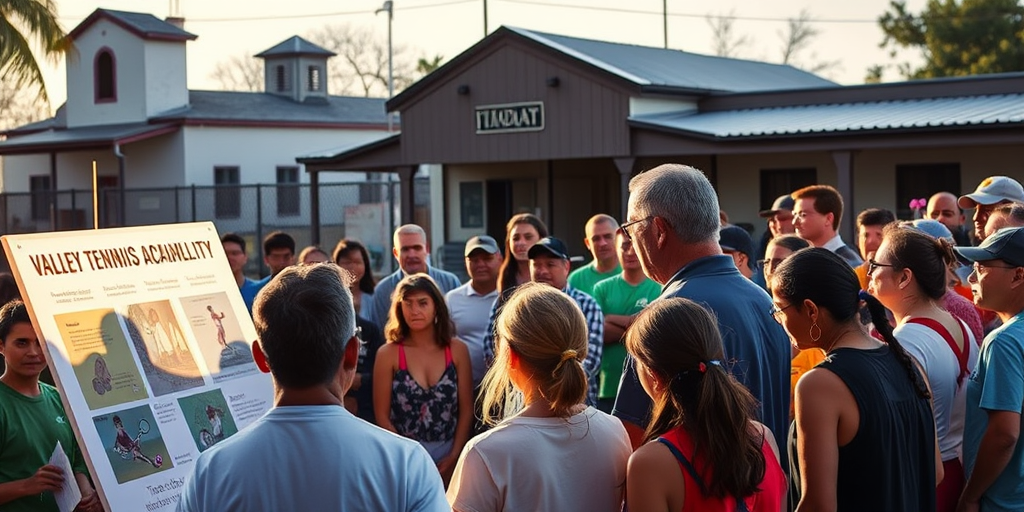
Valley Tennis Academy in Mission on the Hunt for New Training Grounds
The Valley Tennis Academy in Mission is facing a significant transition after being displaced from its longtime training site due to a lease amendment. With its home at the Cimarron Golf Course no longer accessible, the academy, which serves around 150 members, is actively seeking a permanent and suitable location to continue its programs. This development has garnered local interest, highlighting the broader challenges faced by sports organizations in the Rio Grande Valley (RGV).
Facing Sudden Changes
The academy’s ousting was a result of what the academy claims was a sudden decision by the new owners of the Cimarron Golf Course. Coach Ivan Magadan explained the chain of events, “We were informed via a text message a day before the lease ended. There was no formal communication from the city, which left us scrambling.” The lease, adjusted by the Mission Economic Development Organization in August, effectively barred the academy from using the facilities as of October 31st. This alteration was reportedly in preparation for the sale of the 200-acre site to a private buyer.
In response, the academy has temporarily moved its operations to Bentsen Palm Park. However, this arrangement is less than ideal. The park’s infrastructure, described by Coach Magadan, lacks certain amenities, notably adequate lighting and restroom facilities, which diminishes the quality of training and increases logistical challenges for many of the academy’s members.
Local Impacts and Community Concerns
The displacement of the academy is not just a setback for the organization but also for the RGV’s burgeoning sports community. The Valley Tennis Academy has been a cornerstone in the local tennis landscape, nurturing young talent and serving as a recreational hub. Many community members express concerns over the loss of such an important institution.
Maria LaRosa, whose two children have been students at the academy, shared her thoughts: “It’s more than just about tennis. It’s about providing kids with opportunities, building character, and promoting a healthy lifestyle. Not having a stable home base affects families like mine tremendously.”
Moreover, the relocation has exacerbated commuting issues for some members, further affecting attendance and participation. The importance of the academy’s work extends beyond tennis, touching on broader efforts to promote physical activity and community engagement among Valley residents.
Navigating Solutions and Prospects for the Future
In light of these disruptions, the academy is determined to find a new, permanent facility. Potential partnerships and collaborations with local entities and businesses are being explored. However, the urgency of the situation requires swift action, and community support will be pivotal in ensuring a sustainable outcome.
Coach Magadan remains hopeful despite the challenges, “We’re committed to our players and their families. Our goal is to find a solution that not only meets but exceeds what we had before, ensuring a bright future for tennis in the Valley.”
Contextual Challenges
This scenario also brings to light the ongoing issues related to sports infrastructure within the RGV. While the region continues to celebrate achievements—such as the UTRGV Vaqueros closing their inaugural football season with success—there remains a disparity in facilities available to community and grassroots programs.
Jose Gonzalez, a sports development analyst, points out, “While university-level sports seem to be gaining traction and investment, grassroots programs crucially need support and facilities to foster the next generation of athletes. This is a vital step towards comprehensive community development.”
Community Involvement and Support
As the Valley Tennis Academy works through this transition, the Mission EDC and local authorities are encouraged to facilitate dialogue and offer potential resources. Ensuring that athletic programs have stable home bases is vital for the continued growth of sports in South Texas.
Members of the public who wish to support or learn more about the academy’s journey can attend forthcoming community meetings, where updates and calls to action will be shared. Additionally, those interested in assisting or providing input can contact the academy through their official channels.
The academy’s situation is a reminder of the broader need for coordinated efforts to nurture youth sports infrastructure across the Valley, prompting a reevaluation of priorities and investments in the region.