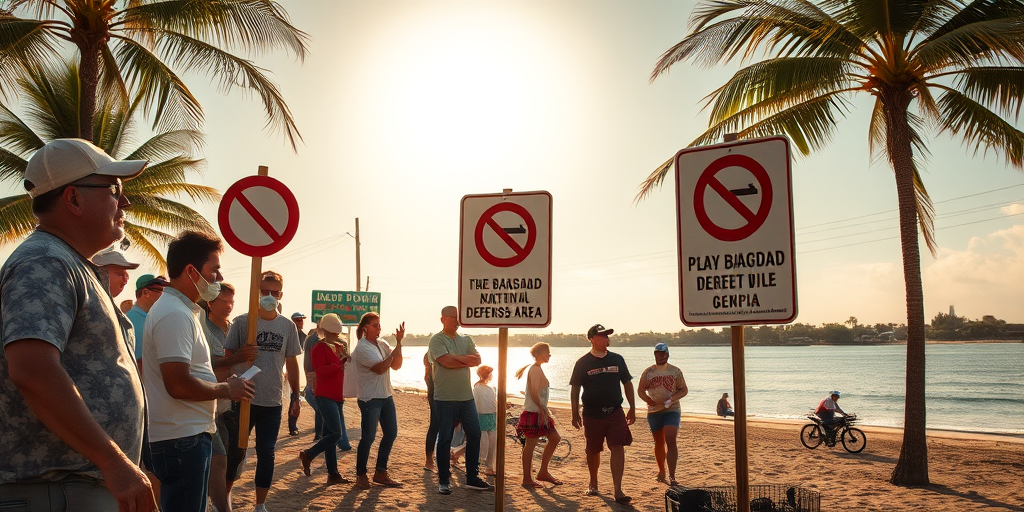
Mexico and U.S. Face Tensions as Military Contractors Install ‘No Trespassing’ Signs on Matamoros Beach
The residents of the Rio Grande Valley are witnessing an unfolding diplomatic incident along the South Texas border as Mexico responds with concern over the installation of ‘no trespassing’ signs by U.S. military contractors on Matamoros Beach, marking a potential escalation in cross-border tensions.
Signs Spark Diplomatic Controversy
Cynthia Banda, currently battling breast cancer while raising her children, embodies the resilience of Valley residents facing life’s myriad challenges. In stark contrast, another face of local tenacity emerged when Cynthia’s sister, Melissa Banda, became a hero after stepping into a life-threatening situation to rescue a child from a car crash in Brownsville. However, it is not just personal battles and acts of bravery that define the Rio Grande Valley. Complex geopolitical dynamics also shape the community.
This week, an unexpected move by U.S. military contractors ignited diplomatic flames when ‘no trespassing’ signs marking the Mexican side of Playa Bagdad beach as a “restricted area” under the U.S. Department of Defense regulations were discovered. This development prompted swift involvement from Mexican authorities and various American agencies, highlighting the sensitive nature of border politics in South Texas.
Elias Ibarra, an environmental activist, witnessed the installation. “We were taken by surprise when a group without clear identification arrived, docked their boats, and installed these signs,” he recalled. Their actions seemed reminiscent of previous executive orders aimed at fortifying border control.
Mexican Response and Local Repercussions
The Mexican Federal Attorney for Environmental Protection quickly assessed the situation after the installations were reported. Mexico’s President, Claudia Sheinbaum, confirmed diplomatic efforts are underway, involving the International Boundary and Water Commission (IBWC). “We must ensure our territories are clearly demarcated,” Sheinbaum stressed.
For residents of the RGV, this latest controversy emphasizes the dual nature of their region—serving as a vibrant binational community while often becoming a focal point of international tension. A Pentagon official explained that these signs are part of larger efforts to delineate National Defense Areas within the South Texas National Defense Area, amidst changing topographies affecting border perceptions.
The situation at Matamoros Beach has evoked mixed reactions. Local realtor Jose Martinez expressed concerns about the message this sends. “South Texas thrives on its people and culture. Additional restrictions and unclear boundaries might deter the flow of goodwill and cooperation that our community relies on.”
A History of Cross-Border Coordination Challenges
Historically, the RGV has often been caught in the crosshairs of border regulation policies that impact daily life. During previous administrations, similar security measures led to community unrest as residents navigated the implications of living in a high-monitor zone. Valley residents recall the complex relationship between safeguarding national interests while respecting cultural and economic connections with Mexico.
Maria Diaz, a long-time resident, echoed these sentiments. “Our community is built on relationships across the river. Any policies adding strain to these ties are concerning,” she said.
Future Implications and the Need for Clear Communication
Moving forward, both U.S. and Mexican officials must clarify procedures and communicate intentions behind border installations to both domestic and international audiences. This episode serves as a reminder of the importance of diplomacy in maintaining peace and cooperation along borders.
Dr. Teresa Galvan from the University of Texas Rio Grande Valley suggested caution. “Such measures must be thought through collaboratively between our national governments, with local communities playing a consultative role,” she said.
Amid this dispute, the Valley community remains resilient. Local initiatives like those by the Hidalgo County Sheriff’s Office offering holiday safety tips and South Texas College professors collecting student aid gift cards underscore the spirit of unity and mutual support prevalent among Valley residents.
Staying Informed and Engaged
For residents seeking updates or those impacted by these developments, Valley news channels and community representatives will continue offering timely information. Residents are encouraged to participate in regional forums and dialogues with local leaders to voice their perspectives and ensure their concerns are heard at higher levels.
In conclusion, as the ‘no trespassing’ signs stir diplomatic ripples, it presents an opportunity to reinforce the Rio Grande Valley as a unique, culturally rich region, poised at the intersection of national interests and local resilience. The focus remains on fostering transparent communication and fostering positive relations across borders, illustrating the region’s complex narrative of challenges and triumph.