First Responders Evaluate Readiness in Mass Casualty Training Exercise in San Benito
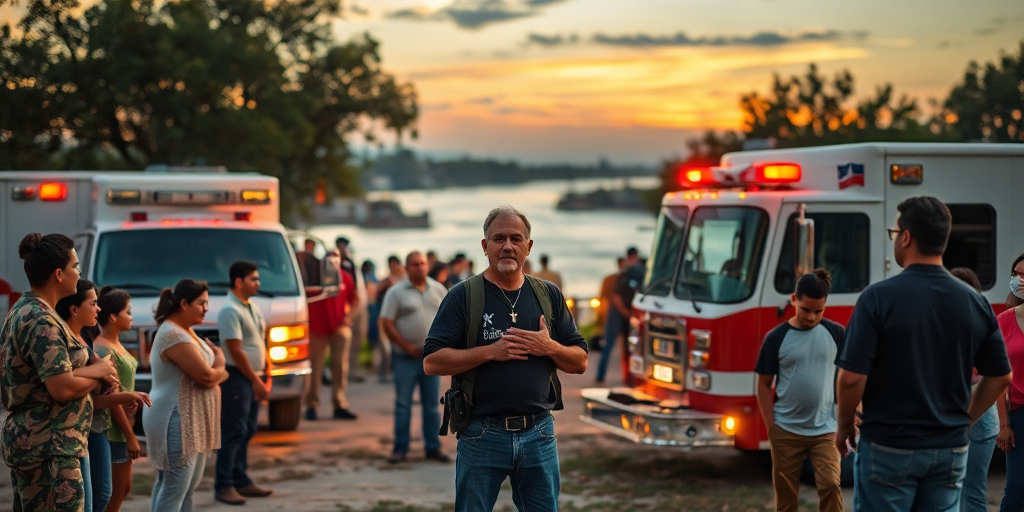
First responders in the Rio Grande Valley recently gathered in San Benito to participate in a comprehensive mass casualty training exercise, simulating a catastrophic bus crash. This event was a crucial part of ongoing efforts to assess and enhance the efficiency of emergency response strategies across South Texas, ensuring Valley residents receive timely and effective care during real disaster scenarios.
Innovative Strategies in Testing Ground
The exercise involved a faux scene of chaos, with dozens of volunteers assuming roles as injured passengers. The participants reflected a wide spectrum of injuries, from minor scrapes to severe trauma, providing a realistic challenge for emergency teams. Key to the exercise was the integration of new techniques aimed at improving communication and coordination among responders and healthcare facilities.
Nathan Ramon, Executive Director of the Trauma Regional Advisory Council in the Valley, emphasized the dual mission of the exercise: “We are not only looking to sharpen our disaster readiness but also employing new methodologies to see how they hold up in stressful, time-sensitive environments.”
One of these methods was a sophisticated colored wristband system that categorizes injury severity, streamlining the information relay from field medics to hospital staff. Additionally, a new mobile application designed to expedite patient data sharing with hospitals through barcodes was put to the test.
Enhancing Regional Emergency Preparedness
Rene Perez from the South Texas Emergency Care Foundation highlighted the importance of these exercises. “Through simulations like these, we can pinpoint issues and improve our practices. Today, while challenges were identified, the successful deployment of all participants to medical facilities shows our ongoing progress,” said Perez.
This training is particularly relevant for the region, given its unique set of challenges, including its growing population and geographical vulnerabilities like hurricanes and flooding. Such simulations ensure that first responders are prepared for various emergencies, thus bolstering the RGV news narrative of a community dedicated to resilience and preparedness.
A Boost to Community Confidence
The local community’s confidence in emergency services could likely increase as a direct result of these proactive measures. The Valley’s residents remain aware of the potential for natural and man-made disasters, making the presence of a well-coordinated emergency response team a crucial element of local safety infrastructure.
“Living in the Valley means always being prepared,” shared San Benito resident Maria Torres. “It’s reassuring to know that our first responders are constantly training and adapting to serve us better.”
Linking to Broader Initiatives and Local Needs
This exercise ties into broader regional strategies aimed at improving public safety and emergency management. It aligns with new initiatives focused on community education, encouraging Valley residents to engage with emergency services, for example, through preparedness workshops and information sessions.
Such training exercises are not isolated events but part of an integrated approach to increase the region’s overall readiness. The experience garnered from these exercises helps refine emergency protocols that benefit not only San Benito but surrounding communities across Cameron County and beyond.
Future Implications and Ongoing Adaptations
The success of this simulation may simulate further enhancements and investments in technology and training for emergency services in the Valley. As community growth continues, adapting such initiatives becomes imperative to meet evolving demands.
While this training exercise was a mock scenario, its implications are serious and far-reaching. It underscores the importance of readiness in ensuring the safety and well-being of all Valley inhabitants. Efforts such as these reflect a commitment to continuous improvement within local emergency management frameworks.
For additional information and training related resources, community members can contact the Trauma Regional Advisory Council directly. Citizens are encouraged to familiarize themselves with local emergency procedures and resources to further bolster community safety efforts, creating a well-rounded, informed, and prepared resident base.
In essence, this mass casualty training acts as a beacon of proactive planning and community welfare, reinforcing the RGV’s commitment to sustaining robust, life-saving measures for all its inhabitants. Situated within the broader context of local resilience, such initiatives highlight the Valley’s focus on innovation and preparedness as it faces the future.