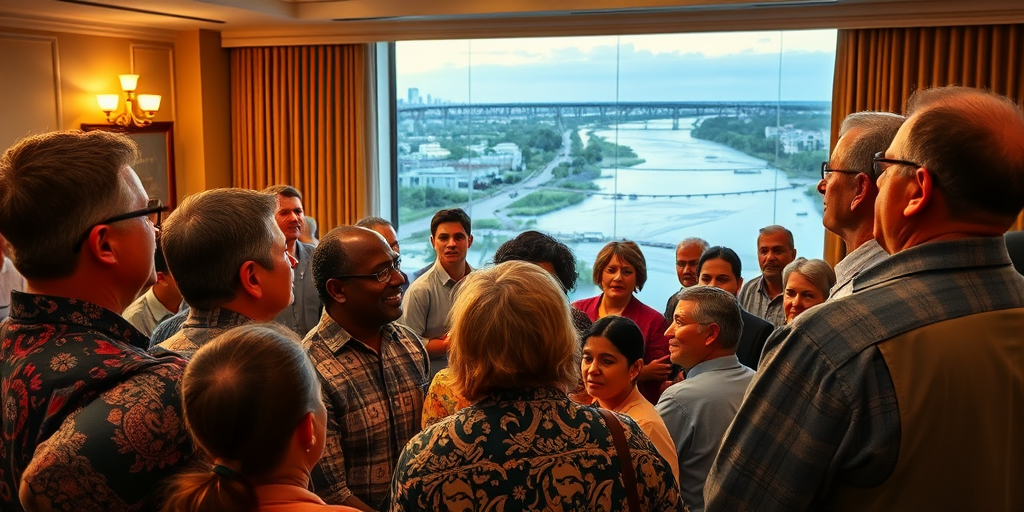
Successful Three-Day Rio Grande / Río Bravo Symposium in McAllen Concludes
The Rio Grande Valley recently witnessed a significant milestone in cross-border cooperation as the 2025 Rio Grande / Río Bravo Binational River Symposium concluded after three productive days. Held in McAllen, Texas, the symposium gathered over 200 leaders, scientists, and policymakers from both sides of the U.S.-Mexico border, all focused on addressing one of the region’s most critical issues: water management.
Water Management: A Binational Concern
Under the theme “The River in 2050,” the symposium aimed to envision a sustainable future for the Rio Grande, a river that serves as a vital lifeline for both the United States and Mexico. Attendees engaged in technical panels, interactive sessions, and field activities designed to tackle urgent water challenges, including drought, groundwater depletion, and aging infrastructure.
Texas Water Foundation CEO, Sarah Schlessinger, emphasized the collective effort required to address these issues. “It’s difficult to look ahead when the challenges seem so large,” Schlessinger remarked in her closing address. “Yet there’s hope in viewing the river as one in recovery, rather than one that is dying.”
Local Impact and Economic Implications
For Valley residents, the outcomes of the symposium carry profound implications. The North American Development Bank (NADBank) announced new funding initiatives aimed at enhancing cross-border water resilience projects, an investment expected to spur economic growth in South Texas and across the border.
Jose L. Garcia, a policy analyst based in McAllen, noted the economic ripple effects: “These projects are more than environmental initiatives; they’re economic stimulants. Improved water infrastructure can attract businesses, create jobs, and support agriculture—a cornerstone of our local economy.”
Historical Context and Future Outlook
Historically, the Rio Grande has been a focal point for regional cooperation and conflict. With past agreements like the 1944 U.S.-Mexico water treaty, the river’s management has often highlighted the complex interdependence of regional ecosystems and economies. Schlessinger underscored the treaty’s importance as an opportunity for progress rather than an obstacle, advocating for collaboration as the path forward.
The symposium also marked the launch of the forthcoming publication, “The State of the Rio Grande: 2050,” which will consolidate insights and policy recommendations from the event. This publication promises to be an invaluable resource for ongoing and future water management strategies in the RGV.
Community and Civic Engagement
Throughout the symposium, the role of community engagement and education in fostering water stewardship was a recurring theme. “Public education is key,” Schlessinger told participants. “Teach the children, teach the adults—and let us all be adults in the room.” Her call to action highlights the need for comprehensive civic involvement to address the multifaceted water issues facing the Rio Grande Valley.
Local community leader, Marissa Torres, expressed enthusiasm about these educational efforts: “Involving our students and educators provides both immediate and long-term benefits. It ensures a more informed populace and prepares future leaders to make sound decisions for our environment.”
Connecting to Past and Present Challenges
The challenges discussed at the symposium are not entirely new to the RGV news scene. Water scarcity and management have long been pressing issues, often exacerbated by climate change and growing populations. The symposium served as a pivotal moment for regional leaders to revisit past approaches and embrace innovative solutions.
With the Texas Water Foundation at the helm, many see this event as a catalyst for future positive change. “What I heard throughout our panels is that the path forward is compliance and collaboration,” said Schlessinger. “And it operates at the speed of trust.”
Looking Ahead
As the symposium concluded, the sentiment among participants was optimistic yet pragmatic. Colin McDonald, who played a crucial role in organizing the event, highlighted the importance of persistent collaboration. “This symposium could not happen without all of you,” he stated. “It is for you; it is about you. We set the table—but it’s your passion, your information, and your future that make this meaningful.”
For Valley residents, the outcomes of the symposium reflect a commitment to addressing the water issues that are critical to the region’s future. As plans move forward, the involvement and support of the community will be vital in steering the Rio Grande toward a sustainable 2050.
For further resources and participation, interested individuals can reach out to the Texas Water Foundation and local environmental organizations, ensuring that the momentum gained from the symposium continues.
The Rio Grande / Río Bravo Binational River Symposium has not only highlighted immediate concerns but has also charted a course for sustainable water management across borders, creating a legacy of stewardship for future generations.