**Tiny Forest Initiative Blossoms at McAllen’s Town Lake**
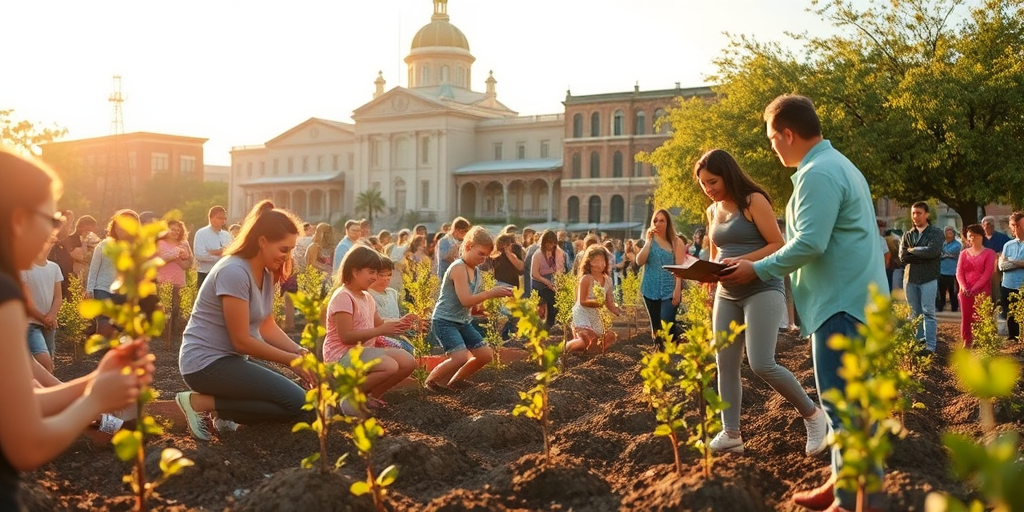
In a transformative ecological and community-driven effort, the City of McAllen, alongside Quinta Mazatlán, has embarked on planting its seventh tiny forest at Town Lake, using the innovative Miyawaki method. The initiative is bolstered by the dedication and participation of the Chang family who have become instrumental in bringing this vision to reality. This project aims to rapidly restore urban biodiversity and enhance the communal fabric of the Rio Grande Valley (RGV).
**A New Green Leap for McAllen**
The Miyawaki method, developed by Japanese botanist Akira Miyawaki, is renowned for its ability to accelerate forest growth. Urban forests created through this technique can mature in 20-30 years, contrasting sharply with the 200-300 years required by traditional methods. In selecting Town Lake as the site for its latest tiny forest, McAllen is taking an exemplary step toward sustainability and environmental responsibility.
“This is more than just planting trees; it’s about planting a self-sustaining ecosystem,” commented Colleen Hook, Executive Director of Quinta Mazatlán. “In a few decades, this tiny forest will not only beautify our area but also improve air quality and provide habitat for native wildlife.”
**Local Impact: A Testament to Community Interest**
For the residents of the RGV, the establishment of a tiny forest is significant. It reflects a growing trend of integrating green spaces into urban planning—a crucial move in a region grappling with the juxtaposition of rapid development and environmental conservation.
Eric and Chelsea Chang, the local family involved in this project, have been hailed as community heroes. Their proactive engagement demonstrates a powerful community interest in sustainability. “We are committed to creating a legacy of green spaces that our children and grandchildren can enjoy. This tiny forest is a gift to McAllen and a symbol of our dedication to a healthier environment,” stated Eric Chang.
**A Broader Context: Linking Past Efforts with Future Prospects**
This initiative is part of a broader strategy adopted by McAllen and other South Texas communities aiming to fortify green infrastructure as regional development continues. Previously, similar efforts included the enhancement of parks and the introduction of community gardens, which have helped foster a local culture that values environmental stewardship.
Local environmentalist, Maria Gonzalez, noted, “Planting these forests is critical as they serve multiple purposes. They are educational, they enhance our urban aesthetics, and they bring us closer to reaching our sustainable development goals.”
**Challenges and Future Implications**
Nonetheless, the implementation of tiny forests is not devoid of challenges. Funding, maintenance, and public awareness are key hurdles that must be managed. This is why initiatives that actively involve community members are crucial, not only for maintaining the forests but also for ensuring long-term success. The Chang family’s involvement is a testament to how community participation can drive environmental change.
Looking forward, the city hopes this project will spur similar environmental initiatives across the Valley. By advocating for green spaces, McAllen is setting a precedent for other cities aiming to balance urban expansion with ecological preservation.
**Engagement and Resources for Valley Residents**
To ensure the tiny forest’s success, McAllen has scheduled informational workshops at Quinta Mazatlán. These will educate the public on sustainable practices and how individuals can contribute to local green initiatives. For residents keen on playing a role, resources are available through McAllen’s Parks and Recreation Department, which also encourages volunteer participation in future projects.
In closing, the inauguration of the tiny forest at Town Lake highlights McAllen’s commitment to fostering a sustainable future for the RGV. This initiative not only enhances local biodiversity but also brings the community together to create a greener, more resilient South Texas. As Valley residents, we are reminded of our roles in maintaining these precious green spaces and the collaborative spirit that can transform regional challenges into opportunities for growth and renewal.