Government Set to Deploy Buoy Barrier Along Rio Grande Near Brownsville
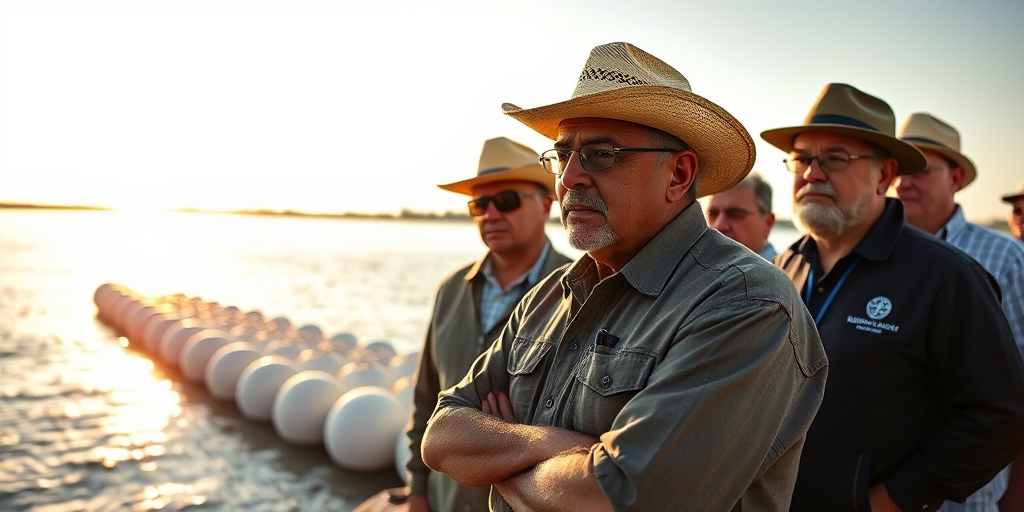
The federal government is poised to initiate the deployment of a buoy barrier along the Rio Grande near Brownsville, a measure aimed at curtailing drug and human smuggling. The project, funded through the Big Beautiful Bill signed by President Donald Trump, involves a $96 million contract for constructing a 17-mile-long barrier. This move, however, has sparked considerable debate among local officials and environmentalists, leading to a larger conversation about its implications for the Rio Grande Valley (RGV).
Efforts to Address Smuggling
The proposed buoy barrier is part of ongoing federal efforts to strengthen border security. According to the Department of Homeland Security, the barrier is intended to serve as a deterrent against illegal cross-border activities. The buoys are expected to be similar to those previously deployed in the Eagle Pass area under Texas Governor Greg Abbott’s initiative.
Cameron County Judge Eddie Trevino highlighted the urgency of addressing smuggling activities but raised questions about the notification process and potential environmental effects. “Our hope is that these actions are being taken in a way that helps our federal law enforcement do their jobs without impacting the environmental issues that could arise,” Trevino stated.
Environmental Concerns
Environmentalists have vociferously opposed the plan, arguing that the buoy barrier could disrupt the natural flow of the river and consequently harm local ecosystems. Christopher Basaldu, co-founder of the South Texas Environmental Justice Network, described the buoys as an environmental affront. “They’re an insult to the environment. They interfere with the river flow and pose a threat to wildlife,” he said.
Basaldu further expressed concerns about potential scenarios where the river’s low water levels could render the buoys ineffective, stating that they could merely rest on the riverbed, entangling debris and harming aquatic life. He emphasized, “It’s anti-human and anti-life. We should reject it completely.”
Border Encounter Statistics
In light of recent U.S. Customs and Border Protection (CBP) statistics, some officials are questioning the necessity of the buoy barrier. Border encounters have notably dropped from 130,000 in 2024 to 34,700 in 2025. Judge Trevino pointed to these figures as a reason to reassess the project’s justification. “With such a decrease in crossings, it’s important to question the need for such an extreme measure,” Trevino noted.
Local and Economic Implications
The buoy deployment could have broad implications for the RGV, impacting not only environmental but also socioeconomic sectors. Valley residents have historically relied on the Rio Grande for water resources and recreational activities. Disruptions could influence local businesses and the broader community’s relationship with the river.
Moreover, there are potential implications for economic development. As Cameron County continues to evolve, attracting businesses and residents, the perceived barriers of a buoy system might impact investment and community growth, requiring careful consideration by local leaders and stakeholders.
Collaboration and Future Steps
Judge Trevino has underscored the need for collaboration and transparency in this ongoing issue, advocating for better communication between local, state, and federal entities. “Even though we were not informed in advance, I’m open to working together to ensure any actions taken are in the community’s best interest,” said Trevino.
While no specific date has been set for the buoy deployment, the conversation remains active, with stakeholders pushing for wide-ranging considerations that balance the intent of national security with local welfare and environmental sustainability.
Community Resources and Engagement
Community members concerned about the buoy barrier or interested in voicing their opinions are encouraged to contact their local officials. The South Texas Environmental Justice Network offers resources for those looking to get involved in advocacy efforts. Additionally, ongoing community meetings aim to address this issue and provide platforms for public input.
As the situation develops, the buoy barrier proposal continues to highlight the complexities of balancing security with community values and environmental stewardship, serving as a reminder of the unique challenges faced by border regions like the RGV.