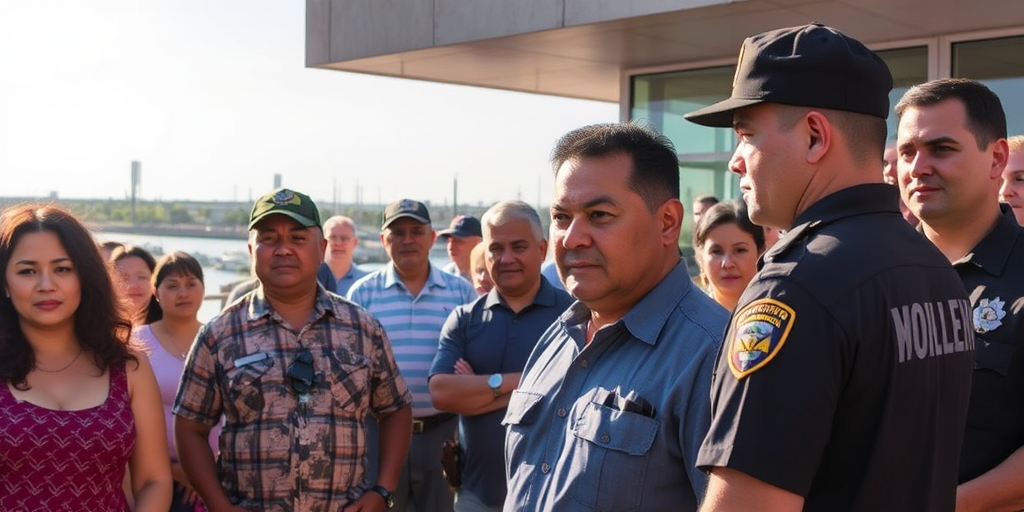
McAllen City Commissioner Faces Federal Charges Amid Bribery Allegations
McAllen City Commissioner Rodolfo “Rudy” Castillo has surrendered to federal authorities following charges of money laundering and smuggling, bringing an unsettling spotlight to South Texas’s political and business circles. His arrest came alongside allegations of bribing Mexican law enforcement to favorably maneuver his business, Oro Ropa Usada, in a complex web of cross-border trade intricacies.
Federal Investigation Unveils Disturbing Practices
Homeland Security Investigations (HSI) executed a search warrant at Castillo’s McAllen residence and business, uncovering significant discrepancies in documentation related to his used clothing trade operations. Further incriminating details emerged from a criminal complaint revealing Castillo’s admission to bribing a formerly viewed incorruptible police force in Mexico to ensure the smooth flow of merchandise. These discoveries were coupled with the detention of Castillo’s wife, Bertha, who now faces charges alongside her husband.
Local attorney Rick Salinas, representing Castillo, expressed concerns over the troubling nature of the complaint, hinting at complexities likely to be addressed during a potential trial. “This may, conceivably, end up going to trial,” Salinas remarked, underlying the gravity and intricacy of the case at hand.
The Unfolding Saga of Cross-border Commerce
Oro Ropa Usada is one of many Valley businesses navigating the nebulous territories of used clothing trade, a sector often stifled by stringent Mexican import regulations. These businesses, predominantly serving customers across the border, frequently operate in a legal gray area and face pressures from alleged corrupt law enforcement and customs officials.
According to federal documents, Rudy Castillo admitted evading merchandise entry reporting into Mexico, thus bypassing detection by local authorities. An exchange with a federal informant revealed his acknowledgment of paying bribes to facilitate uninterrupted transport—a stark contradiction to the elite police force’s incorruptible reputation.
The sale of used clothing in Mexico, due partly to stringent government import regulations, presents significant operational challenges. Storefronts similar to Oro Ropa Usada find themselves caught between adhering strictly to legal standards and addressing practicalities enforced by local governance complexities.
Broader Implications for the Rio Grande Valley
These charges, while primarily focused on Castillo’s enterprise, illuminate larger communal and economic dynamics for South Texas’s Rio Grande Valley, sparking conversations about business ethics and governmental integrity. Valley residents are expressing concerns over how systemic practices might adversely impact job opportunities, tax revenues, and public confidence in local governance.
Jose Mendoza, a community leader in McAllen, voiced his worries: “It’s disheartening to see trust betrayed at such levels. Businesses in our region thrive on transparency and trust with customers and partners on both sides of the border.”
Such scandals, unfortunately not isolated in local history, carry broader implications by impacting perceptions of South Texas’s economic environment and governance. Acknowledging these aspects is crucial in devising sustainable strategies addressing economic development and legal adherence.
What Lies Ahead
With 22 individuals charged following business raids in McAllen, the crackdown could signal strengthening measures by authorities to combat illegal operations. These legal challenges might prompt Valley businesses to reassess operational practices, potentially influencing regional trade protocols and regulatory frameworks—outcomes significant not only economically but also culturally and politically for the RGV community.
Residents, business owners, and officials alike must engage in discourse about ensuring community interests align with lawful operations. Reevaluating oversight efforts, perhaps emphasizing cross-border economic partnerships and regulatory reforms, could reconcile existing disparities skewing business practices.
With the case evolving, Rudy Castillo’s charges serve as a critical reminder of adhering to legal and ethical standards. Additionally, they foster opportunities for reformation within business governance and redefining integrity in political forums, propelling the Río Grande Valley along pathways of accountability and progress.
Community Resources and Assistance
For those affected or seeking more information, local resource centers are dedicating efforts to support businesses navigating compliance mandates. Moreover, constructive public forums aim to fortify dialogue among government officials, community leaders, and business entities, empowering informed decisions benefiting Valley residents.
This unfolding story reflects broader societal currents, marking pivotal steps necessary towards achieving holistic community prosperity and reinforcing the Rio Grande Valley as a resilient, ethically rooted region amid challenges ahead.