Legal Challenge over Rio Grande LNG Project Raises Community Concerns
The Rio Grande Valley has found itself at the center of a potentially transformative yet contentious development as legal battles continue over the Rio Grande LNG project at the Port of Brownsville. As Texas Border Business reports, various stakeholders in the RGV and beyond are closely monitoring the proceedings due to the profound local impact the outcome could have. The resolution of this issue carries particular significance for Valley residents, given its potential to reshape regional infrastructure and economic dynamics.
The Heart of the Issue
The crux of the legal dispute involves the August 6 decision by the U.S. D.C. Circuit Court of Appeals to vacate and remand the Federal Energy Regulatory Commission’s (FERC) reauthorization order for the controversial Rio Grande LNG project. This decision has sparked a widespread debate in South Texas, particularly in Cameron, Hidalgo, Starr, and Willacy counties, according to Texas Border Business. At its core, the case raises questions about the long-term viability of significant infrastructure projects in the region.
Proponents of the project, like Cameron County Judge Eddie Trevino, Jr., emphasize potential economic benefits. “The LNG project could be a catalyst for economic growth, creating jobs and attracting investments to the area,” Judge Trevino noted. However, opponents argue that the environmental risks and potential disruptions to local communities outweigh these benefits and demand greater scrutiny.
Local Impact: Economic Prospects vs. Environmental Concerns
Debates around the Rio Grande LNG project often center on its economic prospects versus the environmental concerns it raises. Proponents highlight job creation and increased regional profitability as key benefits. Texas Border Business underscores that the project aligns with broader efforts to bolster Texas as a hub for energy and technological development, as seen in reports celebrating its ascension comparable to Silicon Valley.
However, environmental advocates caution against potential ecological disruptions and long-term health impacts. “Valley residents must consider the strain on our natural resources and the air quality concerns associated with such large-scale ventures,” argues Isabel Gutierrez, a spokesperson for an environmental coalition. She suggests that alternative sustainable practices should be prioritized.
A Community Divided
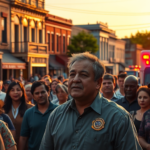
The proposed development has reignited ongoing dialogues concerning the region’s priorities, with various community members expressing both support and resistance. Public forums and community meetings have become avenues for residents to voice their opinions, highlighting the split in sentiment.
Individuals like Maria Santos from Brownsville support the project, citing the urgent need for economic revitalization. “For many local businesses and workers, the LNG project represents hope for a stable financial future,” she shared. Conversely, others fear the project overlooks social equity and environmental justice, urging more inclusive planning processes that better reflect RGV news.
Broader Connections and Implications
Connecting to previous local events, this controversy is not the first time infrastructure projects have sparked debates in the Valley. Past projects have also faced scrutiny over their environmental backgrounds and potential gentrification impacts. This underscores an ongoing narrative in the RGV about balancing growth with cultural and environmental integrity.
As Texas Border Business reports, the court’s decision and subsequent actions could influence future infrastructure endeavors, reshaping stakeholder perspectives not only in South Texas but across the state. If the decision halts construction, it may dissuade future investors apprehensive about regulatory hurdles.
Looking Ahead: Navigating Future Outcomes
The outcome of this legal challenge will likely have far-reaching implications for the RGV. Should the project proceed, stakeholders must navigate the economic opportunities while addressing community concerns and implementing rigorous environmental oversight.
Organizations and residents eager to remain informed about developments are encouraged to visit resources such as StandWithRGLNG.com, a portal providing case updates and testimonies from regional leaders. Through enhanced community engagement via platforms like MeGustaTV and legislative updates, the public remains at the forefront of this evolving story.
Local leaders are tasked with finding a path forward that supports commerce while protecting community interest, ensuring these diverse perspectives are reconciled. In doing so, the Rio Grande Valley stands to solidify its place as a region that champions thoughtful development, reflective of its unique social, environmental, and economic landscape.