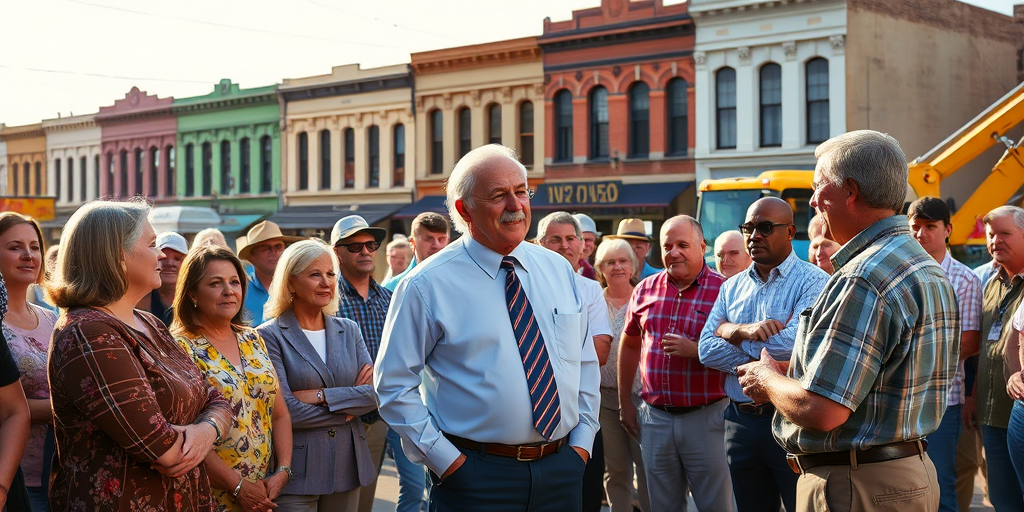
CCDD5 Seeks Sen. Cornyn’s Support for Critical Flood Mitigation Funds On September 25, 2025, amidst the sweltering South Texas heat, the Cameron County Drainage District No. 5 (CCDD5) board members comprising Steve Jennings, Jerry Wade, and Nick Consiglio met with U.S. Senator John Cornyn at Texas State Technical College in Harlingen. Their mission was singular but critical: to secure Cornyn’s support for two crucial grant applications totaling over $30 million. These funds are earmarked for vital flood mitigation efforts in the Rio Grande Valley, emphasizing the community’s ongoing battle against devastating floods. Laying the Groundwork for Comprehensive Flood Management Rolando Vela, Executive Director of CCDD5, was emphatic about the importance of these grants. “Together, these two grants are worth more than $30 million,” Vela stated. “Once released, these funds will help us widen key drainage channels and build new downstream detention ponds to reduce flooding in our communities.” For a region like the Rio Grande Valley, which has a history of severe flooding, the stakes couldn’t be higher. Established in the aftermath of a catastrophic flood in 1993, CCDD5 has since operated as a bulwark against future flooding threats. The district covers about 40 square miles, encapsulating regions within Harlingen, Combes, Palm Valley, and Primera. Its network of roughly 70 miles of open drainage channels is vital for redirecting stormwater to the Arroyo Colorado, playing a crucial role in the Valley’s flood management infrastructure. The Local Impact: Protecting Valley Residents For Valley residents, particularly those in low-lying areas prone to flooding, the potential improvements promised by these funds are monumental. Flood management has always been a pressing concern in the region, as underscored by previous flooding incidents that have led to significant property damage and loss of life. “The Valley’s flat topography and heavy rainfall make it particularly susceptible to flooding,” explained local hydrologist Dr. Maria Gonzalez. “Efforts like CCDD5’s are essential to safeguard community livelihoods and minimize future flood impacts.” Beyond physical safety, these projects promise economic benefits by protecting properties, ensuring business continuity, and potentially lowering insurance costs associated with flood risks. As Vela pointed out, “While we continue making improvements with our current grant projects, we’re also working hard to secure additional funding for future drainage improvements that will benefit the communities we serve.” Historical Context and Connection to the Community Historically, the Rio Grande Valley has grappled with significant flooding challenges. The flood that led to CCDD5’s establishment was one of many that have punctuated the region’s history. Initiatives like this not only aim to tackle these long-standing issues but also highlight the resilience and proactive nature of its community. Local historian Felipe Rodriguez recalled, “Communities here have always banded together in the wake of floods. The establishment of CCDD5 was a significant step in taking control of our destiny concerning flood management. Support from leaders like Senator Cornyn is crucial in these efforts.” Future Prospects and Regional Collaboration If successful, these funding applications could serve as catalysts for broader regional initiatives and encourage further federal investment in South Texas infrastructure. The potential fusion of resources and federal support could significantly enhance the effectiveness and reach of future projects, offering a template for other flood-prone regions in need. Senator Cornyn’s backing could also strengthen bipartisan efforts to address infrastructure vulnerabilities, providing a unified front against unpredictable weather patterns exacerbated by climate change. While Cornyn’s office has not yet commented on the specific outcome of the meeting, his interest aligns with broader national trends focusing on infrastructure sustainability and disaster mitigation. Balancing Perspectives and Continuing the Dialogue As with most governmental initiatives, there’s a need to balance ambition with practicality. Critics caution that funding allocation processes must be transparent and equitable, ensuring a clear approach to prioritizing projects based on need and impact. Community forums offer the space for dialogue and transparency, inviting Valley residents to express their concerns and hopes. Engaging stakeholders from varying backgrounds ensures that efforts are not only technically sound but considerate of the community’s social fabric and future vision. For ongoing updates, community members can access information via CCDD5’s official channels and local government announcements. Ensuring public awareness and involvement is a priority as these projects unfold, representing both a commitment to transparency and a belief in collective progress. In conclusion, as Valley residents await news of funding approval, the spirit of community, resilience, and proactive planning remains central to navigating the challenges posed by flood risks in this part of South Texas. As these efforts bolster local impact and safeguard the community, they underscore the vital relationship between federal support and grassroots initiatives in building a resilient future.