**Chagas Disease Detection Raises Concern in Hidalgo County**
In a recent development that has put health officials on alert, two chronic cases of Chagas disease have been identified in Hidalgo County. This life-threatening tropical disease, spread by the so-called “kissing bug,” has stirred discussions on the necessity for increased awareness and resources to manage the potential health risk in the region.
**Understanding Chagas: A Local Perspective**
Chagas disease is caused by the Trypanosoma cruzi parasite and is transmitted to humans and animals primarily through the feces of the kissing bug. Dr. Ivan Garcia from DHR Health elaborates on the transmission, stating, “The bug bites, blood is sucked, and while feeding, it defecates near the wound. The parasite then enters the body, going unnoticed, which is why it’s often not detected by those infected.”
These recent chronic cases, as reported by Texas A&M, the Texas Department of State Health Services, and the CDC, highlight that the individuals contracted the diseases at some point in their lives. However, these cases did not necessarily originate within Hidalgo County.
Dr. Garcia emphasizes the potential severity of the infection, “If untreated, it can lead to heart and digestive complications, even sudden death. Many doctors often overlook Chagas because they seldom look for it unless they consider it.”
**Reclassifying Chagas as Endemic**
The report from health officials strongly advocates for reclassifying Chagas as an endemic disease, which would facilitate better resources for research, surveillance, and prevention efforts. With such a reclassification, more attention would be drawn to developing advanced diagnostic and treatment options, effectively enhancing community interest in tackling this silent risk.
“This isn’t a health issue that can remain on the back burner any longer,” notes Commissioner Carlos Ortiz. “As Valley residents, our focus has to shift to proactive measures, drawing on the knowledge and capacities of our health institutions.”
**Local Impacts Beyond Health**
The concern surrounding Chagas disease is juxtaposed with other developments in Hidalgo County that are influencing local dynamics. While health officials prepare to address the disease, the county is simultaneously seeing the termination of its free Wi-Fi program for rural areas. This termination could intensify challenges for residents dependent on digital access for health, education, and work-related needs.
Samara Lopez, a resident of a rural community, expresses her concerns, “The free Wi-Fi was our digital bridge to the world—losing it means losing access to health information, especially information about risks like Chagas. It’s a step backward for communities like ours.”
On a more promising front, in Mission, a substantial investment is underway with the development of a new $25 million subdivision. This endeavor aims to invigorate the local economy and provide expanded housing options, indicative of a region that is growing and evolving.
**Looking Forward: Implications and Opportunities**
As the Valley faces health, technological, and economic shifts, there are multiple paths forward. The detection of Chagas cases serves as a reminder of the critical need for a comprehensive public health strategy.
Officials are hopeful that the appeals for reclassification are recognized at the federal level. “The goal is not only to manage cases more effectively but also to educate the public on preventative measures and create informed strategies,” says Dr. Garcia.
The Rio Grande Valley, known for its resilience, stands at a crossroads. Balancing health challenges like Chagas with socioeconomic developments is crucial for sustainable growth. Valley communities could greatly benefit from collective efforts among government bodies, health experts, and residents to penetrate the disease’s obscurity and transform it into a managed entity.
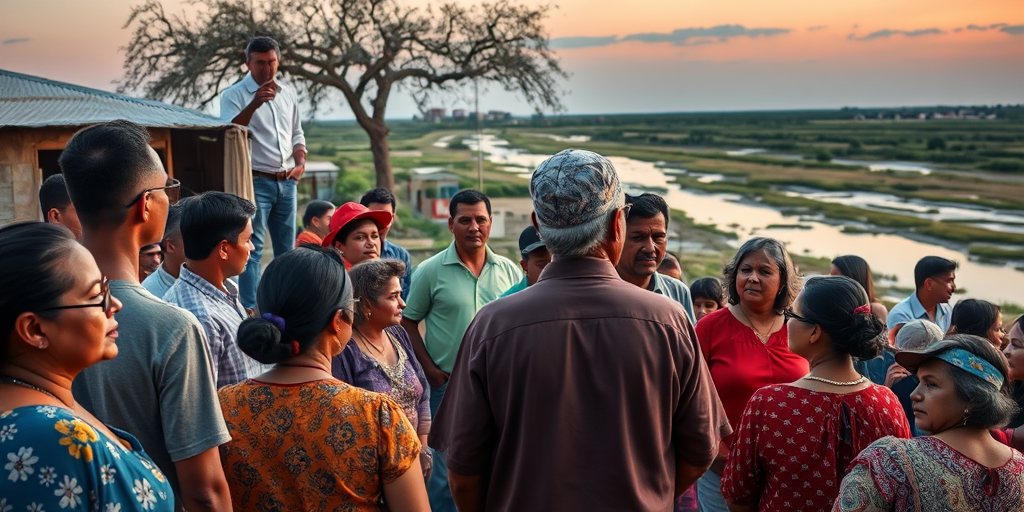
Community information sessions and accessible resources are planned to raise awareness and facilitate dialogue among residents, local health providers, and policymakers.
As South Texas navigates these emerging realities, the RGV can continue to adapt and thrive, marrying health security with economic potentials to bolster a robust future for its residents.