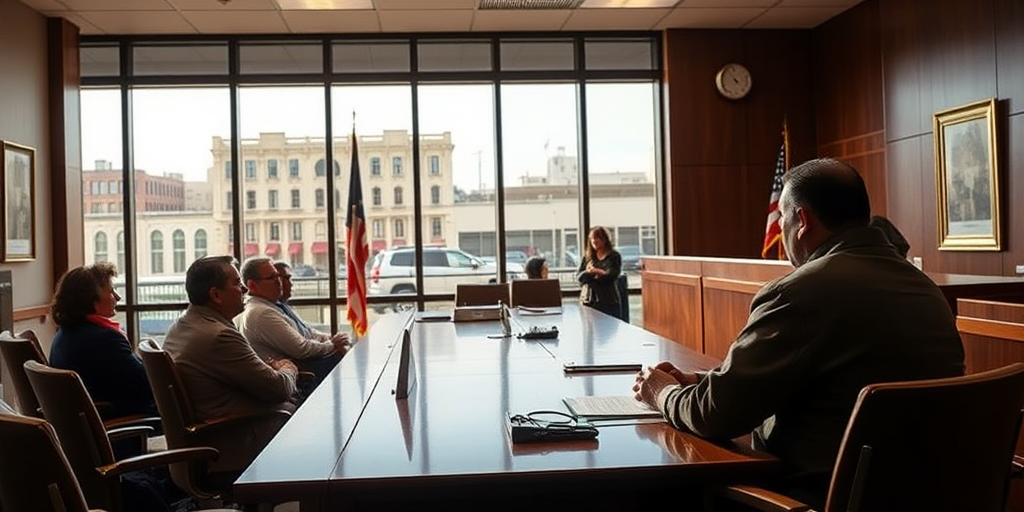
**Legal Battle Over PSJA ISD Trustee Ban Sparks Debate Across RGV**
In a compelling legal saga that has captivated the Rio Grande Valley, a lawsuit challenging the Pharr-San Juan-Alamo Independent School District’s (PSJA ISD) decision to ban Trustee Cynthia A. Gutierrez from the boardroom is raising critical questions about governance and accountability. The legal proceedings have not only spotlighted Gutierrez’s censure but have ignited broader discussions about the authority of school boards in South Texas.
**The Basis of the Legal Challenge**
In June, PSJA ISD reprimanded and banned Trustee Cynthia A. Gutierrez, accusing her of prioritizing political gamesmanship and self-promotion over educational priorities. Gutierrez, known for her outspoken nature, responded with a lawsuit calling the ban a “gross abuse of governmental authority.” Her attorney, Edinburg-based Samuel Reyes, argued that the district’s action unjustly silences Gutierrez, effectively reducing her role to a “second-class” trustee. While Visiting Judge Rogelio Valdez upheld the censure, he overturned the ban, allowing Gutierrez to attend board meetings in person once again.
“The district’s actions were not just about silencing my client,” Reyes stated. “They were about preventing her from asking valid questions that were crucial to transparency and governance.”
**Context and Community Concerns**
The incident at PSJA ISD is not isolated. Over the past three years, multiple school boards in the Rio Grande Valley have enacted similar bans on trustees, often sparking accusations of political motivations and misuses of power. Hidalgo and La Villa ISDs have previously banned trustees from their boardrooms over alleged misconduct ranging from influencing personnel decisions to public intoxication charges.
These growing instances have prompted debates across the Valley. Many community members see these bans as necessary measures to maintain decorum and focus within the schools, whereas others view them as potentially undermining democratic processes and trustee accountability.
Maria Diaz, a local parent and activist, voiced her concerns, “Schools are meant to be a pillar of transparency and openness. How can decisions be made in a vacuum, removing duly elected representatives from the process?”
**Impact on Valley Residents and Educational Governance**
The consequences of such governance decisions are far-reaching for Valley residents. In a region where the community is intimately connected to educational outcomes, shifts in boardroom dynamics can ripple through local politics and public trust in the school system. The unfolding legal battle emphasizes the need for clarity in governance structures and raises questions about the limits of local school boards’ authority.
Jose Martinez, an educator from McAllen, commented on the issue’s wider significance, “This isn’t just about one trustee or one board; it’s a question of how we want our institutions to function. Are we prioritizing a politics of exclusion or one of engagement?”
**Future Implications and Legislative Considerations**
Going forward, should this case establish precedent, it may prompt legislative consideration at the state level about the extent to which school boards should control member participation. Some experts suggest this could lead to more precisely defined legal frameworks within the Texas Education Code and the Texas Open Meetings Act regarding the treatment of elected school officials.
Dr. Teresa Galvan, a policy analyst focusing on educational reform, noted, “The case sheds light on the ambiguous territories within school governance. Clarifying these areas will help protect trustees’ rights and ensure that public institutions serve communities effectively, upholding both transparency and accountability.”
**Resources for Community Engagement**
The ongoing legal proceedings underscore the importance of community engagement and dialogue. For those interested in staying informed or participating in discussions, local resources such as upcoming public forums and online information sessions hosted by PSJA ISD offer platforms for resident involvement.
For more updates on this case and other stories affecting the RGV, ValleyCentral.com remains a critical source of RGV news, featuring comprehensive coverage on local impact and community interest topics. From local politics and educational updates to sports and daily weather, ValleyCentral.com serves as a vital resource for Valley residents. Additionally, the community is encouraged to reach out with inquiries or reports through their “Report it to ValleyCentral” feature.
As the legal challenge progresses, it continues to serve as a critical discourse on the delicate balance of power, authority, and accountability within educational settings of the Rio Grande Valley.